
mudroom organization ideas entry problems usually show up the same way: shoes pile up, coats migrate to chairs, and the “drop zone” turns into a daily stress point. The good news is you don’t need a bigger house to fix it, you need clearer zones, smarter storage heights, and one or two rules everyone can follow.
If you’re planning a refresh for 2026, think less about buying random bins and more about designing a system that fits your household’s traffic, weather, and habits. A mudroom in Minnesota behaves differently than an entryway in Arizona, and your setup should reflect that.
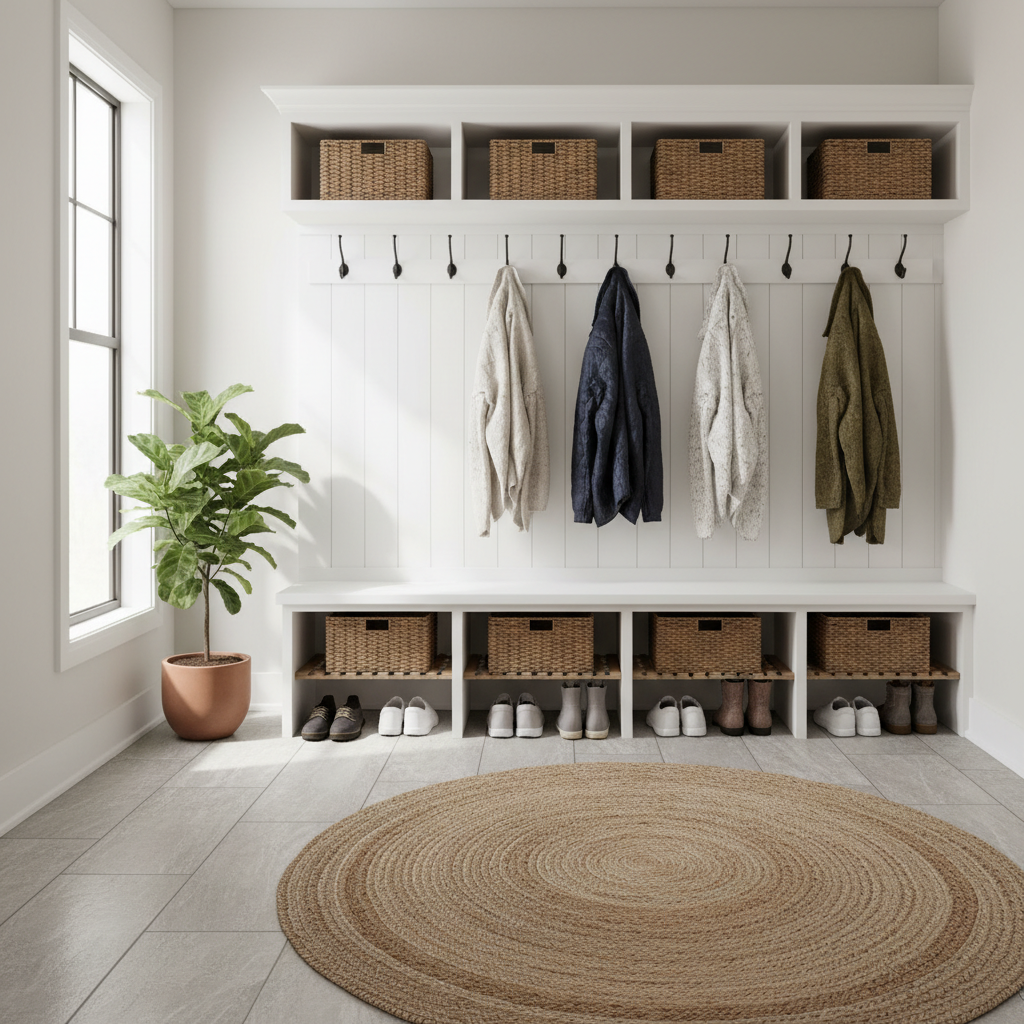
Below, you’ll get practical layouts, a quick self-check to diagnose what’s actually failing, and a few “small changes, big payoff” routines that keep the space working after the first weekend of organizing.
What’s really causing entryway clutter (it’s rarely “not enough storage”)
Most entryways don’t fall apart because you lack containers, they fall apart because the space has competing purposes and no clear decision points. A few common culprits show up again and again.
- No landing spot per category: keys, mail, backpacks, dog gear, and shoes all compete for the same flat surface.
- Storage at the wrong height: hooks too high for kids, shoe shelves too low to use comfortably, baskets too deep so items disappear.
- “Maybe later” items: returns, donations, sports gear, and dry cleaning live at the door because it feels like a reminder.
- Seasonal overload: boots, umbrellas, hats, and heavy coats stay out all year, so daily items never get a clean home.
According to the American Cleaning Institute, keeping a simple routine and assigning items to consistent “homes” supports a space that stays cleaner with less effort. In real life, that translates to fewer decisions at the end of a long day.
A 5-minute self-check: which mudroom setup do you actually need?
Before you copy Pinterest, answer these quickly. Your best mudroom organization ideas entry will match your traffic pattern, not a trend.
- How many people enter here daily? 1–2, 3–4, or 5+ changes how many “slots” you need.
- Shoes off or shoes on? If shoes come off, shoe capacity becomes the #1 constraint.
- What’s the mess type? Wet gear, paper clutter, kid stuff, pet stuff, or all of it.
- Do you sit to put shoes on? If yes, a bench isn’t optional, it’s functional access.
- Where does mail go next? If the answer is “it doesn’t,” you need a paper plan, not more hooks.
If you got stuck on the mail or returns question, that’s normal. Those items are “decision-heavy,” so the system needs an easy next step, like a labeled tray with a scheduled weekly reset.
2026 layout ideas that work in real American homes
Trends come and go, but the best-performing entryways usually follow the same blueprint: hang, sit, store, and stage. Here are flexible layouts you can adapt whether you have a full mudroom or just a narrow hall.
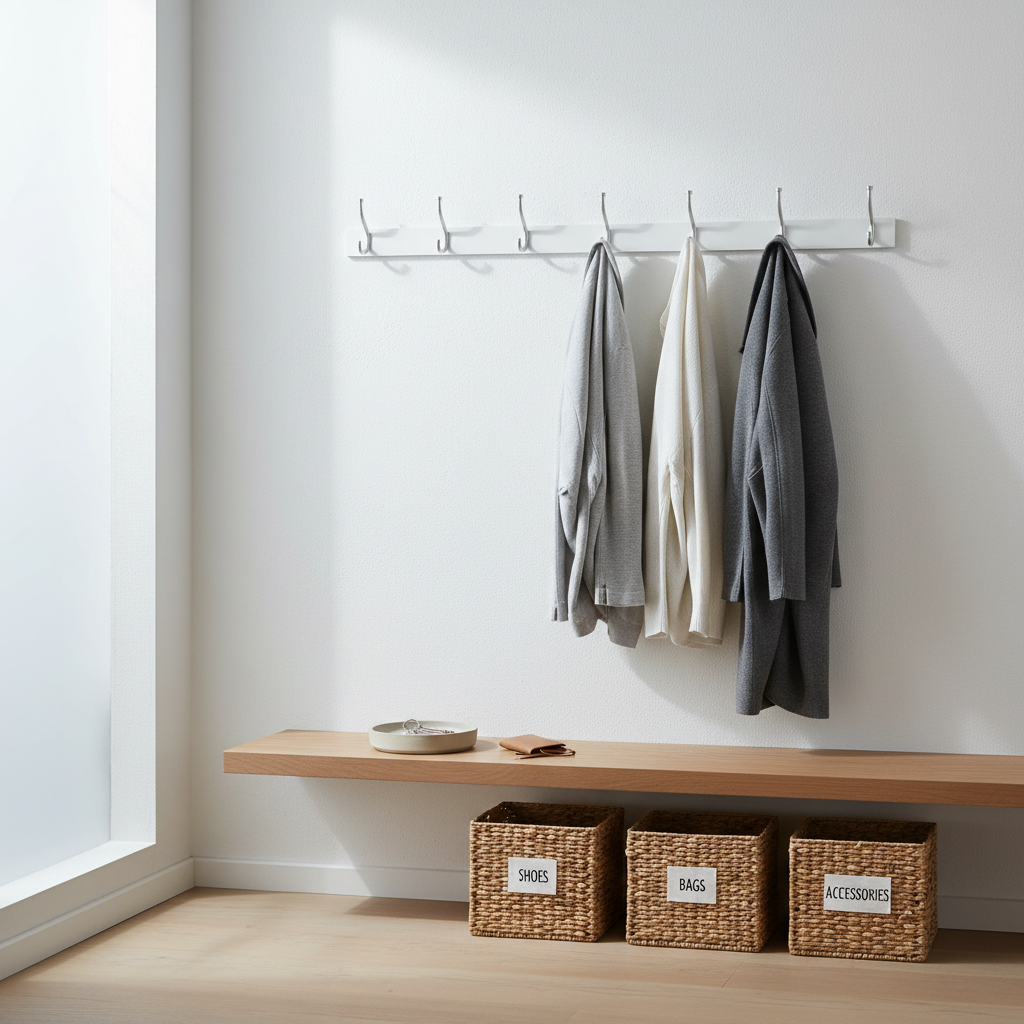
1) The “one-wall command center” (great for apartments and townhomes)
- Top: a slim shelf for small decor and rarely used items
- Middle: hooks on a rail (easier to adjust than individual hooks)
- Bottom: closed shoe cabinet or low open rack
- Side: a narrow tray or wall pocket for mail and keys
2) The bench-and-cubby drop zone (family-friendly, lowest friction)
- Bench depth around 16–18 inches is usually comfortable without eating the walkway
- One cubby per person, plus 1–2 “guest” cubbies for overflow
- A lidded basket per cubby if you prefer visual calm
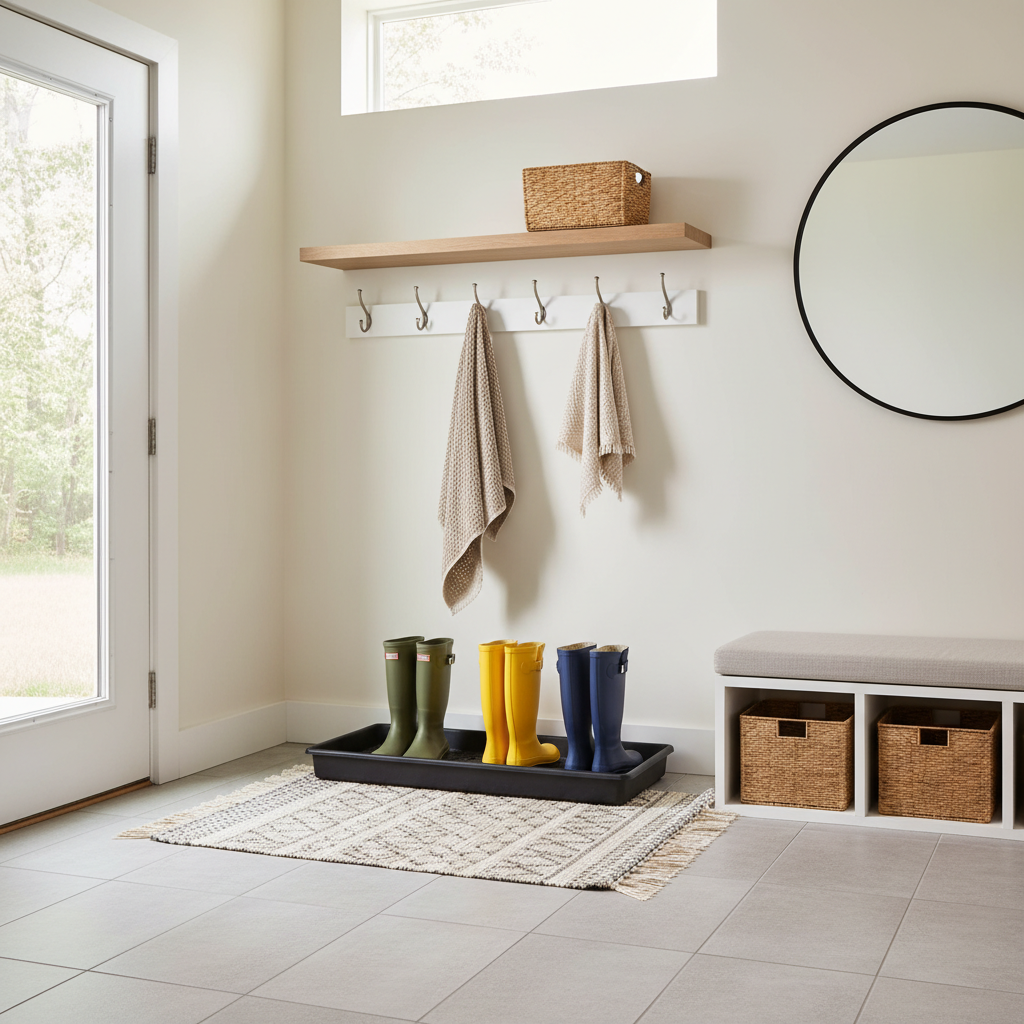
3) The wet-zone + dry-zone split (snow, rain, sports households)
- Wet zone: boot tray, washable rug, towel hooks
- Dry zone: backpacks, work bags, hats, keys
- If you can, separate zones by 2–3 feet so puddles don’t migrate
One detail people underestimate: if your door swings into the space, your storage depth matters. Keeping the first 24–30 inches clear around the swing path prevents the “constant bumping into stuff” problem that slowly ruins habits.
Storage upgrades that pay off fast (without a full remodel)
You can get a meaningful reset with a few targeted changes. The trick is choosing upgrades that remove daily friction, not “add options.”
- Double-row hooks: adults up top, kids down low, or everyday coats below and occasional items above.
- Shoe capacity math: plan for 2–3 pairs per person near the door, store the rest elsewhere.
- Vertical bag storage: a sturdy hook or peg per backpack avoids floor piles.
- Labeling that matches behavior: labels like “Return,” “Donate,” “Library,” “Batteries” work better than vague labels like “Misc.”
- Closed storage where you visually stress: if clutter makes you anxious, add doors or lidded baskets in the most visible spots.
For households that hate visual noise, a simple rule helps: open storage for items used daily, closed storage for items used weekly. It keeps the space honest.
A practical plan: set up your entry in 60 minutes
This is the fastest way to apply mudroom organization ideas entry without turning it into a weekend project that dies halfway through.
Step 1: Clear and sort by “next action”
- Keep here: true daily use
- Move elsewhere: seasonal or occasional
- Decide this week: returns, donate, repair
Step 2: Create four zones (even if it’s a tiny space)
- Hang zone for coats and bags
- Sit zone for shoes
- Shoe zone that fits your household’s shoe-off policy
- Small-item zone for keys, sunglasses, dog leash, mail
Step 3: Add one “reset habit” that feels realistic
- 10-second reset: shoes onto rack, bag onto hook
- 2-minute reset: empty pockets into tray, toss junk mail
- Weekly reset: clear the “Decide this week” bin on Sunday
If your household includes kids, make the system “pass/fail” simple. When the right choice is obvious, you stop needing reminders.
Quick reference table: match solutions to common entryway pain points
Use this as a cheat sheet when you’re shopping or re-arranging, it keeps you from buying storage that doesn’t address the real bottleneck.
| Pain point | What usually causes it | What to do next |
|---|---|---|
| Shoes everywhere | Rack too small, no “overflow” rule | Add a boot tray + set a 2–3 pairs-per-person limit near the door |
| Coats on chairs | Not enough hooks, hooks hard to reach | Install a hook rail, add a lower row for kids |
| Backpacks on the floor | No dedicated hook per child | Assign one hook per person, label it, keep it at shoulder height |
| Mail piles up | No next step for paper | Add a wall file or tray labeled “Action” and schedule a weekly clear-out |
| Entry looks messy even when “clean” | Too much visible storage | Swap 1–2 open bins for closed baskets or a slim cabinet |
Mistakes to avoid (things that look good but fail by week two)
- Over-binning: too many containers creates sorting fatigue, then items land on top of bins instead.
- Ignoring the “grab-and-go” path: if you block the direct route to the door, the system fights you every morning.
- Buying storage before measuring: a shoe cabinet that sticks out too far becomes a daily annoyance.
- No plan for wet items: without a tray and washable rug, water and salt can damage floors. If you have flooring concerns, it may be worth asking a local flooring pro what protection makes sense.
- Designing for your best day: build for rushed school mornings and late-night arrivals, not the ideal scenario.
A small mindset shift helps: your entryway doesn’t need to look staged, it needs to be recoverable. If a quick reset brings it back, you’re winning.
Key takeaways and your next move
The most effective mudroom organization ideas entry come down to clear zones, the right storage heights, and a routine that fits your household’s reality. Start by fixing the single biggest friction point, usually shoes or bags, and your entryway will feel calmer almost immediately.
If you do one thing today, pick a shoe limit and set up a simple “small-item tray” for keys and daily essentials, then give it a week before you add more products.
FAQ
What are the best mudroom organization ideas for a small entry?
Go vertical: a hook rail, a slim shoe cabinet or rack, and a shallow key tray. Small spaces work when each category has a defined spot and you limit shoe quantity near the door.
How many hooks should an entryway have?
A practical baseline is one hook per regular user, plus a couple for guests or rotating items. If coats still land on chairs, it usually means hook placement is inconvenient, not just hook count.
How do I keep kids from dumping backpacks and shoes?
Make the “correct” spot easier than the floor: low hooks they can reach, a dedicated cubby, and a simple rule like shoes go in the tray. Labels can help, but only if the system stays consistent.
What’s the simplest way to manage wet boots and umbrellas?
A boot tray and a washable rug handle most households. If moisture is frequent, add towel hooks nearby and consider materials that tolerate water, and when in doubt, consult a local contractor about protecting trim and flooring.
How do I organize an entryway without a mudroom?
Treat the first 3–5 feet inside the door as a mini-mudroom: wall hooks, a narrow bench or stool, and a shoe solution. Even one dedicated wall can carry the whole system.
Should I use open cubbies or closed cabinets?
Open cubbies are faster for daily use but look busy. Closed storage feels calmer but can hide clutter. Many homes do best with a mix: open for everyday, closed for overflow.
How often should I reset the entryway?
Daily micro-resets keep it from snowballing, but the real game-changer is a weekly 10-minute clear-out for the “decide this week” bin, mail, and stray items.
If you’re trying to refresh your entry for 2026 and you’d rather not guess what storage fits your space, start by listing your top three daily drop items and measure the wall you can dedicate, that small prep makes choosing shelves, hooks, and cabinets dramatically easier.