
Industrial style bathroom vanity with sink is usually the easiest way to get that clean, loft-like look without rebuilding your whole bathroom, you swap one piece and the room instantly feels more intentional. The problem is that “industrial” gets used loosely, and vanities that look right online can disappoint in person, wobbly frames, cheap laminate, awkward sink height, or storage that barely works.
This guide narrows it down to what actually matters when you shop: proportions, materials, sink type, and the little construction details that determine whether the vanity still looks sharp after a few years of steam, splashes, and daily cleanup.
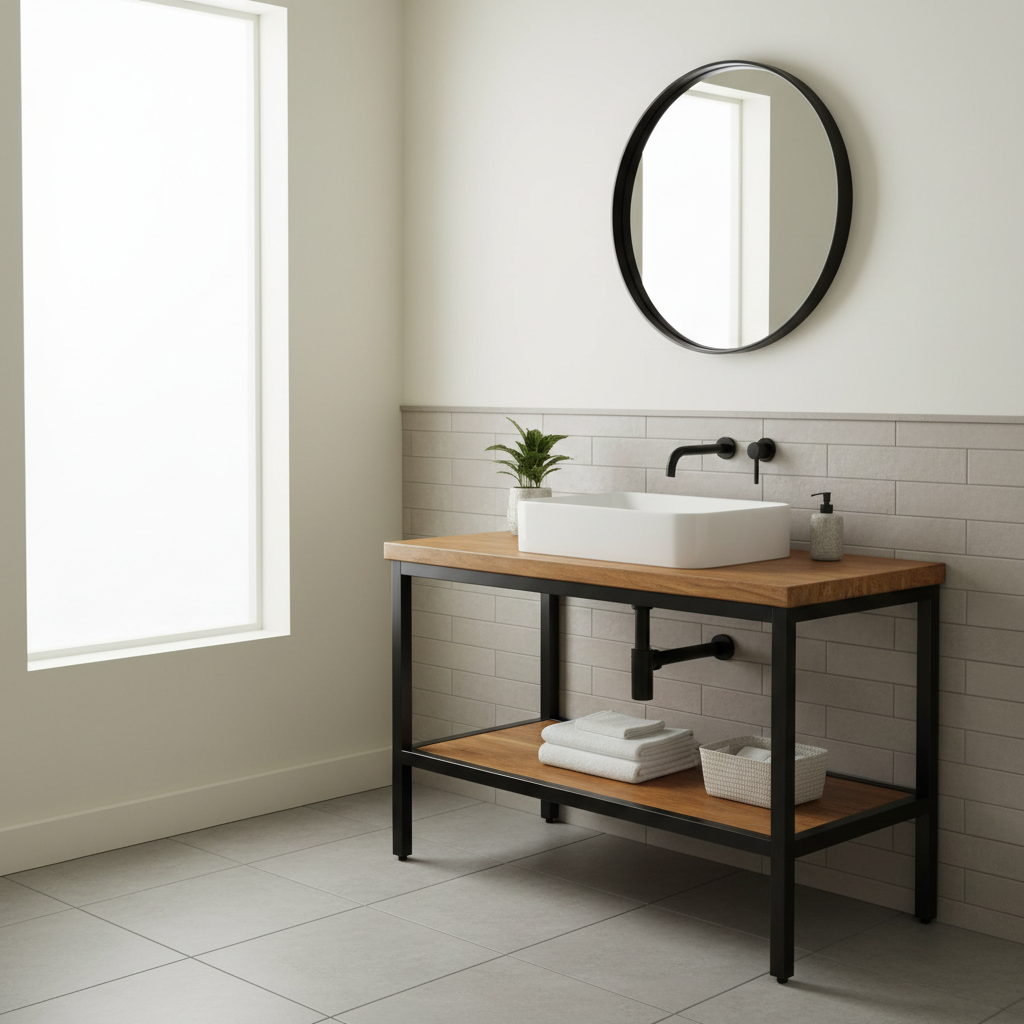
One quick expectation check before we start, industrial style is about a mix of metal, wood, and honest structure, but your bathroom still needs moisture resistance and practical storage. You can have both, if you know what to look for.
What “industrial style” really means for a bathroom vanity
In bathrooms, industrial design tends to show up in a few repeatable elements. If a vanity misses most of these, it may be more “rustic” or “modern” than truly industrial.
- Visible metal structure: black or gunmetal steel legs, frames, or brackets that look structural, not decorative.
- Wood with character: medium to dark tones, noticeable grain, often a matte finish rather than glossy.
- Simple geometry: boxy cabinet shapes, straight lines, and minimal ornament.
- Hardware that matches: matte black pulls, knurled textures, or simple bar handles.
For most homes, the sweet spot is “industrial-inspired” rather than a literal factory look, you get the vibe, but still have a sealed top, smooth drawers, and easy-to-clean surfaces.
Why people regret a vanity purchase (and how to avoid it)
Most regrets aren’t about style, they’re about fit, function, and finish quality. These are the pain points that show up again and again.
- Wrong size for the room: doors or drawers hit the toilet, or the walkway feels tight.
- Sink feels shallow: water splashes everywhere, especially with higher-flow faucets.
- Countertop stains or swells: some “wood look” tops don’t like standing water, hair dye, or harsh cleaners.
- Not enough storage: the open shelf looks cool, but you miss concealed space for clutter.
- Plumbing conflicts: center drains and P-traps eat up drawer space, or the back isn’t cut for your existing supply lines.
According to the U.S. Environmental Protection Agency (EPA), indoor humidity control matters for reducing moisture issues in homes, and bathrooms are where moisture spikes happen the most. Translation: you want finishes and construction that tolerate damp air, even if your style leans raw and edgy.
Materials and build details that matter in a wet room
Industrial style often uses mixed materials, but not all versions age the same in a bathroom. Here’s how to judge what you’re actually buying.
Cabinet body: solid wood, plywood, or MDF
- Plywood: usually a strong middle ground, stable and often better with humidity than budget MDF.
- Solid wood: looks great, but can expand/contract with humidity; good finishing and sealing are key.
- MDF: can be fine if fully sealed and well-made, but tends to be less forgiving if water sneaks into seams.
Metal frame: what to look for
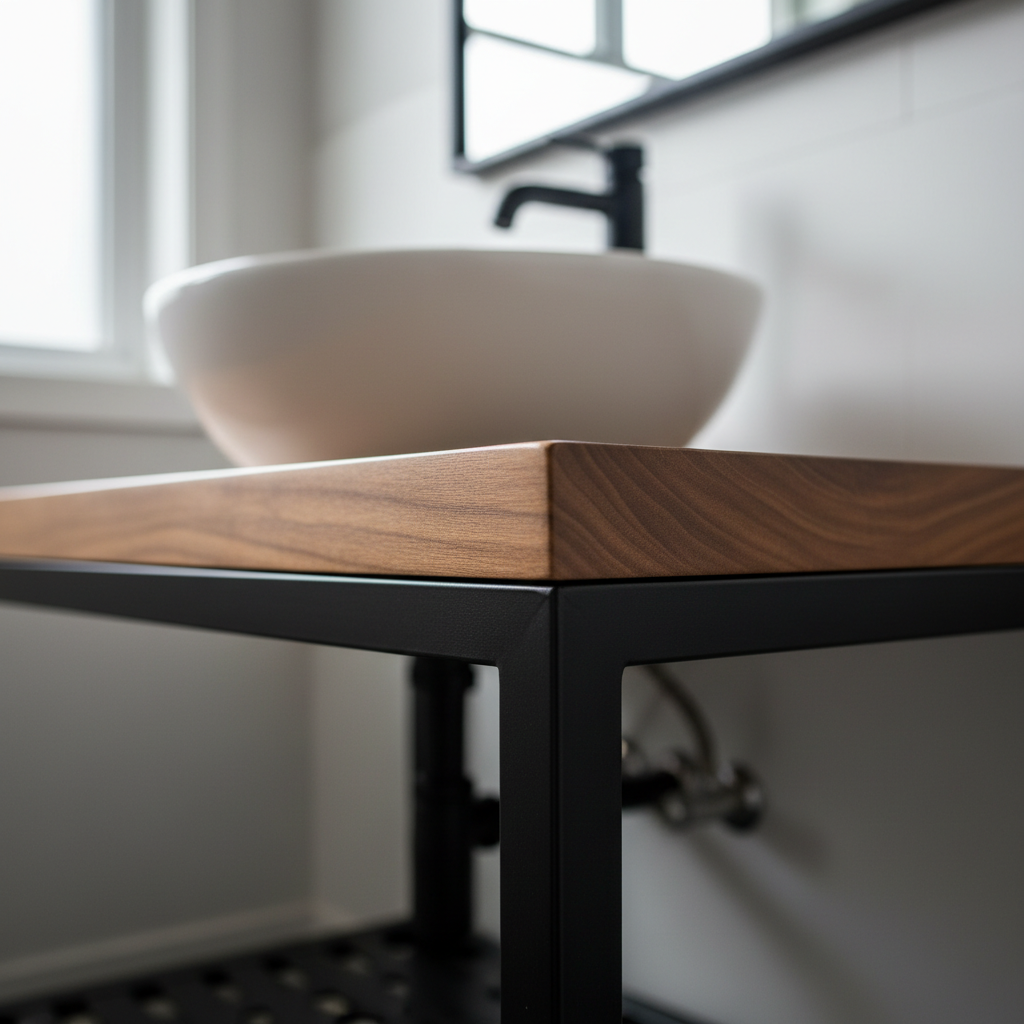
- Powder-coated steel typically resists chipping and rust better than thin paint.
- Welds and corner joints should look clean and consistent, sloppy welds often mean flex.
- Leveling feet are a small feature that saves you later, many bathroom floors are not perfectly flat.
Countertop and sink pairing
Many shoppers want a ceramic sink because it feels “classic-clean” against the industrial frame. That’s a smart combo, ceramic is non-porous and usually easy to maintain, but the surround matters too. If the top is wood, you’ll want a well-sealed finish and a backsplash or tight caulk line to prevent water intrusion at the back edge.
Choosing the right ceramic sink: undermount vs. vessel vs. integrated
When people search for an industrial style bathroom vanity with sink, they often picture a crisp white basin that contrasts with dark metal. You can get that look in a few sink formats, each with tradeoffs.
- Integrated ceramic top: easiest cleanup, fewer seams; style tends to be slightly more modern than “raw industrial.”
- Undermount ceramic: clean countertop look; depends on countertop material and proper sealing.
- Vessel ceramic: bold statement, very “design-forward,” but you must plan faucet height and overall vanity height to keep it comfortable.
If you share a bathroom or you’re tired of constant wiping, integrated or undermount usually wins on daily practicality. Vessel sinks can be great, just know they add splash risk if the bowl is shallow or the faucet hits at the wrong angle.
Quick self-check: what size and layout should you buy?
Before you fall in love with finishes, do this simple check. It prevents the most expensive mistakes.
- Measure width: common sizes are 24, 30, 36, 42, 48, 60 inches. Leave comfortable clearance for door swings and traffic.
- Measure depth: many vanities run 18–22 inches deep; tighter bathrooms may need slimmer depth.
- Check plumbing location: note drain centerline and supply valve positions; compare to the vanity’s back cutouts.
- Decide on single vs. double sink: doubles look great at 60 inches, but a single with more counter space often works better for many households.
- Think about storage style: drawers for daily items, doors for tall bottles, open shelf if you’ll actually keep it neat.
Key point: if you’re replacing an existing vanity, matching the old width and drain position usually makes the project smoother, but not always. If the old setup was cramped, this is your chance to fix it.
A practical comparison table for shopping
Use this as a quick “does it fit my life?” filter when you’re deciding between similar-looking options.
| Feature | Best for | Watch-outs |
|---|---|---|
| Open shelf + metal frame | Airy look, towels/baskets | More visual clutter, dust on stored items |
| Fully enclosed cabinet | Hiding toiletries, family bathrooms | Can feel heavier in small rooms |
| Integrated ceramic top | Low maintenance, fewer seams | Less flexibility if you want a unique faucet layout |
| Undermount ceramic sink | Clean look, more counter options | Sealing matters; depends on countertop material |
| Vessel ceramic sink | Statement design, boutique feel | Faucet height and splash control can be tricky |
Installation tips that save headaches (DIY-friendly, but realistic)
Even a great-looking vanity can turn into a frustrating install if a few basics get skipped. If you’re not comfortable with plumbing, it’s often worth hiring a licensed pro, especially if shutoff valves or drain lines need changes.
- Confirm wall support: wall-hung or floating styles need proper blocking; don’t assume drywall anchors solve it.
- Dry-fit everything: set the vanity in place, check level, confirm the drain and supplies align before sealing or fastening.
- Use the right sealant: kitchens and baths typically call for mildew-resistant silicone at the backsplash and sink edges.
- Mind faucet reach: water should hit near the drain, not the front slope, this reduces splashing.
- Ventilation is part of the install: if your fan is weak, even premium finishes struggle long-term. According to Home Ventilating Institute (HVI), properly rated bathroom ventilation supports moisture control, if your space stays foggy after showers, it’s a sign to review airflow.
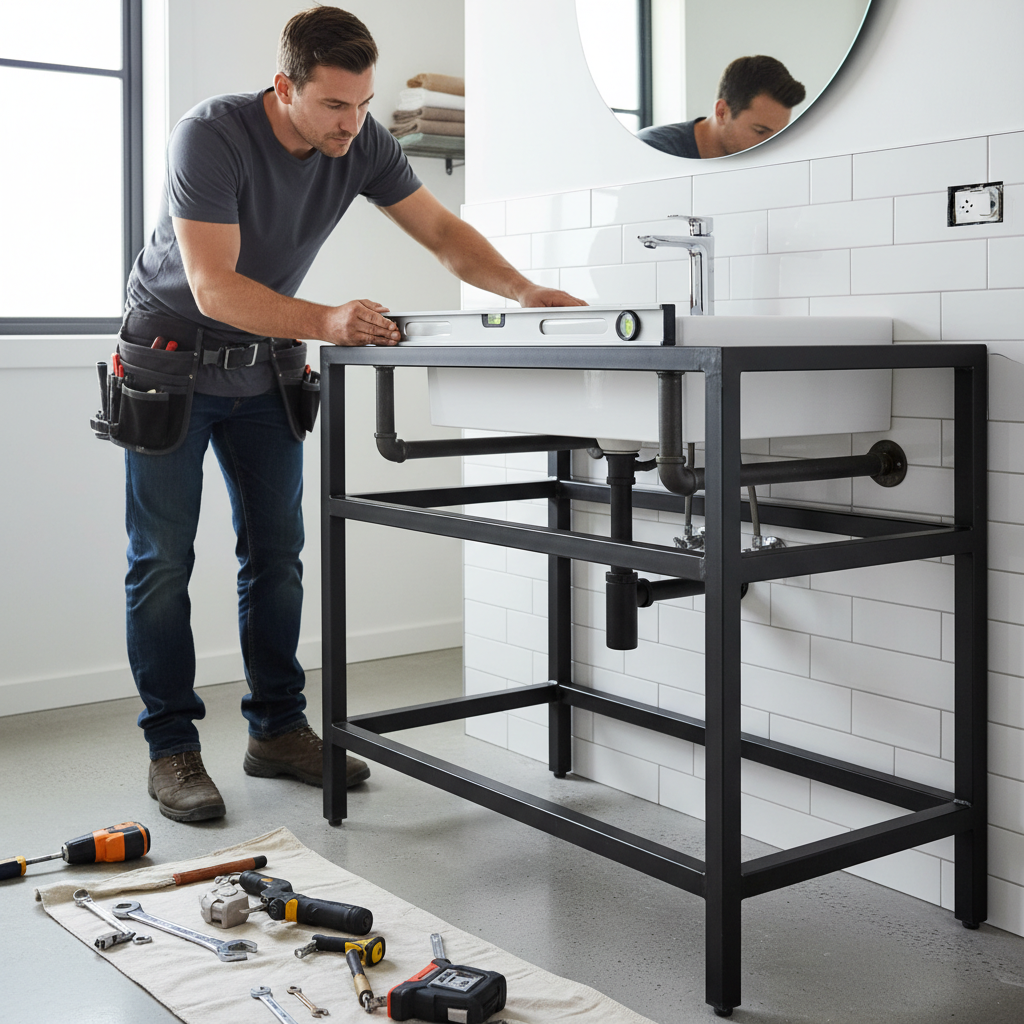
If you’re doing this yourself, the “not fun but important” step is shutting off water and checking for slow leaks after you turn it back on. A tiny drip behind a cabinet can cause swelling before you notice.
Common mistakes with industrial vanities (and what to do instead)
- Choosing looks over cleaning: heavily textured wood tops can trap toothpaste and makeup, a smoother sealed finish makes daily life easier.
- Ignoring mirror and lighting balance: a dark vanity plus dark walls can feel heavy; adding a lighter mirror frame or warmer bulbs often fixes it.
- Mixing too many metals: industrial can handle mixed finishes, but pick a “leader” (usually matte black) and keep the rest supportive.
- Assuming all ceramics are equal: check glazing quality and overflow design; some budget basins stain easier over time, especially with hard water.
Also, don’t overdo faux rust. A little patina can look intentional, but many bathrooms already have enough visual noise from grout lines, towels, and bottles.
When to bring in a pro
Some projects are still “one-vanity simple,” others quietly turn into plumbing or wall repair jobs. Consider professional help if:
- Shutoff valves are old, stuck, or leaking
- Your drain height or location must move
- You’re switching from pedestal to vanity and need wall/floor patching
- You want a floating industrial vanity and your wall lacks proper support
If you live in a condo or co-op, rules about plumbing work can vary, and you may need an approved contractor. When in doubt, a quick call to building management avoids a bigger problem later.
Conclusion: buy for the look, but commit to the details
An industrial style bathroom vanity with sink works best when the vibe matches the room, but the build matches bathroom reality, moisture, daily cleaning, and storage needs. Start with measurements and plumbing, prioritize a durable cabinet and a well-glazed ceramic basin, then choose the finishes that make you happy when you walk in every morning.
If you want one next step, make a short shortlist of two or three vanities, then compare them only on the points that affect daily use: sink depth, storage layout, countertop sealing, and frame stability.
FAQ
- What faucet finish looks best with an industrial vanity?
Matte black is the most common match, especially with a black steel frame. Brushed nickel can also work if your bathroom already leans lighter, just keep it consistent across towel bars and lighting. - Is a ceramic sink good for hard water?
Often yes, because ceramic glazing is non-porous, but hard water can still leave mineral spots. Regular gentle cleaning helps; if staining persists, you may want to ask a plumber about water hardness and treatment options. - Can I put an undermount ceramic sink on a wood countertop?
Usually, but the cutout edges must be sealed properly and maintained. In bathrooms with heavy splashing, a stone or engineered top can be lower maintenance. - What size industrial vanity works for a small bathroom?
24 to 30 inches is common for compact layouts. If depth is tight, look for slimmer models and prioritize drawers over doors for easier access. - Do open-shelf industrial vanities get dusty?
They can, especially if you store extra tissue, towels, or baskets. If you like the look but want less upkeep, choose a hybrid design with one open shelf and one enclosed cabinet. - How do I know if the metal frame will rust?
Look for powder-coated steel and avoid exposed bare metal on corners and welds. If you live in a very humid area or the bathroom lacks ventilation, rust risk increases over time. - Is it hard to replace a vanity while keeping the same plumbing?
Many swaps are straightforward if width and drain location stay similar. If the new vanity has drawers or a different trap clearance, you may need a different drain configuration, a plumber can confirm quickly.
If you’re trying to narrow down options fast, focus on a vanity that gives you the industrial look you want, but also answers the boring questions clearly: what the cabinet core is made of, how the top is sealed, how deep the ceramic basin runs, and whether the back is designed for real-world plumbing. That’s the difference between “looks great on delivery day” and “still glad you bought it” later.