
Mid century modern side table decor ideas work best when you treat the table like a small “stage”, one clear focal point, a little height, and enough empty space that the surface still feels usable.
If your side table keeps looking messy, it’s usually not because you need more cute objects, it’s because the pieces don’t match in scale, the heights are all similar, or the table is trying to do two jobs at once, display and storage. The good news is, mid-century modern is forgiving, it actually looks better with fewer, stronger items.
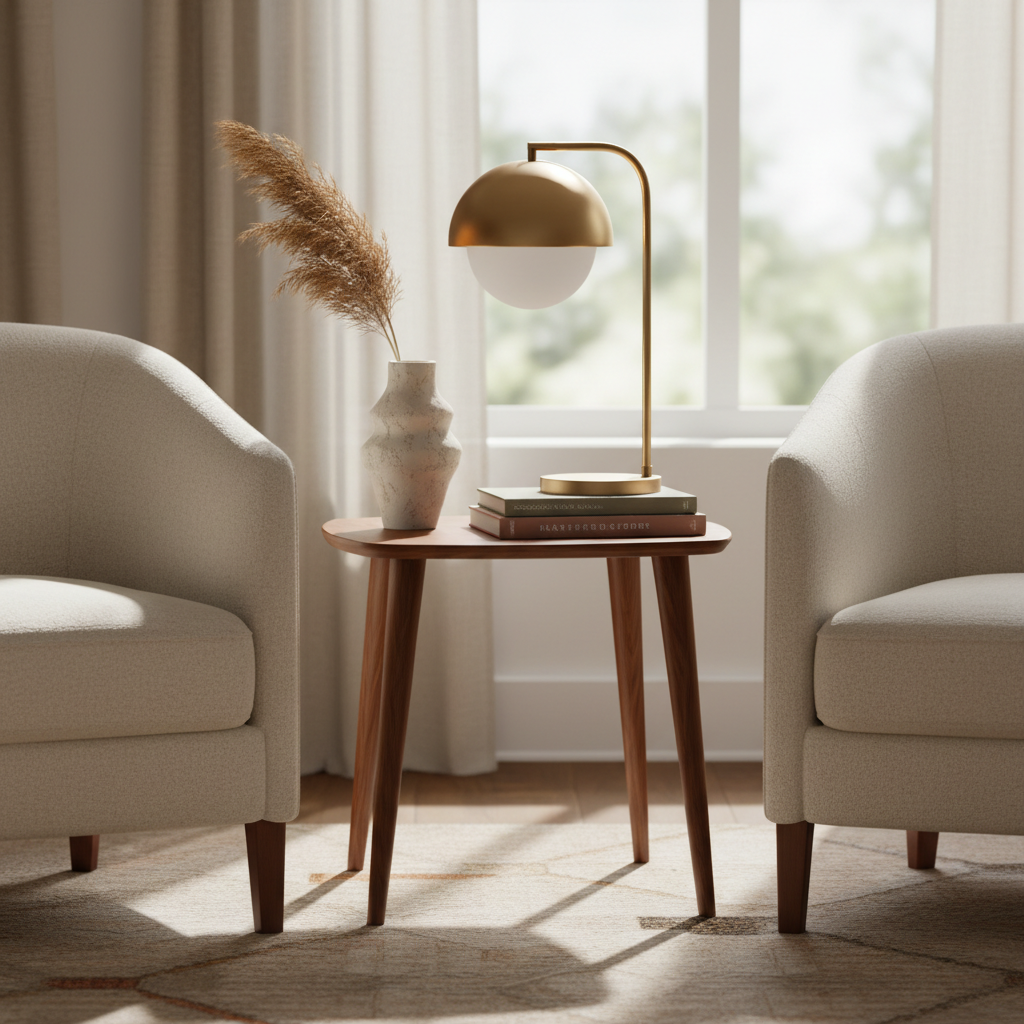
This guide gives you a few reliable styling formulas, a quick self-check to diagnose what’s “off”, and practical combinations that feel current for 2026 without turning your space into a time capsule. You’ll also get a small checklist you can use every time you refresh the look.
What makes a side table feel “mid-century modern” (and not random)
Mid-century modern style usually reads as intentional when the shapes and materials have a clear point of view, think warm wood, simple silhouettes, and a mix of organic and geometric forms. It’s less about owning vintage pieces, more about editing.
According to the Smithsonian Magazine, midcentury design is closely associated with clean lines and functional forms, which is why a side table vignette gets better when you remove the “extra” items and keep the most useful ones visible.
- Shape language: one strong curve or one strong angle can carry the whole vignette.
- Material story: walnut or teak tones, ceramics, glass, and a little metal read authentic.
- Negative space: leaving open surface area is part of the look, not a failure to decorate.
Quick self-check: why your side table styling feels off
Before buying anything, look at the table for 30 seconds and answer these honestly. Most side table “problems” show up here.
- All items are the same height, so nothing leads the eye.
- Too many small pieces, which creates visual noise instead of a focal point.
- No anchor item like a lamp, tall vase, or sculpture.
- Color temperature mismatch, for example cool gray decor on a warm walnut table.
- The table has no job, you need a drink spot, remote spot, charging spot, and decor spot, all at once.
If you checked more than two, don’t “add”, switch to a formula below and rebuild with fewer pieces. That’s the fastest path to clean mid-century results.
3 reliable styling formulas (use one and stop overthinking)
When people search mid century modern side table decor ideas, they often want something they can copy, not a lecture on aesthetics. Here are three setups that work in most U.S. living rooms and bedrooms.
Formula A: Lamp + stack + small sculptural object
This is the classic, and it still looks good in 2026 because it’s functional.
- One table lamp with a simple shade, dome, drum, or cone
- 2–3 books (or one thick book) to create a stable platform
- One small object with a clear silhouette, ceramic, stone, or brass
Formula B: Tall vessel + greenery + catchall tray
If you hate clutter, a tray is your best friend, it makes “small stuff” look curated.
- Tall vase (roughly 1.5–2x the height of other items)
- Simple greenery, one stem can be enough
- Low tray for keys, coasters, or matches
Formula C: Statement object + negative space
For smaller tables, the most modern move is leaving space empty on purpose.
- One statement piece: vintage-style clock, abstract sculpture, or bold ceramic
- Optional: one coaster or small dish
- Nothing else
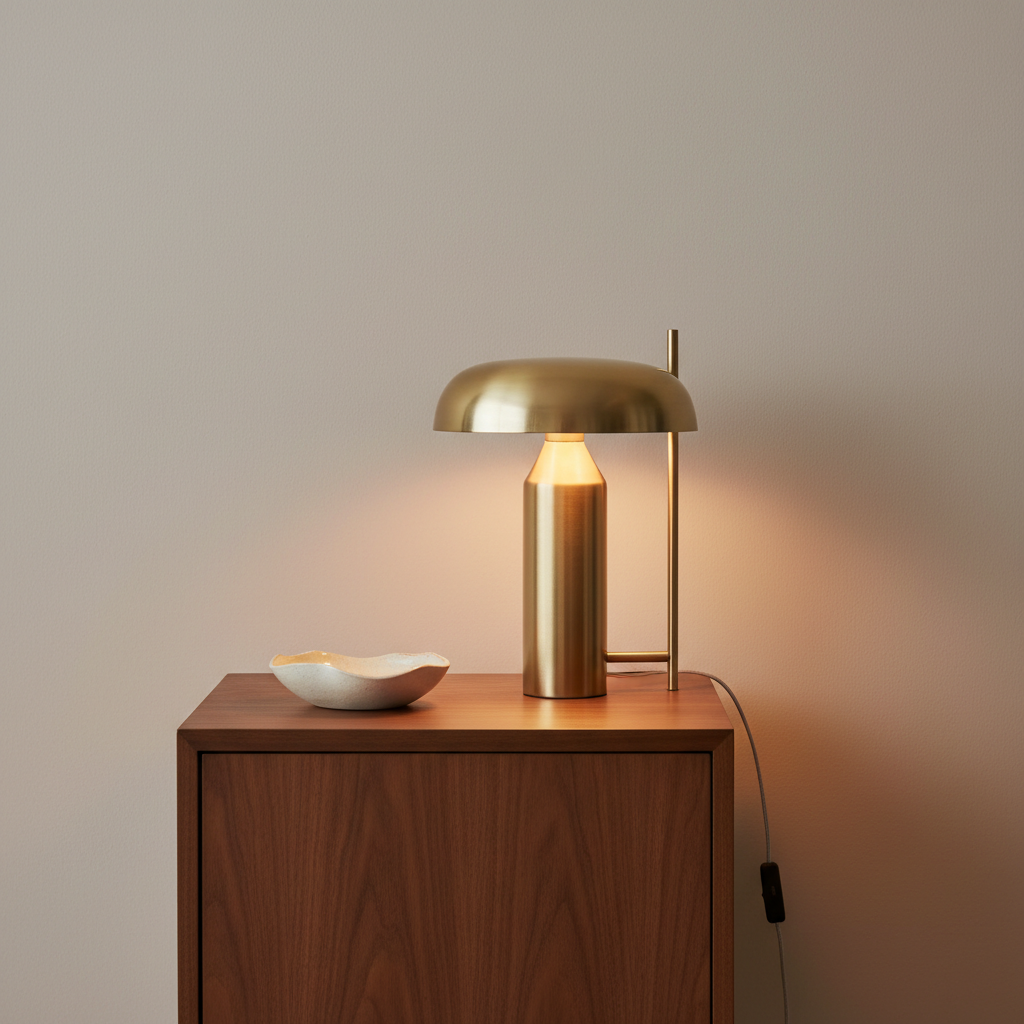
2026-friendly accent picks that still feel mid-century
Trends shift, but the mid-century backbone stays stable. The “2026” angle usually shows up in finishes, color accents, and softer, more tactile materials.
- Warm metals over shiny chrome: brushed brass, aged bronze, blackened steel.
- Organic modern ceramics: matte glazes, uneven rims, hand-thrown look.
- Muted color pops: olive, ink blue, clay, ochre, rather than neon.
- Textural smalls: boucle coasters, woven trays, ribbed glass.
- Wireless-friendly function: a discreet charging pad or cable box, kept out of sight.
One caution: if you add too many “trend” pieces at once, the table starts looking like a store shelf. Pick one trend cue, then keep the rest classic.
Scale and placement: the part everyone underestimates
Even the prettiest objects won’t save a setup if the proportions fight each other. Use these quick rules and you’ll fix 80% of awkward vignettes.
- Lamp height: many spaces look right when the lamp shade bottom sits near eye level from the seat, but sofa height and table height vary, so adjust by feel.
- Keep a “landing zone”: leave a clear 6–10 inch area for a mug or phone when possible.
- Triangle heights: aim for three visible height levels, tall, medium, low.
- Odd numbers help: 3 items usually reads more natural than 2 or 4.
Say it out loud: your side table is allowed to be useful. In fact, functional styling is part of why mid century modern side table decor ideas tend to look calmer than more maximal setups.
Room-by-room setups (living room vs bedroom vs entry)
Same table, different job. If you style it like a showroom without respecting the room, it won’t last two days.
Living room side table
- Anchor with a lamp or a tall vase
- Add coasters and one tray for remote and lighter
- Keep one “personal” item max, like a framed photo or small collectible
Bedroom nightstand
- Prioritize lighting and a small dish for rings
- Add one calming object, a book, small art tile, or ceramic
- If you use fragrance, place it on a tray and keep it away from heat sources, and if sensitivity is a concern, consider asking a professional about indoor air choices
Entry or hallway table (small accent table)
- Use a bowl or tray as the “drop zone”
- Add a mirror or art above to give the vignette a reason to exist
- One tall piece only, otherwise it becomes a snag point
A simple shopping-and-styling cheat sheet (with table)
If you prefer rules you can reuse, this table helps you pick items that cooperate, not compete. It also keeps your purchases tight, which is usually the point.
| Goal | Best anchor | Add-ons that look mid-century | Avoid if you want it clean |
|---|---|---|---|
| Cozy reading corner | Dome/drum lamp | 2 books + ceramic object | Too many candles, tiny trinkets |
| Airy, minimal look | Statement sculpture | One coaster + negative space | Busy patterned decor |
| More function (daily use) | Lamp or tall vase | Tray + coasters + one small bowl | Loose cables on top |
| Color accent moment | Neutral anchor item | One bold ceramic in olive/clay | Multiple competing bright colors |
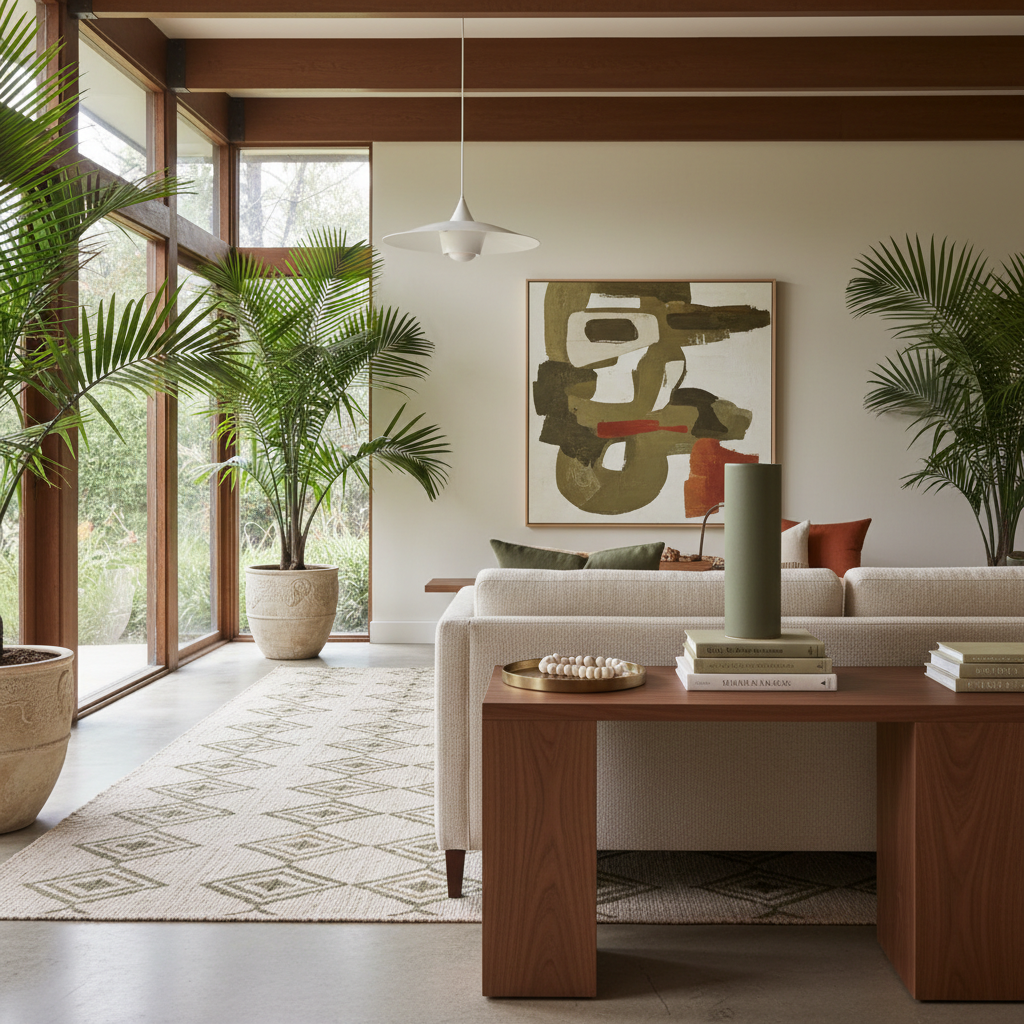
Common mistakes (and quick fixes that actually stick)
- Mistake: Filling every inch. Fix: Remove one item, then remove another. Stop when it feels “done.”
- Mistake: Only decor, no utility. Fix: Add a tray or coaster and decide where the phone goes.
- Mistake: Everything matches too perfectly. Fix: Mix one contrasting material, like ribbed glass on wood.
- Mistake: Tiny art objects scattered. Fix: Group small items on a dish so they read as one shape.
Key takeaways: pick one anchor, build three heights, keep a landing zone, and let negative space do some work. That’s the backbone behind most good mid century modern side table decor ideas, even the ones that look “effortless.”
Wrap-up: a 10-minute refresh plan you can do today
Start by clearing the table completely, then bring back only one anchor item, a lamp or tall vessel. Add one practical piece, then one sculptural piece, and stop before the surface feels crowded. If it still looks off, it’s almost always scale, swap in a taller item or consolidate small objects into a tray.
If you want your table to look current for 2026 without losing the mid-century vibe, aim for classic shapes, warm materials, and one subtle trend accent. Then live with it for a week before changing anything, real homes need systems, not constant restyling.
FAQ
How do I style a mid-century modern side table without it looking cluttered?
Limit yourself to 3–5 visible items, use one anchor (lamp or tall vase), and keep a clear landing zone. A tray helps small necessities feel intentional instead of scattered.
What colors work best for mid-century side table decor in 2026?
Many homes are leaning into warm neutrals plus muted accents like olive, clay, and deep blue. If your table is walnut-toned, warm accents usually blend more naturally than icy grays.
Do I need vintage pieces for an authentic mid-century look?
No. A few pieces with the right silhouette and materials often read “mid-century” even if they’re new. If you do buy vintage, check stability and finishes so it works for daily use.
What size lamp looks right on a side table next to a sofa?
It varies by sofa height and table height, but you generally want enough height to create a clear focal point without glaring in your eyes while seated. If it feels squat, go taller or add books under a smaller lamp.
How do I mix mid-century modern with a more contemporary sofa?
Use the table decor to bridge the two, mid-century shapes (ceramic, brass, walnut) paired with one contemporary texture like ribbed glass or a minimal black tray often keeps it cohesive.
What should I put on a nightstand if I like mid-century modern but need function?
Try a lamp, a small dish for jewelry, and one book, then hide the rest in a drawer or basket. If you need charging, route cables behind the table or use a discreet organizer to avoid visual noise.
How often should I change side table decor?
If it’s a high-use table, seasonal tweaks or occasional swaps work better than constant changes. A stable “base” (lamp + tray) with one rotating accent keeps it fresh without resetting every week.
If you’re styling a space and want the mid-century look without spending hours rearranging, it helps to pick one formula, choose an anchor item you genuinely use, then build the rest around scale and restraint, it’s the simplest way to make the decor feel intentional.