
How to remove ink stains from fabric couch is mostly about two things: stopping the ink from spreading, then using the right solvent for the type of ink and fabric. If you move too fast with the wrong product, you usually end up with a bigger, paler ring that’s harder to fix than the original dot.
Ink loves upholstery because fabric wicks liquid sideways through the fibers and into the cushion layers. That’s why the “quick wipe” instinct often backfires, especially on lighter couches or textured weaves where ink hides in the grain.
This guide walks you through a realistic, do-it-at-home process: quick triage, a fabric-safe test, then a few proven options (dish soap, rubbing alcohol, and oxygen bleach) with clear stop points. You’ll also get a simple table to choose a method based on ink type and couch material.
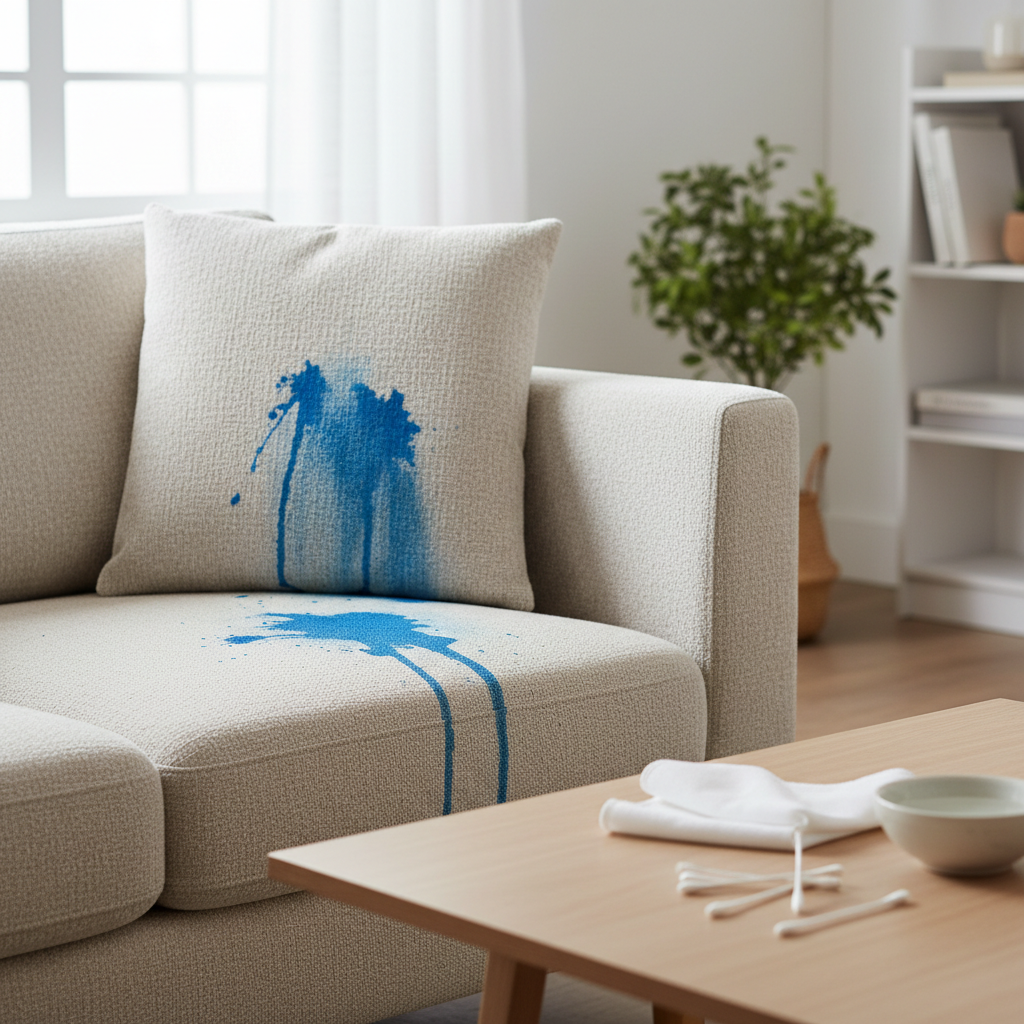
Before you start: what makes ink stains tricky on couches
Ink isn’t one ingredient. Ballpoint ink often contains oils and dyes, gel ink tends to be more pigment-heavy, and permanent marker is usually solvent-based. Different chemistry, different removal odds.
Fabric couches also have “layers,” the upholstery cover, batting, foam, and sometimes a backing cloth. If ink penetrates deep, the top may look clean while the cushion core keeps bleeding back up later.
According to the American Cleaning Institute, the safer approach for many stains is to blot (not rub) and work from the outside edge toward the center to limit spread.
Fast triage (the first 2 minutes)
Do these steps before choosing a cleaner. They sound basic, but this is where many people accidentally set the stain.
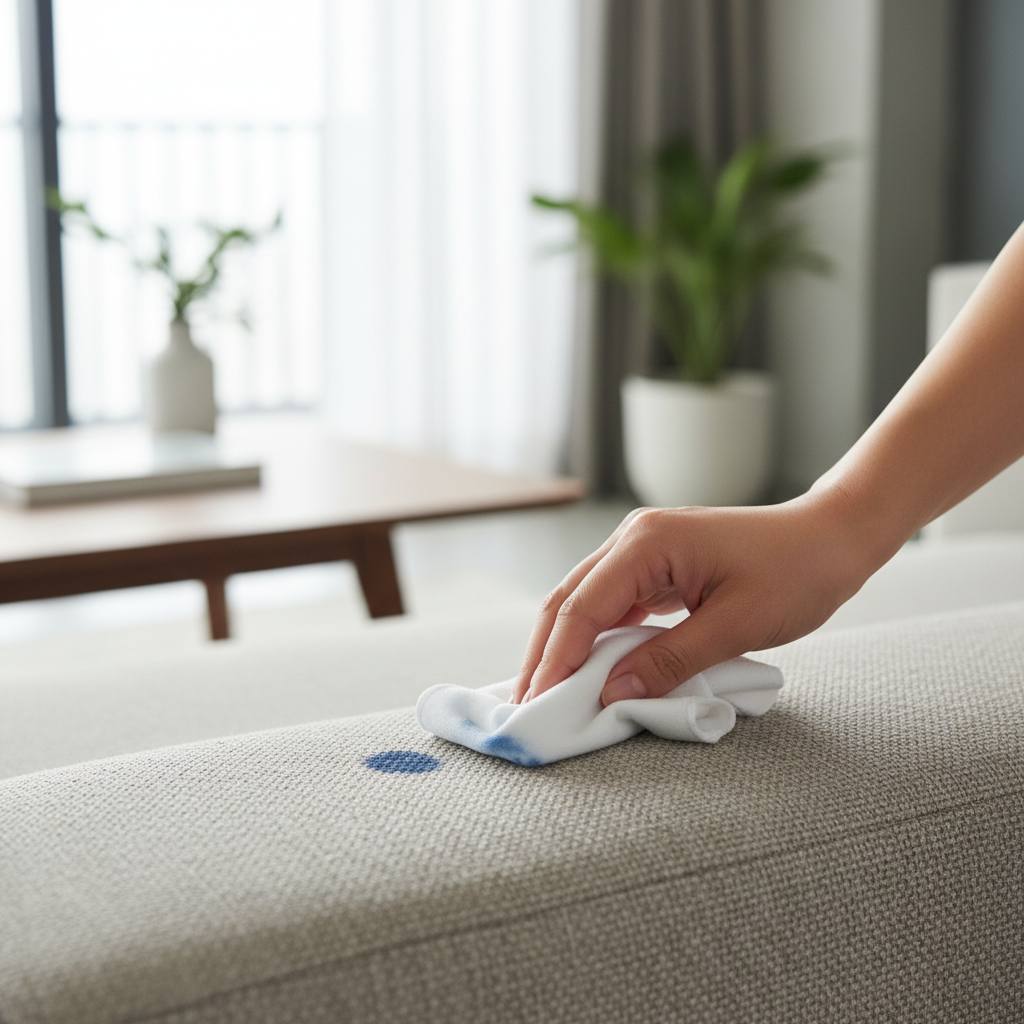
- Blot, don’t rub: Use a clean white cloth or paper towel, press straight down, lift, repeat.
- Remove loose ink transfer: If it’s fresh, a dry cotton swab can pick up surface ink before liquids get involved.
- Check the care code: Look under cushions for W, S, WS, or X. It’s not perfect, but it’s a useful guardrail.
- Ventilate the area: If you’ll use alcohol or solvent-based products, open a window.
Important: Avoid heat (hair dryer, steamer) at this point. Heat can make some inks harder to lift and may lock dye into fibers.
Choose the right method: quick decision table
If you’re unsure what kind of ink it is, start with the mildest option and step up. The goal is to remove ink while keeping dyes in your couch fabric stable.
| Situation | What usually works | What to avoid |
|---|---|---|
| Fresh ballpoint ink on durable fabric (cotton blend, tight weave) | Rubbing alcohol dab method, then mild soap rinse | Heavy soaking, scrubbing |
| Gel ink or felt-tip on light fabric | Alcohol in small amounts, multiple passes, patience | Bleach-chlorine products, heat |
| Permanent marker | Alcohol, sometimes specialized ink remover (spot test) | Random “multi-purpose” solvents without testing |
| Delicate upholstery (linen, rayon blends, vintage fabrics) | Very light alcohol dabbing or professional cleaning | Over-wetting, aggressive stain sprays |
| Unknown fabric code or “X” code | Dry blot only, then consult a pro | Any water/solvent application |
Step-by-step: how to remove ink stains from fabric couch (most common methods)
Method A: dish soap + water (best first try for mild transfer)
This is the low-risk option when the stain is light or you’re unsure how sensitive the dye is.
- Mix 1–2 drops of clear dish soap into a cup of cool water.
- Dampen a white cloth (don’t soak), then blot the ink from the outside edge inward.
- Switch to a fresh section of cloth often so you don’t re-deposit ink.
- Rinse by blotting with a cloth dampened with plain cool water.
- Blot dry with a towel and let air-dry.
If the ink barely moves after a few careful passes, don’t grind on it. That’s your cue to step up to alcohol.
Method B: 70% isopropyl alcohol (the workhorse for many inks)
For many couches, this is the practical answer for how to remove ink stains from fabric couch without turning a dot into a cloudy ring. The key is controlled dabbing, not flooding.
- Spot test first: Apply a tiny amount of alcohol on a hidden seam, blot with white cloth, check for color transfer.
- Place a dry towel under the stained area if possible (to absorb push-through).
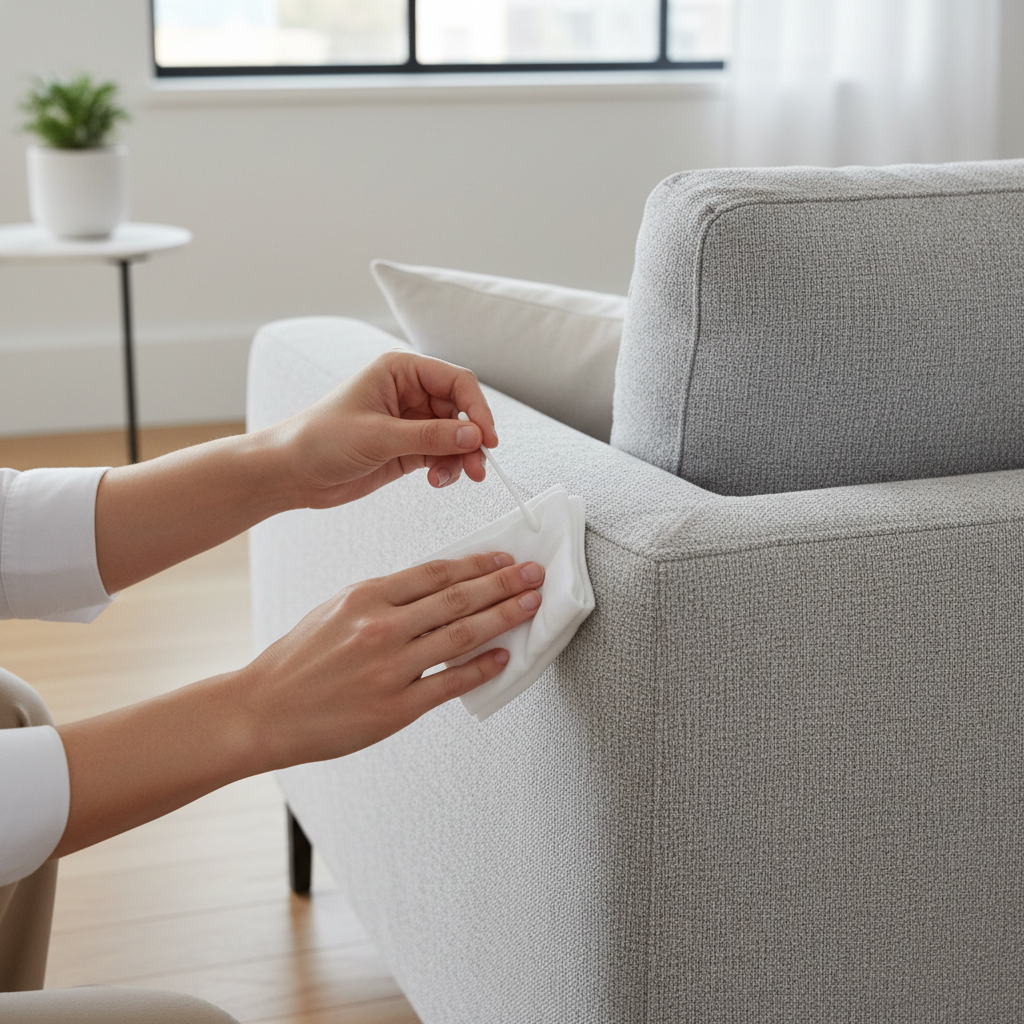
- Put a small amount of 70% isopropyl alcohol on a cotton ball or swab.
- Dab the stain lightly, let it sit 10–20 seconds, then blot with a clean cloth.
- Repeat in short cycles until transfer slows.
- Finish with a light soap-and-water blot, then plain water blot to reduce residue.
Safety note: Alcohol is flammable and can irritate skin, use ventilation and avoid open flames. If anyone in the home has sensitivities, it may be worth asking a professional cleaner about options.
Method C: oxygen bleach for lingering shadow (only when fabric allows)
If you’ve removed most ink but a gray-blue shadow remains, oxygen bleach (not chlorine bleach) sometimes helps on colorfast fabrics.
- Check the upholstery label and do a spot test in a hidden area.
- Mix oxygen bleach per product directions in cool water.
- Dampen a cloth and blot the affected area, keep the application tight.
- Blot with plain water afterward to remove cleaner residue.
According to the U.S. Environmental Protection Agency, you should always follow label directions for cleaning products and ensure good ventilation, especially when using chemical cleaners indoors.
Self-check: are you about to make it worse?
If you answer “yes” to any of these, pause and adjust before continuing. This short checklist saves couches.
- You’re rubbing back and forth because “it’s not moving.”
- You’re using colored towels or printed paper towels that can bleed dye.
- You’re pouring cleaner directly onto the couch.
- You skipped the spot test because the stain feels urgent.
- The stain area is getting larger, even if lighter.
When ink starts feathering outward, that’s usually over-wetting, switch to smaller amounts and more frequent blotting.
Common mistakes that slow ink removal
- Using hairspray as a “hack”: Some hairsprays used to contain more alcohol, but formulas vary and additives can leave sticky residue.
- Jumping to chlorine bleach: It can discolor upholstery fast and won’t necessarily fix ink.
- Scrubbing with a brush: On many fabrics, that frays fibers and makes a permanent fuzzy spot.
- Ignoring cushion seams: Ink loves to migrate into piping and seams, check edges and treat them gently.
If you’re trying how to remove ink stains from fabric couch and the stain keeps “coming back” after drying, it often means ink reached deeper layers. At that point, surface cleaning alone may not be enough.
When it’s smarter to call a professional
There’s no shame in handing this off. Upholstery is expensive, and some stains are time sinks.
- The couch has an “X” code or you can’t verify what the fabric is.
- It’s a large stain, or it soaked through into cushion foam.
- The fabric is vintage, delicate, or clearly not colorfast in spot testing.
- You smell strong solvent odors lingering indoors and want a safer setup.
Professional upholstery cleaners often have extraction tools that remove dissolved ink and cleaner residue more effectively than repeated at-home blotting.
Key takeaways (so you can act fast next time)
- Blot early, don’t rub, and keep liquids controlled.
- Match the method to ink type, alcohol dabbing is a common middle step.
- Spot testing is non-negotiable if you want to protect color and texture.
- If ink penetrates cushion layers, consider professional extraction.
If you take one action today, make it this: set up a small “stain kit” with white cloths, cotton swabs, and 70% isopropyl alcohol, then you’re not improvising when ink happens.
FAQ
How do I know if rubbing alcohol will discolor my couch?
You don’t know until you spot test on a hidden area and blot with a white cloth. If you see fabric dye transfer or the spot looks lighter after drying, stop and use a milder method or consult a pro.
What if the ink stain is old and already dry?
Old ink usually takes more cycles. Try controlled alcohol dabbing, then a mild soap rinse, and let it fully dry between rounds. If the outline remains but won’t budge, oxygen bleach may help on colorfast fabric.
Can I use hand sanitizer to remove ink from a fabric couch?
Sometimes, because many sanitizers contain alcohol, but gels often include thickeners and fragrances that can leave residue. If that’s all you have, use a tiny amount, blot thoroughly, then rinse with damp cloth.
How to remove ink stains from fabric couch if the label says “S” only?
An “S” code usually indicates solvent-based cleaning only. Alcohol may still be acceptable in small amounts, but it’s a higher-risk situation, spot test carefully and avoid water-heavy steps.
Will a steam cleaner remove ink stains from upholstery?
Steam can spread ink and may set some dyes, so it’s rarely the first move. If you plan to use steam, it’s often better after most ink is removed and the fabric is known to be stable.
Why did my stain turn into a larger light ring?
That’s commonly from over-wetting, the cleaner and dissolved ink travel outward, then dry at the edge. Tighten your application area, use less liquid, and blot more frequently with clean cloth sections.
Can I use acetone or nail polish remover on couch ink stains?
It can dissolve some inks, but it can also damage certain fibers and strip dye, especially on synthetic blends. Many situations call for professional guidance before using acetone on upholstery.
If you’re dealing with repeated stains, a delicate fabric, or you want a more predictable routine than trial-and-error, a dedicated upholstery ink remover kit and a clear spot-test process can save time and reduce risk.