
Mudroom storage ideas for families work best when they reduce the two things that cause most entryway chaos: decision fatigue and pile-up surfaces. If everyone has a clear “landing spot” for shoes, coats, backpacks, and sports gear, mornings get faster and your hallway stops looking like a donation bin.
Most families don’t need a bigger mudroom, they need a more obvious system. The trick is planning around real life, wet boots, school papers, stroller parts, and the fact that kids hang nothing unless it’s easy.
This guide breaks down what usually goes wrong, how to assess your space quickly, and practical setups you can copy whether you have a true mudroom, a tiny entry nook, or a garage-to-kitchen pass-through.
Why mudrooms get messy (and what to fix first)
In most homes, the mudroom fails for predictable reasons, not because anyone lacks “organization skills.” When you know the patterns, the fixes feel straightforward.
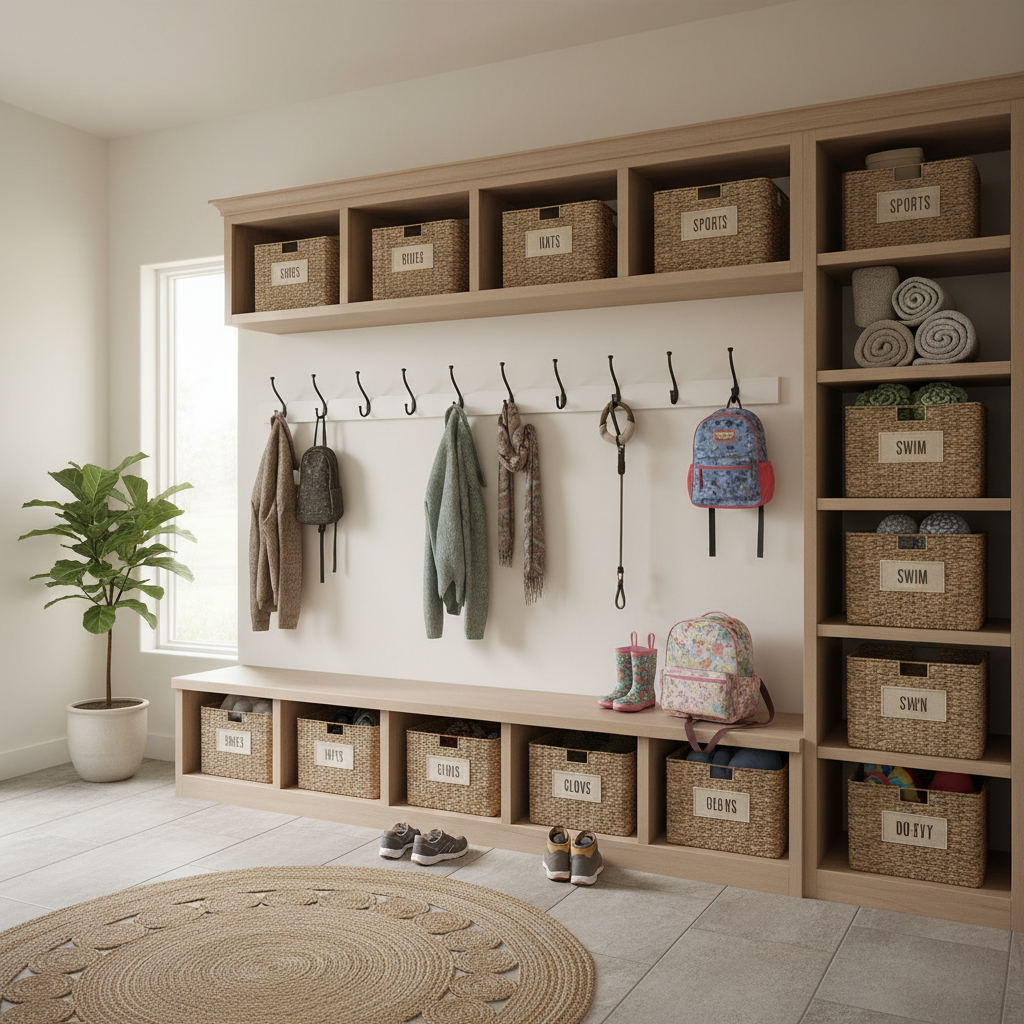
Common causes you can usually spot in five minutes:
- No “one-step” drop zone, so items land on the closest flat surface.
- Hooks are too high or too few, kids can’t reach them, adults run out of space.
- Shoes have no capacity limit, every pair migrates to the floor.
- Paper has nowhere to live, school flyers and mail become a permanent layer.
- Wet + dry mix together, muddy cleats touch backpacks, coats touch damp hats.
One note on safety: if your current setup blocks a walkway or creates a tripping hazard, address that before buying anything. According to CPSC (U.S. Consumer Product Safety Commission), preventing falls often comes down to keeping pathways clear and reducing clutter where people walk.
A quick self-check: what kind of family mudroom are you running?
Before you shop, classify your situation. Most “failed” entryways are missing one core element, not everything at once.
Use this checklist and mark what’s true:
- We regularly have more than 6–10 pairs of shoes in the drop zone.
- Backpacks land on the floor because there’s no obvious hook or cubby.
- Coats pile because hooks fill up by midweek.
- Sports gear has no home, so it lives in the way.
- Wet items have nowhere to drip-dry.
- We lose track of keys, sunglasses, dog leash, or lunch bags.
If you checked 3+, you don’t need “more storage,” you need zones with capacity and rules, especially for shoes and bags. That’s where most mudroom storage ideas for families actually pay off.
Build the zones that keep mornings moving
A family-friendly mudroom has a few repeatable zones. You can create them with built-ins, a wall system, or a mix of budget pieces, the labels matter less than the habit.
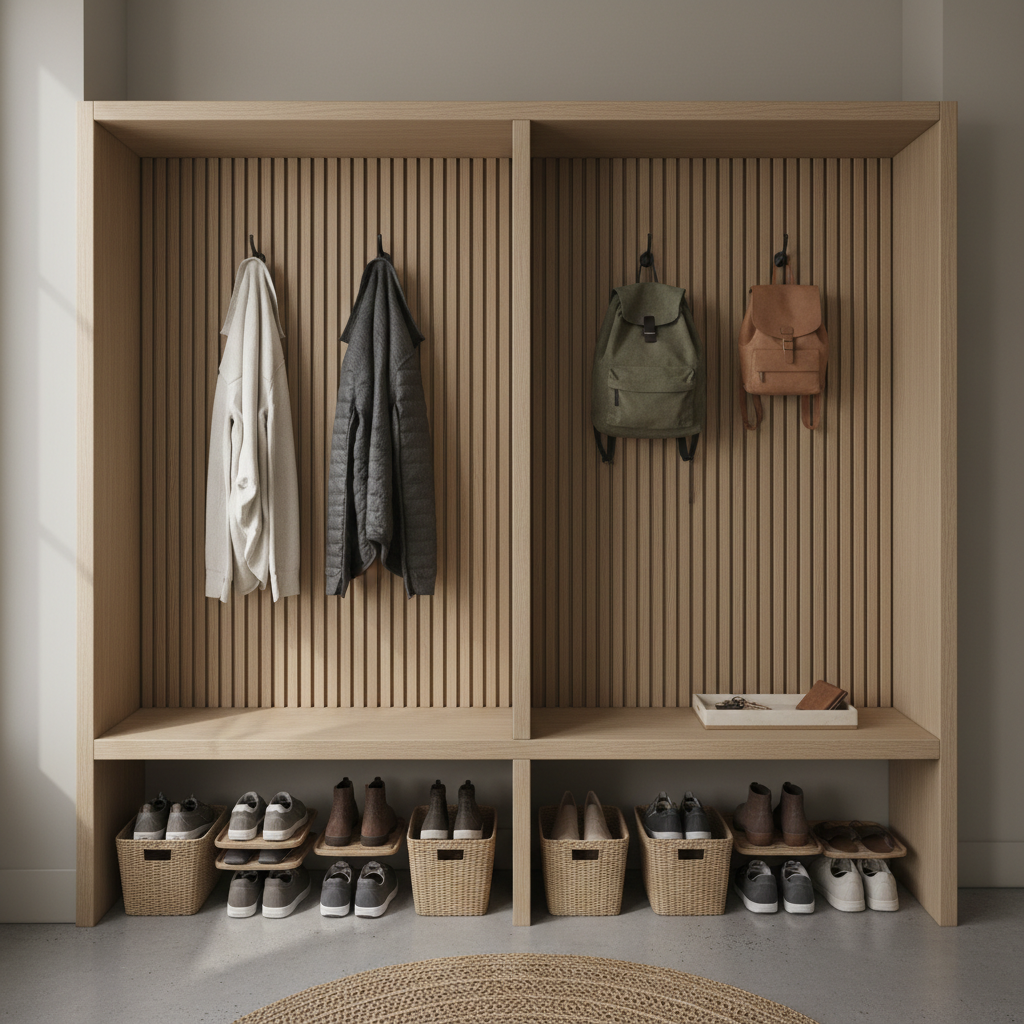
Shoe zone (the “capacity limiter”)
Shoes are the clutter multiplier. If you only fix one thing, fix this. Aim for a defined capacity that matches your real routine, for many families that means one daily pair per person plus a couple extras.
- Best for small spaces: a vertical shoe cabinet or slim rack.
- Best for wet climates: boot trays plus a mat that can handle water.
- Best for little kids: low open cubbies, not a lidded bin.
Hang zone (at two heights)
Hooks beat hangers for families. Put a row at adult height and another at kid height, it looks less “perfect,” but it actually gets used.
- Plan 2 hooks per person if you can, coat + backpack often need separate hooks.
- Add one “overflow” section for guests or bulky winter gear.
Drop zone (keys, papers, little chaos)
This is where you prevent the kitchen counter takeover. A shallow tray for small items plus one paper solution is usually enough.
- Keys/leash: small wall hooks or a tray on a shelf.
- School papers: file slots, a wall pocket, or one inbox per child.
- Permission slips: one clip board or magnetic spot so it stays visible.
Pick storage that fits your family’s traffic pattern
Not every mudroom sees the same kind of “traffic.” A family with toddlers needs different solutions than a family juggling band instruments and travel teams. Below is a simple planning table you can adapt.
| Family situation | What to prioritize | Storage that usually works |
|---|---|---|
| Toddlers + strollers | Clear floor, quick drop | Wall hooks, stroller parking spot, closed bin for small toys |
| Elementary school kids | Backpacks + papers | Low hooks, labeled cubbies, wall file pockets |
| Teens + sports | Gear separation, odor control | Ventilated baskets, tall locker-style cubbies, dedicated hamper |
| Dog household | Leash + towels + paw cleanup | Hook rail, lidded basket for wipes/towels, washable mat |
| Snow/rain climate | Wet management | Boot trays, durable rug, drip-dry hooks, airflow space |
If your entry is a hallway or corner, the best mudroom storage ideas for families often look like “vertical organization,” a wall-mounted hook rail, a narrow bench, and one tall cabinet rather than wide furniture.
Step-by-step setup you can do in a weekend
Many families get stuck because they try to reorganize everything at once. This flow keeps it manageable and avoids buying storage that doesn’t match your stuff.
1) Reset the footprint
Clear the floor and decide the walking path first. If you can’t walk through easily with a backpack on, the layout will fail on Monday morning.
2) Decide your “daily load”
Pick what lives in the mudroom every day: daily shoes, current-season coats, backpacks, and one sports set per child. Everything else goes to closets, garage shelves, or a bin you rotate weekly.
3) Install the high-use pieces
- Hooks: mount into studs when possible, if you’re unsure, consult a handyman.
- Bench: choose a depth that doesn’t steal walkway, many families do well with a narrower bench plus baskets below.
- Lighting: brighter entryways feel cleaner and reduce “I didn’t see it” clutter.
4) Label lightly, not aggressively
Labels help kids, but too many labels turn into visual noise. Start with family names on cubbies and one label for “returns” or “library.” Adjust after a week.
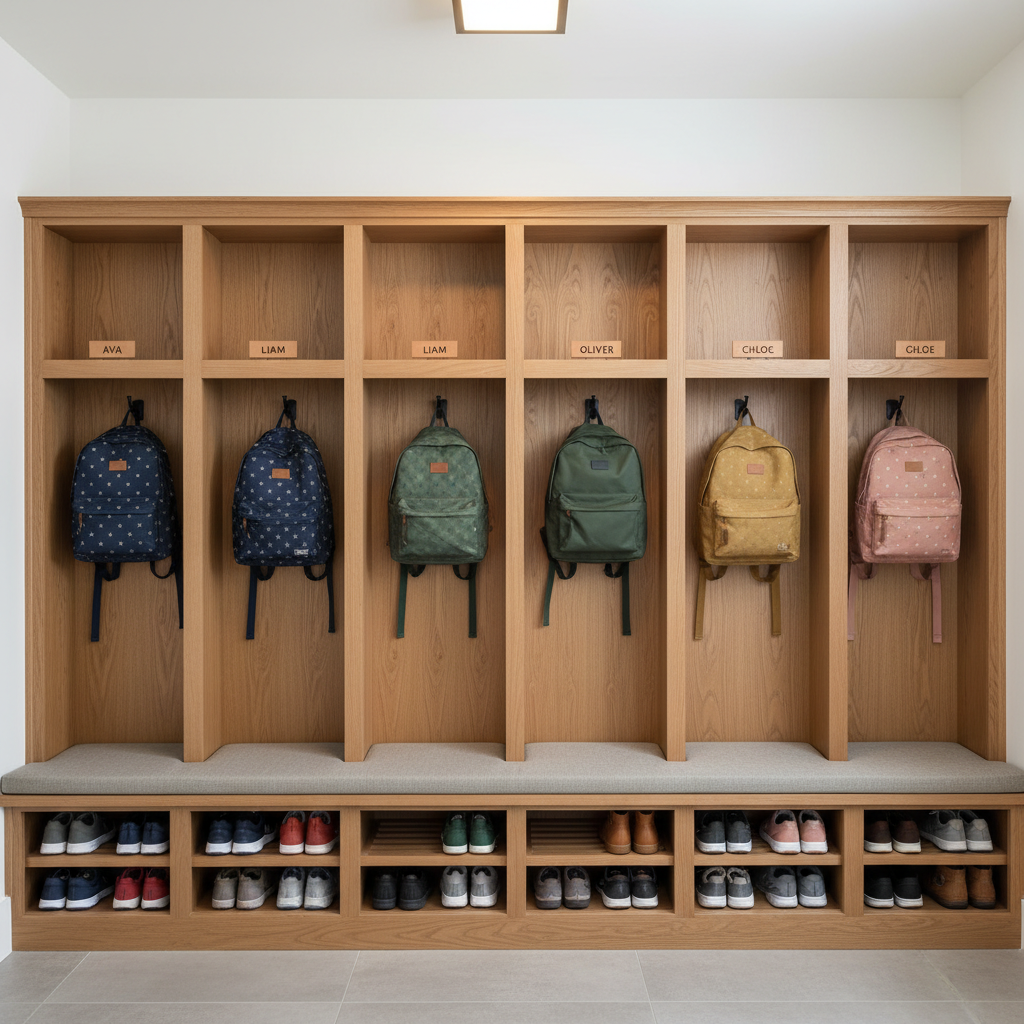
Key takeaway: you’re building habits, not a Pinterest set. If the system needs “extra steps,” kids will skip it.
Mistakes that look good but don’t hold up
Some popular ideas photograph well and then collapse under real family use. If your mudroom keeps reverting to chaos, one of these is often the reason.
- All closed storage: it hides clutter until it explodes, you need at least one open zone for daily items.
- One hook per person: coats and bags compete, the floor loses.
- Deep baskets for everything: small items disappear, then you buy duplicates.
- No wet plan: without trays or drip space, moisture spreads and smells linger.
- “Someday sorting” bins: they become permanent residents.
Also, avoid overloading wall-mounted units beyond what the hardware can safely handle. If you have heavy winter coats or sports bags, it may be worth asking a contractor or qualified installer about anchors and stud placement.
When built-ins, designers, or pros make sense
Sometimes the right move is getting help, not forcing another DIY tweak. Consider calling a pro if:
- Your entryway has no standard wall space because of doors, windows, or HVAC returns.
- You want built-ins that must be secured safely and carry weight daily.
- Moisture problems keep returning, like persistent damp smell or visible water damage, which may need a contractor to assess.
According to NIOSH (National Institute for Occupational Safety and Health), reducing slip and fall risk often starts with housekeeping and maintaining clear walking surfaces, which is a practical reminder that mudroom organization is partly a safety project.
Conclusion: keep it simple, then make it prettier
The most reliable mudroom storage ideas for families are the ones that match how your household enters the home on a busy day, shoes off fast, bag down, keys somewhere predictable, wet gear separated. Start with hooks, shoe capacity, and a drop zone, live with it for a week, then refine. If you want one action today, measure your wall, count your daily shoes, and choose a setup that caps the clutter instead of trying to hide it.
FAQ
What are the best mudroom storage ideas for families with little kids?
Go low and obvious: kid-height hooks, open cubbies, and a bench they can actually sit on. If they can’t reach it, they won’t use it, even if it looks great.
How many hooks does a family mudroom need?
Many households do better with two per person, one for outerwear and one for backpacks or daily bags. If space is tight, add a small overflow rail for guests and bulky items.
How do I organize a mudroom when I don’t have a mudroom?
Treat a wall near the main entrance like a mini system: a hook rail, a slim shoe cabinet, and a small tray shelf. The goal is still the same, create a one-step landing spot.
Should we use baskets or drawers for a family entryway?
Baskets are faster for daily grab-and-go gear, drawers are better for small items that get lost. A mix usually works: open baskets low, one small drawer or lidded box for keys and batteries.
How do you keep mudroom shoes from taking over the floor?
Set a capacity limit and stick to it, like one daily pair per person in the active zone. Everything else moves to a closet or a labeled overflow bin you rotate seasonally.
What’s a good mudroom setup for sports gear and smelly items?
Separate gear from coats and backpacks, add a ventilated basket or open bin, and include a small hamper for washable items. If odor persists, more airflow usually beats more fragrance.
Is it worth investing in built-in mudroom cabinets?
It can be, especially if your family uses the space hard every day and you need vertical storage. But many families get 80% of the benefit from a solid hook system, bench, and smart shoe storage before committing to custom work.
If you’re juggling backpacks, sports schedules, and wet-weather gear, a simple plan and a few targeted upgrades can make the entryway feel calmer without a full remodel, and if you’d rather not guess, sketch your layout and list your “daily items” first, then build the storage around that reality.