
Industrial style storage bins for garage tools solve a very specific garage problem: tools multiply, projects overlap, and suddenly the “quick cleanup” turns into stacks of mixed hardware, cords, and half-finished kits.
If you want a garage that works like a shop, bins are the simplest upgrade that actually changes your day-to-day, you spend less time hunting for the one socket you swear you own, and more time finishing the job.
That said, not every bin marketed as “industrial” holds up to a real garage. Some crack in cold weather, some sag when you load them with steel parts, and some look organized until you try to pull one out from a packed shelf.
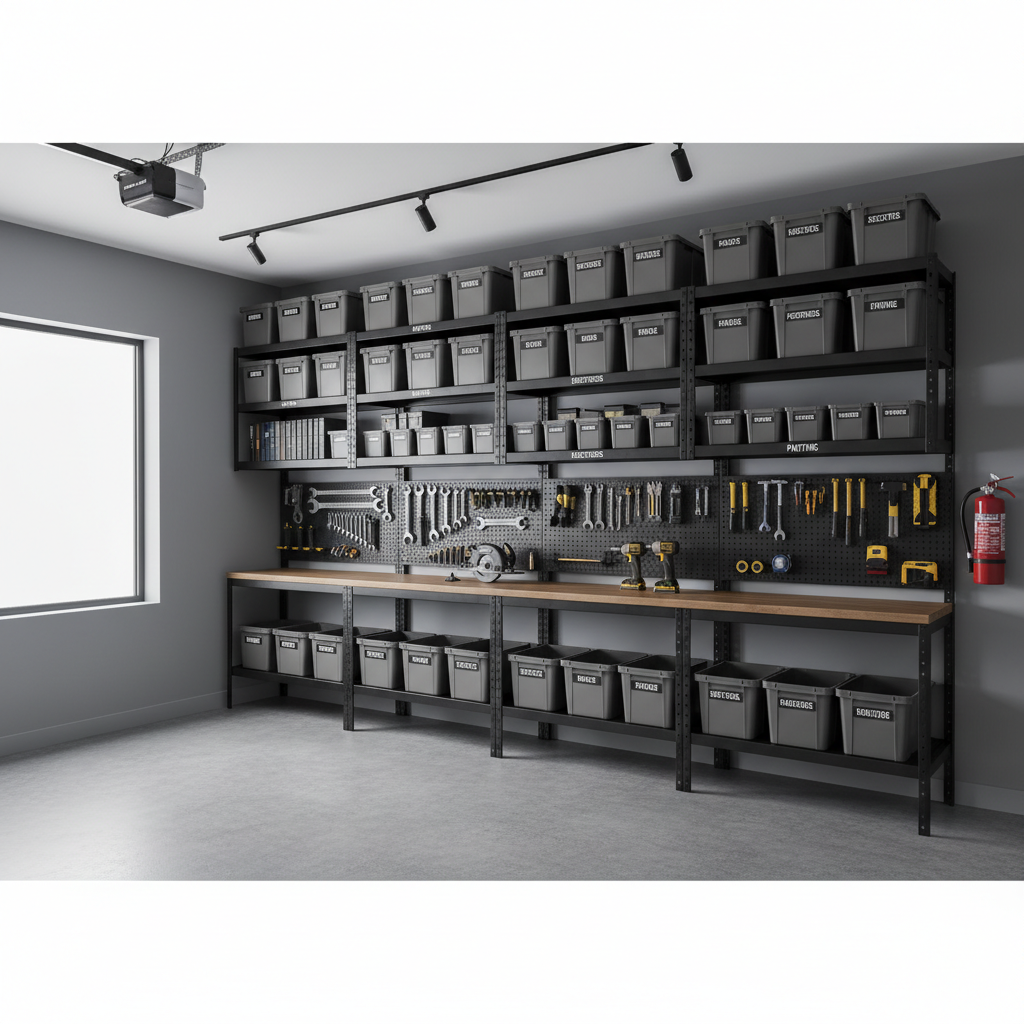
This guide helps you choose bin styles that match how garages really get used, then set up a layout you can keep up with, even when you are mid-project.
What “industrial style” really means in a garage
In storage, “industrial style” usually points to two things: tougher materials and a design meant for frequent handling. In a garage, that translates into bins that can take drops, temperature swings, and awkward loads like drill bits, angle grinder discs, and bags of fasteners.
Look for practical signals rather than marketing words. A thick rim, reinforced base, consistent wall thickness, and a shape that nests or stacks without binding matter more than a badge on the label.
- Impact resistance: useful if you pull bins down often or store metal parts.
- Cold and heat tolerance: important in many U.S. garages that are not climate-controlled.
- Grab points and open fronts: makes “one-handed access” real, not wishful thinking.
- Label surfaces: smooth spots for tape, cards, or label holders prevent constant re-labeling.
According to OSHA, good housekeeping reduces trip hazards and supports safer work areas, which is relevant when bins keep floors clear and small parts contained.
Common reasons garage tool storage fails (and how bins fix it)
Most garage organization breaks down for predictable reasons. It is rarely because people “lack discipline,” it is because the system demands too many steps when you are tired or in a hurry.
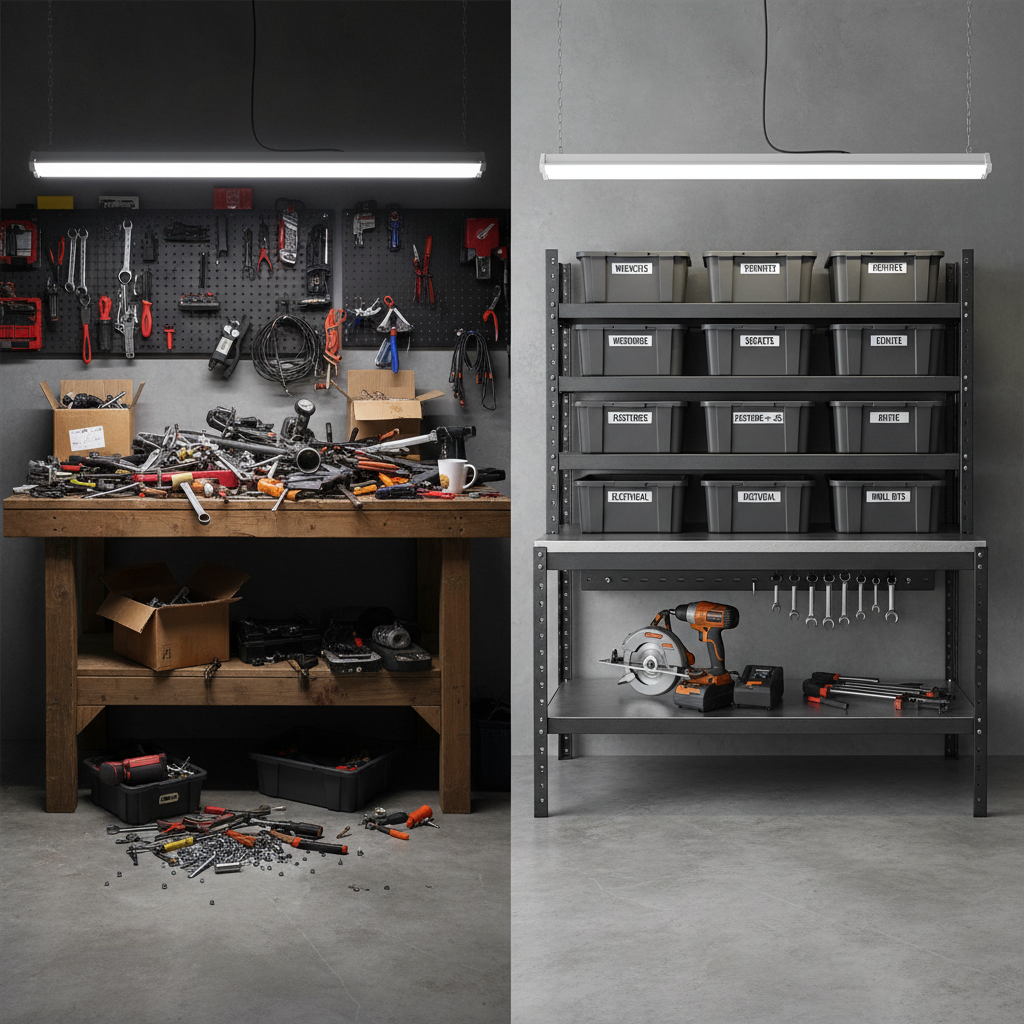
- No “home” for in-between items: screws, anchors, zip ties, and blades end up in random drawers. Small open-front bins make the “put it away” step quick.
- One bin becomes a junk bin: oversized totes invite dumping. Smaller, category-specific bins create friction against mixing.
- Access is annoying: when you must unstack three boxes, you stop using the system. Shelf bins or stackable bins with front access keep things reachable.
- Labels do not match reality: “Electrical” becomes 12 micro-categories. A bin system works best when labels match how you actually search.
Industrial style storage bins for garage tools work because they reduce decisions. You see the category, grab what you need, and the bin goes back without fuss.
Quick self-check: which bin setup fits your garage?
Before buying a stack of bins, answer these honestly. This prevents the classic mistake of buying one style that fits only one type of tool.
- Your main pain: lost small parts, crowded shelves, messy workbench, or floor clutter?
- Your storage mode: shelves, wall racks, rolling cabinet, or overhead racks?
- How you work: weekend projects, daily pro use, auto maintenance, woodworking, or mixed DIY?
- What you store most: fasteners, hand tools, power tools, consumables, or chemicals?
- Reach zones: can you comfortably access the top shelf, or do you need waist-to-eye level access?
If your answer includes “small parts everywhere” and “I buy duplicates because I can’t find things,” you likely need more small bins, clearer labeling, and fewer large totes.
Choosing the right bins: sizes, materials, and features
Here is the practical way to pick. Start with what you store, then choose the bin type that makes retrieval easy. Mixed garages often need two or three bin types, not one.
Bin types that work well for tools
- Open-front shelf bins: best for fasteners, sanding discs, drill bits, and glue sticks. Great on wire shelving.
- Stackable totes with lids: better for seasonal gear, bulky accessories, and kits you want to keep together.
- Clear latching bins: useful when you want visibility, but still need dust control.
- Parts organizers (compartment cases): ideal for mobile work, but slower for daily “grab one” access.
Materials: what matters in a garage
- Polypropylene (PP): commonly used for durable bins, often handles cold better than cheap brittle plastics, though quality varies.
- High-density polyethylene (HDPE): often used in heavier-duty containers, tends to feel less “glassy” and more impact-tolerant.
- Metal bins: strong and durable, but can dent and may not be ideal around moisture if finishes wear.
If you store anything heavy like large fasteners, masonry anchors, or metal offcuts, prioritize a reinforced bottom and a bin that keeps its shape when you lift it one-handed.
A simple planning table: match tool categories to bin style
Use this as a starting point, then adjust based on how you shop and build. Many people overthink category names, but the real win comes from right-sizing containers.
| Tool/Item Category | Best Bin Style | Size Tip | Label Tip |
|---|---|---|---|
| Fasteners (screws, nuts, washers) | Open-front shelf bins | Many small bins beat one large bin | Include size and thread pitch |
| Power tool accessories (bits, blades) | Open-front bins or small latching bins | Keep one “active” bin near the bench | Sort by tool type, not brand |
| Extension cords, straps, hoses | Stackable totes with lids | Go wider, not taller, for easy coiling | List length ranges |
| Auto supplies (funnels, rags, filters) | Clear latching bins | Medium bins prevent “oil-stained overflow” | Add “clean/dirty” sub-labels |
| Safety gear (glasses, gloves, masks) | Open-front bin near the door/bench | Small to medium | Make it the easiest bin to reach |
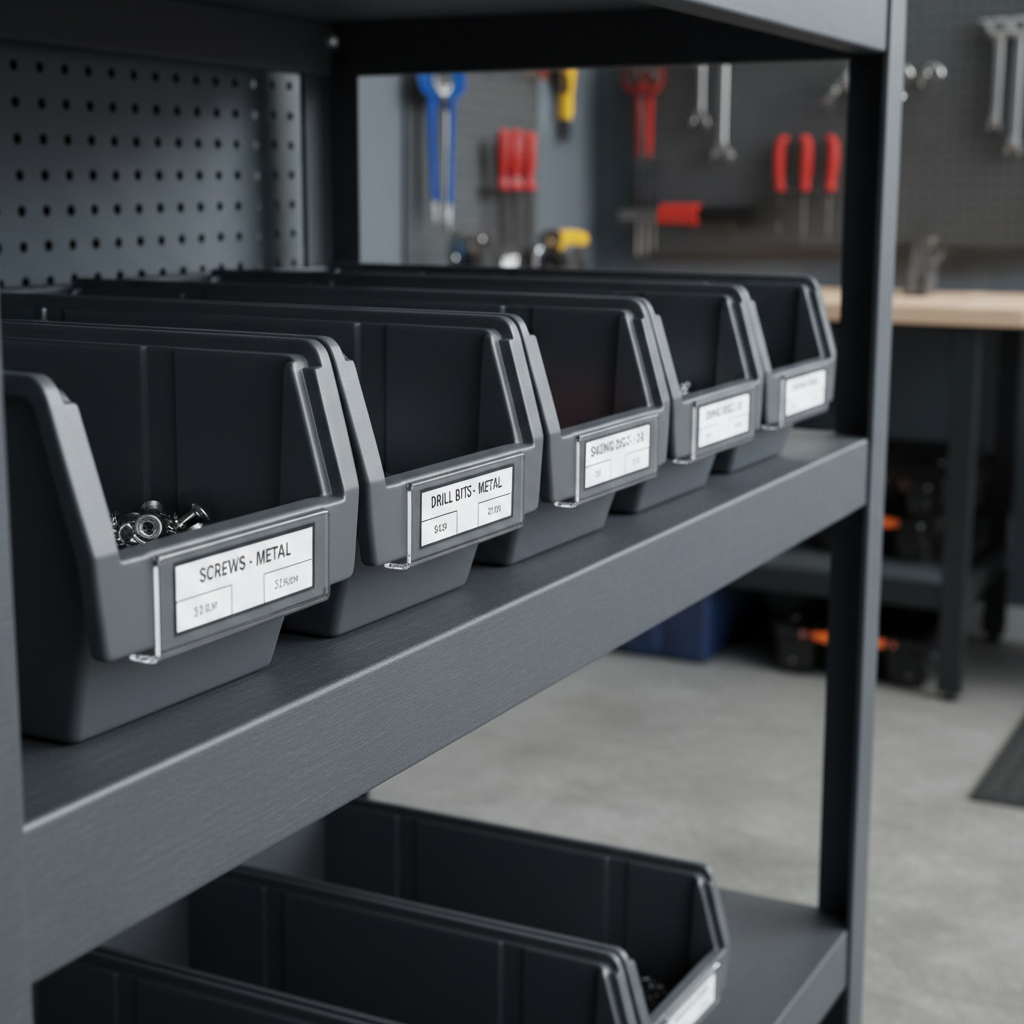
One quiet trick: label for how you look for things. If you think “Phillips screws,” label that, not “Hardware Aisle Items.”
Step-by-step setup: from messy shelves to a working system
You do not need a full weekend and a label printer to get a usable result. A quick, realistic setup tends to stick better.
1) Create three zones
- Daily zone: the stuff you touch almost every project, keep it waist-to-eye level.
- Project zone: bins for current builds, easy to pull down and put back.
- Deep storage: rarely used items, higher shelves or closed totes.
2) Sort by “grab behavior,” not by perfect categories
- Hardware you grab in singles: open-front bins.
- Items you grab as sets: totes for “tile tools,” “drywall kit,” “paint prep.”
- Consumables that expire or run out: put them in a visible bin so you notice.
3) Build labels that survive garage life
- Use high-contrast text, short names, and add sizes where it matters.
- If you use tape labels, cover with clear tape to resist dust and oils.
- Keep a “mystery bin” temporarily, then empty it weekly until it disappears.
Industrial style storage bins for garage tools shine here because they are designed to be handled repeatedly, which is what a good system demands.
Safety, weight, and placement: what to avoid
Garages mix sharp edges, chemicals, and heavy parts. Bins can improve safety, but only if placement is sensible. If you are unsure about load limits for your shelving, consider checking the manufacturer documentation or asking a contractor.
- Do not overload top shelves: heavy metal parts belong lower, even if it looks less tidy.
- Keep chemicals separate: many garages store solvents, oils, or pool chemicals, store them in appropriate containers and follow product labels. When in doubt, consult a professional.
- Avoid “floor overflow”: if bins end up on the floor, either you need fewer categories or more shelf space.
- Mind heat sources: keep plastics away from heaters or appliances that run hot.
According to NFPA, many home fire safety recommendations focus on reducing hazards and storing flammables properly, so treat garage storage like a safety project, not just aesthetics.
Key takeaways and a practical conclusion
Key takeaways:
- Buy bins to match how you grab items, not how you think a catalog wants you to sort.
- Use smaller bins for small parts, large totes for kits and bulky gear.
- Labels matter more than matching colors, keep them readable and specific.
- Put heavy items low, and keep safety gear in the easiest-to-reach spot.
If you want your garage to feel less chaotic fast, start with one shelf: add industrial style storage bins for garage tools, label six to ten high-traffic categories, and give yourself a “project bin” so in-progress work stops taking over every surface. Once that shelf feels easy, expand the same logic to the rest of the space.
FAQ
What size bins work best for screws and small hardware?
Small open-front bins usually win because you grab a few pieces at a time. If the bin is too big, it becomes a mixed pile and you lose the benefit.
Are clear bins better than opaque industrial bins for garages?
Clear bins help when you store mixed items or seasonal gear, but they often scratch and look cloudy over time. For daily-use parts, a labeled open-front bin is typically faster than “see-through.”
How many industrial style storage bins for garage tools should I buy first?
Start with a small batch sized to one shelf, often 6–12 bins. That gives enough categories to reduce clutter without forcing you into a complicated system on day one.
How should I label bins so the system actually lasts?
Use short, specific labels that match how you search, like “1/4-20 nuts” or “impact bits.” If labels stay vague, people stop trusting them and the bins drift back into “misc.”
Can I mix bin brands and still keep things organized?
Yes, many garages do. The main risk is inconsistent footprint sizes that waste shelf space, so try to standardize within each shelf section even if you mix brands across the room.
What is the best way to store power tools: bins or something else?
Power tools often store better on wall mounts or in drawers, while bins handle accessories and consumables. A tote works when you want a tool-and-accessory kit you can carry to a job site.
How do I store oily rags and solvents safely in a garage?
This can be a fire risk in some situations, so follow the product instructions and local guidance, and consider consulting a professional for your setup. Keep chemicals in proper containers and away from ignition sources.
If you are trying to upgrade a garage without rebuilding everything, a small, consistent bin system is one of the few changes that pays off immediately, pick two bin styles, commit to clear labels, and set one “project bin” so your workspace stays usable between weekends.