
Best bamboo drawer organizers for utensils come down to one thing: a layout that matches how you actually cook, not a “pretty” insert that wastes space and slides around.
If your utensil drawer turns into a pile the moment you close it, you end up buying duplicates, fighting stuck drawers, and losing time every meal. A good bamboo organizer solves that by giving every tool a home, and bamboo tends to feel warmer and more durable than flimsy plastic.
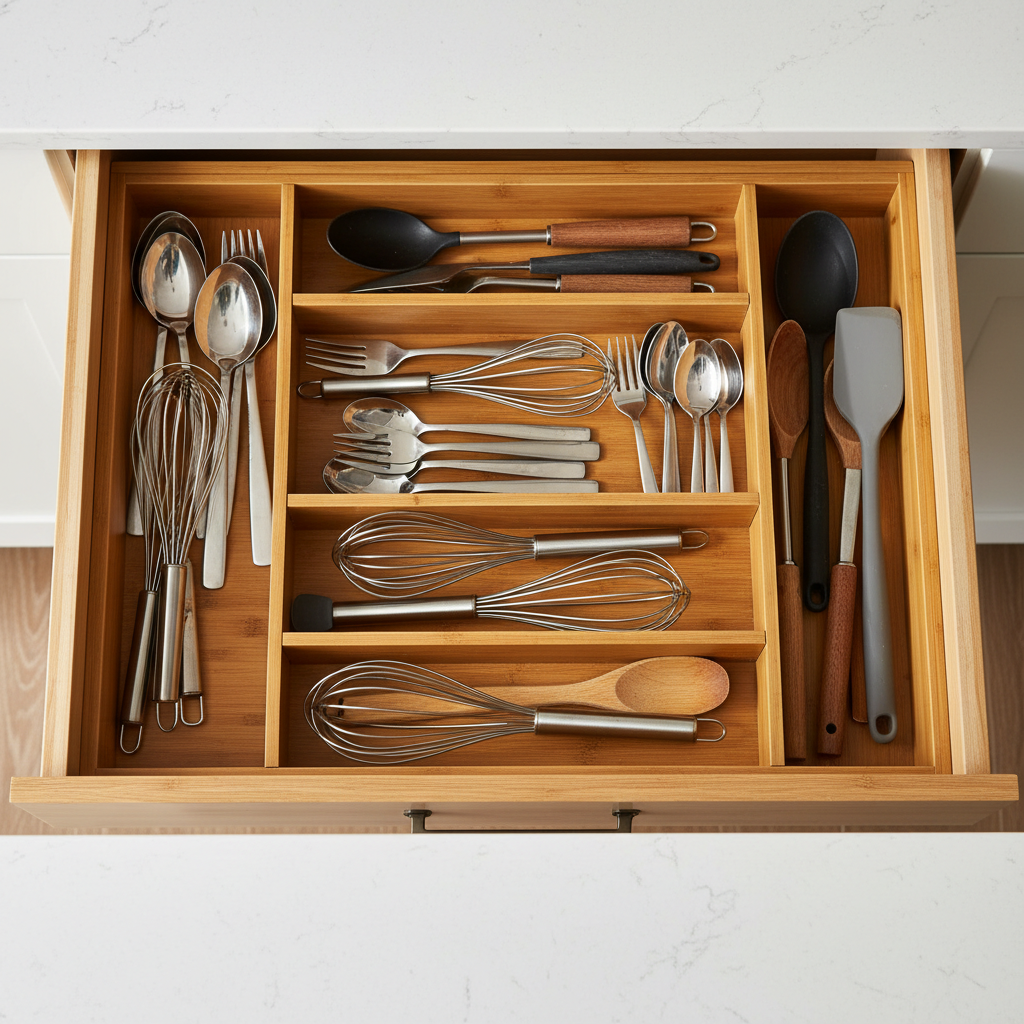
This guide is practical on purpose: what to measure, what features matter, where bamboo works great, and where it might not. You’ll also get a quick comparison table and a checklist so you can pick confidently without overthinking it.
What “best” really means for bamboo utensil organizers
“Best” isn’t a single product, it’s fit. In most kitchens, the right organizer is the one that matches drawer dimensions, utensil types, and how often you use them.
- Fit and stability: if it shifts when you open the drawer, you’ll hate it within a week.
- Compartment sizing: wide slots for spatulas and tongs, narrow lanes for teaspoons and chopsticks.
- Depth compatibility: deeper drawers can handle layered tools, shallow drawers need low-profile trays.
- Moisture tolerance: bamboo handles normal kitchen humidity well, but soaking-wet tools and leaks can shorten lifespan.
According to USDA Forest Service, bamboo is a fast-growing resource commonly discussed as a renewable material, which is one reason many people prefer it over petroleum-based plastics.
Quick comparison: types of bamboo drawer organizers for utensils
Most options fall into a few “formats.” Pick the format first, then shop within it.
| Type | Best for | Pros | Watch-outs |
|---|---|---|---|
| Fixed tray (one-piece) | Standard utensil drawers | Simple, sturdy, no moving parts | Must match your drawer size closely |
| Expandable tray | Odd-width drawers, renters | Adjusts width, better chance of a snug fit | Expansion seams can trap crumbs |
| Modular bins (mix-and-match) | Custom layouts, mixed tools | Flexible, can “Tetris” around drawer hardware | Can slide unless you add liners or grips |
| Angled/knife-friendly combo inserts | One drawer for knives + tools | Saves space, keeps blades separated | Check knife length and drawer depth |
How to choose the right bamboo organizer (measurements + real-life details)
Before you browse, measure. It’s boring, but it prevents returns and “almost fits” frustration.
Measure these 3 things (and measure twice)
- Internal width: inside wall to inside wall, not the outside of the cabinet.
- Internal depth: front inside wall to back inside wall.
- Usable height: from drawer bottom to the lowest obstruction (often the drawer sides).
Then look at your utensil mix. A lot of people buy a tray optimized for forks and spoons, then wonder why tongs and a fish spatula don’t fit. If you cook often, you probably need at least one extra-wide bay.
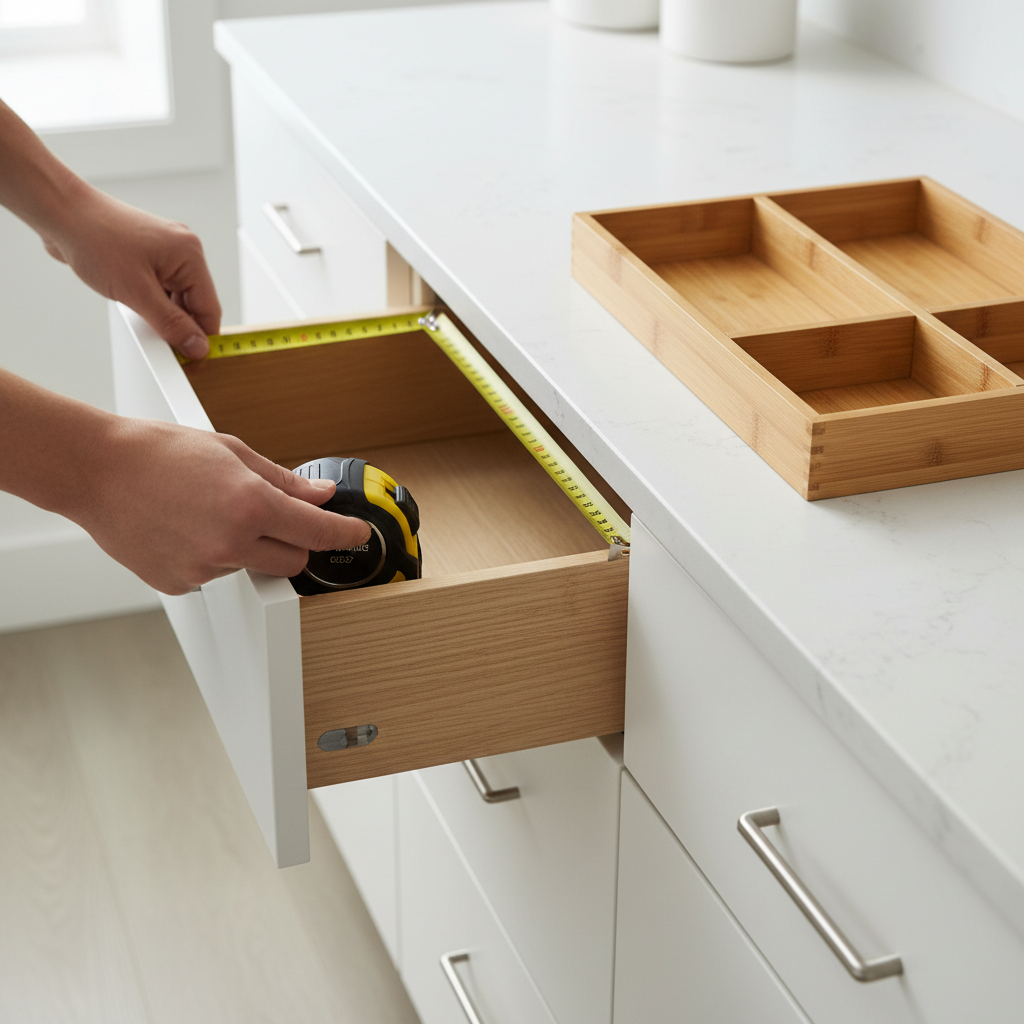
Small but important: if your drawer bottom is slick (painted wood or melamine), even a perfect tray may drift. Plan on a thin drawer liner if you want it to stay put.
Top features to look for in the best bamboo drawer organizers for utensils
Product photos hide a lot. These details usually separate “looks nice” from “works every day.”
- Finish quality: smooth edges, no splinters, and a sealed surface that wipes clean without feeling tacky.
- Strong corner joints: trays get pulled out by the divider edges all the time, weak joints loosen early.
- Practical compartment mix: at least one long bay for spatulas, one medium bay for prep tools, several narrow lanes for cutlery.
- Easy-clean geometry: rounded-ish internal corners clean faster; sharp corners collect debris.
- Expandable track that doesn’t wobble: if it flexes when expanded, it can pinch utensils or catch on the drawer sides.
If you’re sensitive to odor or finishes, check whether the organizer mentions a low-VOC or water-based coating. Claims vary by brand, and if it matters to you, it’s worth confirming with the manufacturer.
Self-check: which organizer setup fits your kitchen?
Pick the description that sounds like your drawer, then shop for that setup. This is the part most people skip, and it’s why they end up with a tray that “technically works” but still feels messy.
- My drawer is standard size, mostly forks/spoons + a few tools: a fixed tray with 5–7 compartments usually fits well.
- My drawer is wide and everything gets lost in the middle: an expandable bamboo tray, adjusted snug to the walls.
- I have weird obstacles (drawer dividers, pipes, child lock): modular bamboo bins so you can build around them.
- I store long tools (tongs, ladles, chopsticks, thermometer): prioritize at least one 12–15 inch lane, or a tray designed for long utensils.
- I want one “prep drawer” with knives too: look for a combo insert, but confirm knife length and safe clearance.
Set it up so it stays organized (not just organized on day one)
Even the best bamboo drawer organizers for utensils can fail if the setup ignores habits. This is the low-effort approach that tends to stick.
Step-by-step setup
- Empty the drawer completely and wipe it down, crumbs act like little ball bearings under trays.
- Group utensils by “moment of use”, not by category alone: cooking tools together, eating tools together, coffee/tea tools together.
- Give prime slots to daily drivers: spatula, tongs, wooden spoon, can opener, peeler.
- Add a thin liner if anything slides. It also cuts noise and protects finishes.
- Label once if your household needs it, especially for shared kitchens or kids helping unload the dishwasher.
Here’s a simple rule that avoids re-messing the drawer: if an item doesn’t fit without stacking, either change the organizer format or move that tool to a different drawer. Stacking is where organization goes to die.
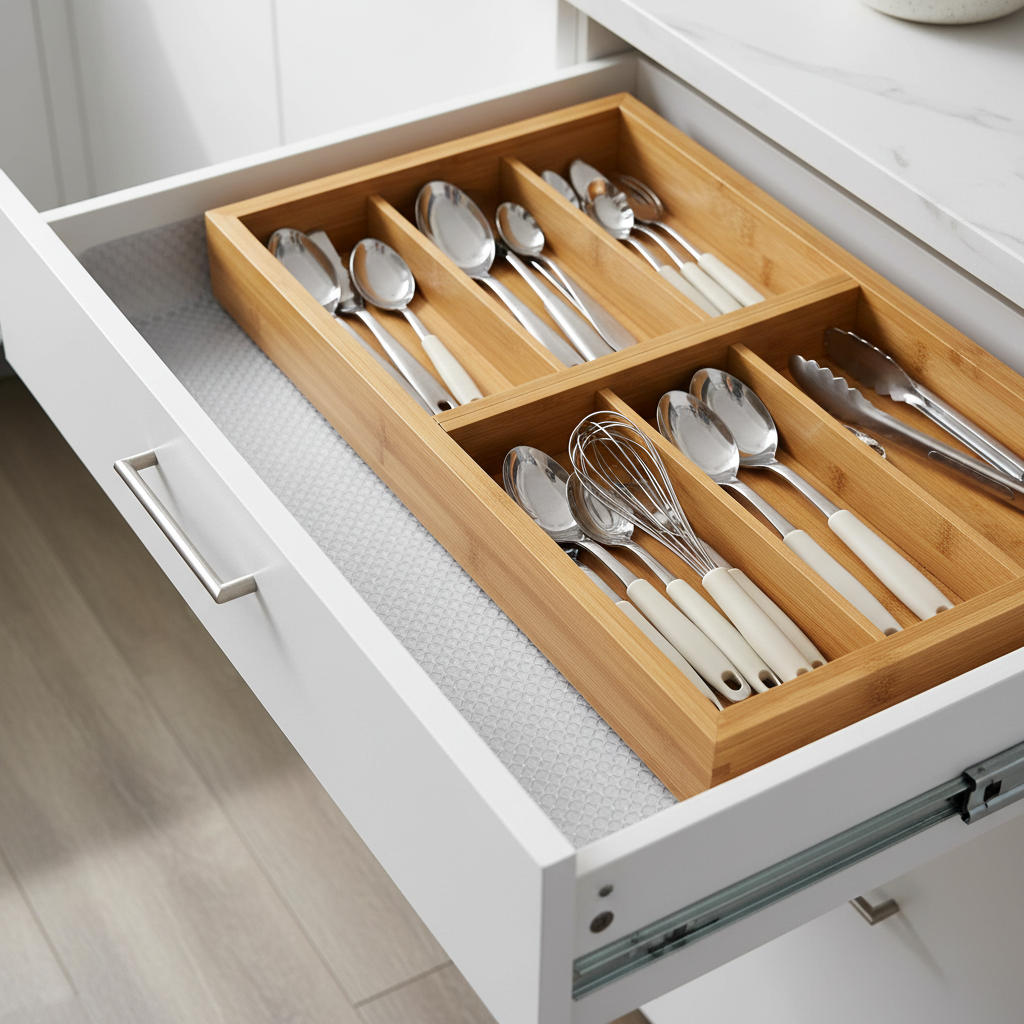
According to FDA, surfaces in food areas should be kept cleanable and in good repair. While a drawer organizer isn’t a direct food-contact surface for most homes, easy-to-clean materials and routines still matter in daily kitchens.
Care, cleaning, and common mistakes with bamboo organizers
Bamboo is fairly forgiving, but it’s not plastic. A few habits keep it looking good.
- Don’t wash it like a dish: avoid soaking. Wipe with a damp cloth, mild soap if needed, then dry.
- Keep wet utensils out: putting dripping tools away can trap moisture against the finish.
- Skip harsh sprays: strong bleach solutions or abrasive cleaners can dull finishes or raise the grain.
- Watch for sticky drawers: an organizer that’s too tall can rub the cabinet frame and make the drawer feel “heavy.”
A common purchasing mistake is over-indexing on “number of compartments.” More compartments often means narrower compartments, and narrow slots become junk slots fast if they don’t match your utensils.
When it makes sense to get extra help (or change the plan)
If your utensils still won’t fit cleanly after you’ve measured and tried a sensible layout, the issue may be the drawer itself: shallow height, odd runners, or a layout that forces one drawer to do three jobs.
- Consider a cabinet or drawer specialist if you’re planning a remodel or want built-in organizers sized to exact dimensions.
- Ask a kitchen designer if you’re reworking storage zones, especially in small kitchens where each drawer has a job.
- If you’re concerned about finishes or sensitivities, it’s reasonable to contact the manufacturer for material and coating details, or consult a professional if you have specific health concerns.
Key takeaways + a simple buying recommendation
If you want the fastest win, choose an expandable bamboo tray that fits your measured internal width and includes at least one long bay for cooking tools. Pair it with a thin liner so it stays put. For odd drawers, modular bins usually beat forcing a single tray to fit.
One small action that pays off: measure your drawer today, then shop with those numbers in your notes app. It turns the “maybe it fits” gamble into a quick decision.
Quick buying checklist (save this)
- Internal drawer width/depth/height measured
- At least one long compartment for tools
- Finish feels sealed and wipeable
- Organizer height clears the drawer frame
- Plan for liner if your drawer is slick
FAQ
What size bamboo drawer organizer should I buy for utensils?
Start with internal drawer measurements, then choose a tray that leaves a little breathing room so it drops in easily but doesn’t float around. If you’re between sizes, an expandable organizer is usually less stressful.
Are bamboo drawer organizers safe for kitchens?
In most home kitchens, bamboo organizers are used for storage rather than direct food contact. Look for smooth, sealed finishes that wipe clean, and avoid storing wet utensils to reduce moisture issues.
Do expandable bamboo organizers break more easily?
Not necessarily, but the sliding mechanism is an extra point of wear. If you open the drawer aggressively or overload compartments, cheaper expandables can loosen sooner than a one-piece tray.
How do I stop a bamboo utensil organizer from sliding?
A thin, grippy drawer liner solves most sliding in seconds. If you use modular bins, adding liner under each module helps keep the layout stable.
Can I put bamboo organizers near the sink?
You can, but it’s worth being cautious. Leaks and constant humidity can shorten lifespan, so keep the organizer dry, fix drips promptly, and wipe condensation when you notice it.
How many compartments should a utensil organizer have?
Enough to separate daily items without forcing tight fits. For many households, 5–7 compartments works, as long as there’s at least one wide section for cooking tools.
Is bamboo better than plastic for drawer organization?
It depends on priorities. Bamboo often feels sturdier and looks more “built-in,” while plastic can be cheaper and more water-tolerant. If your drawer sees lots of moisture, plastic may be less finicky.
What’s the easiest setup for a mixed utensil drawer?
Use a tray with a long bay for spatulas/tongs, keep cutlery in narrow lanes, and move rarely used gadgets to a secondary drawer. Most clutter comes from trying to store everything in the same prime space.
If you’re trying to choose the best bamboo drawer organizers for utensils without measuring ten products and returning nine, a simple approach is to start with your drawer dimensions and your “top 10” tools, then pick an expandable tray or modular set that matches that reality, not a picture-perfect layout.