
Best stackable shoe racks for small closets are the ones that fit your closet’s usable footprint, don’t wobble when you add a second tier, and actually match how you store shoes day to day. If you’re fighting a cramped reach-in closet, the “right” rack is less about a fancy feature list and more about stable stacking, correct depth, and a layout that doesn’t block doors or hangers.
It’s worth getting picky because small closets punish bad sizing: an extra inch of depth can snag the door, and a flimsy frame becomes a leaning tower once you stack it. The upside is real, though, when you nail the fit, you get your floor back and your mornings feel less like a scavenger hunt.
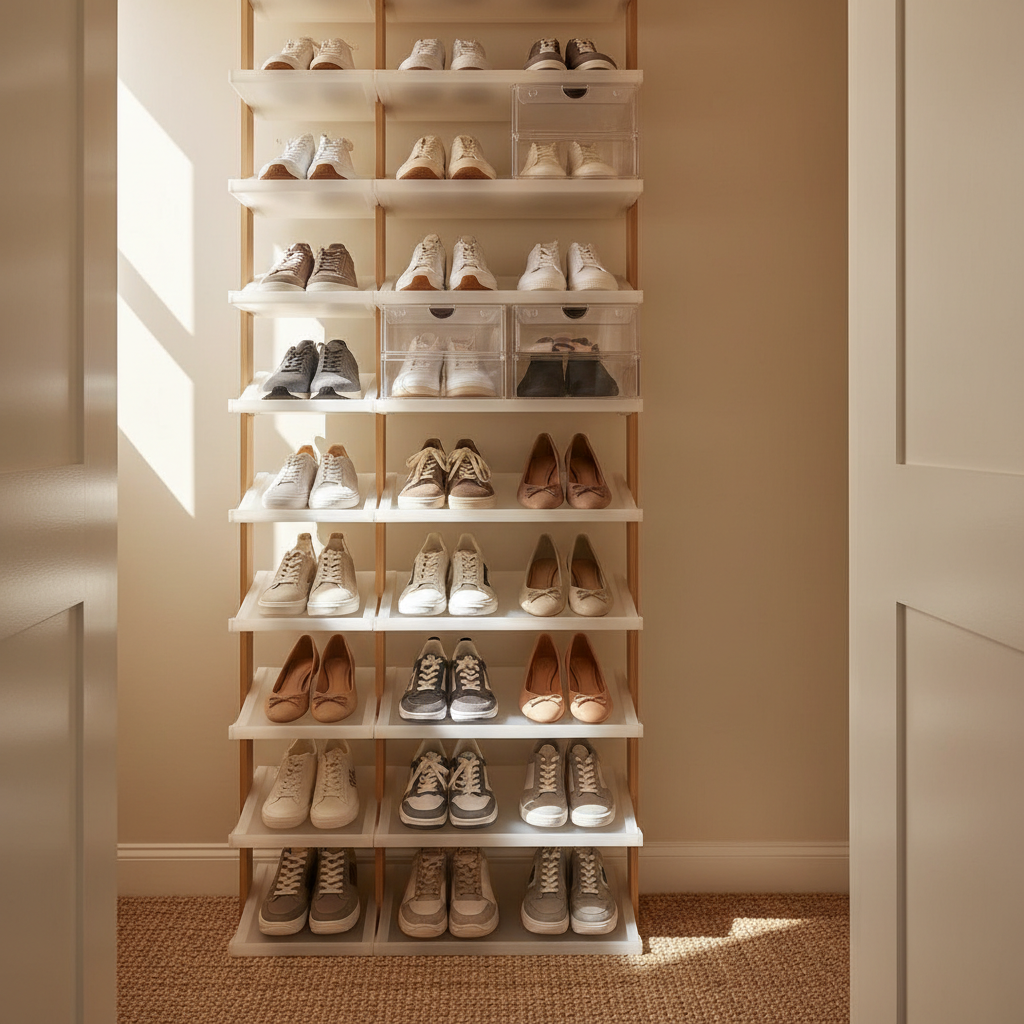
This guide focuses on what tends to work in real U.S. apartments and homes: stackable racks that stay stable, handle everyday shoe sizes, and can expand as your collection changes. I’ll also call out common traps, like choosing a “12-pair” rack that only fits six pairs of bulky sneakers.
What makes a stackable shoe rack “best” for a small closet
When space is tight, you’re optimizing for a few practical specs, not marketing claims. Here’s what usually matters most.
- Footprint and depth: Many reach-in closets work better with racks around 10–12 inches deep, but measure your door swing and baseboards before you buy.
- True stack stability: Look for locking connectors, interlocking posts, or a design that nests securely. If it stacks “kind of,” it will shift.
- Tier height flexibility: Adjustable tiers make it easier to mix boots, heels, and sneakers without wasting vertical space.
- Material and weight rating: Metal frames tend to feel sturdier, resin/plastic can be fine for light shoes, and bamboo/wood looks nicer but can be bulkier.
- Ventilation and cleaning: Open-wire or slatted shelves reduce odor build-up and make dust easier to spot.
According to OSHA, good housekeeping means keeping walking surfaces clear to reduce trip hazards, which is a fancy way of saying shoe piles on the closet floor are an accident waiting to happen in a narrow space.
Quick measurement checklist (so the rack actually fits)
Before you shop, take 3 minutes and measure. This step looks boring, then saves you from returns.
- Usable width: Measure wall-to-wall, then subtract any trim, door track, or closet pole brackets that steal space.
- Usable depth: Measure from the back wall to the inside edge of the door when closed. If it’s a sliding door, check the track clearance.
- Vertical space to stack: Measure from floor to the bottom of your hanging clothes or the lowest shelf.
- Shoe reality check: Count how many pairs are sneakers/boots, not just total pairs. Bulky shoes need more depth and height.
Rule of thumb: if your closet depth is borderline, prioritize a slightly narrower rack and stack upward, rather than forcing a deep rack that blocks the door.
Types of stackable shoe racks (and who they’re best for)
“Stackable” covers a few different designs. The best stackable shoe racks for small closets depend on your shoes and how often you access them.
Interlocking metal wire racks
Usually the most stable when stacked, and airflow is excellent. They’re great for everyday sneakers and flats, and they’re easy to wipe down.
- Best for: heavy use, lots of sneakers, people who want sturdiness
- Watch for: wire spacing that lets thin heels slip through
Resin/plastic modular cubes with shelves
These can be surprisingly space-efficient and flexible. Some people love the “build it your way” approach, others get annoyed by connectors that loosen over time.
- Best for: renters, changing storage needs, lightweight shoe collections
- Watch for: wobble when stacked too high, especially on carpet
Stackable wooden or bamboo racks
They look good in an open closet or bedroom corner, and many have a nicer “furniture” vibe. The downside is they may take up more visual and physical space.
- Best for: style-forward setups, lighter shoes, guest rooms
- Watch for: fixed tier heights that waste space above flats
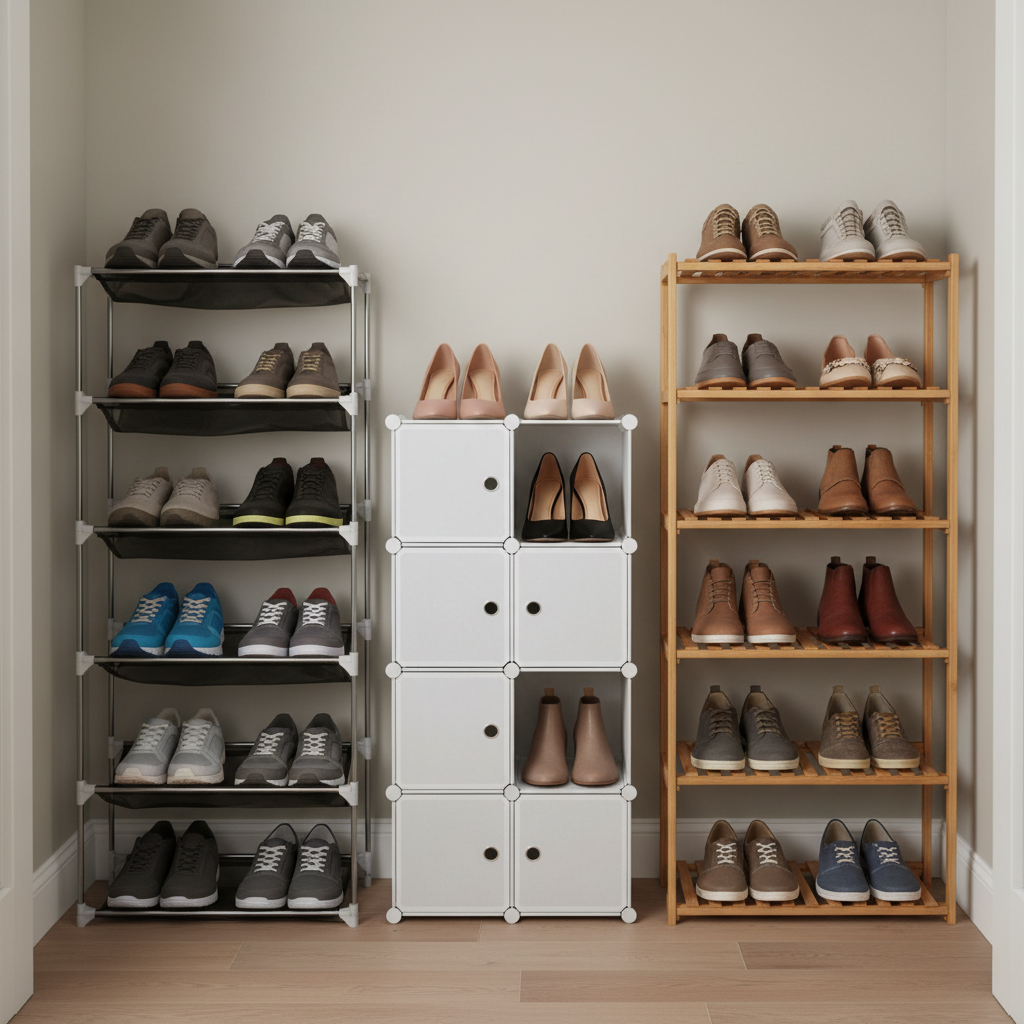
Comparison table: how to pick fast
If you want a quick decision, this table gets you most of the way there.
| Rack type | Stability when stacked | Best shoe types | Closet-fit friendliness | Typical tradeoff |
|---|---|---|---|---|
| Metal wire, interlocking | High | Sneakers, flats, daily pairs | High (often slimmer) | Heels can slip, “industrial” look |
| Resin/plastic modular | Medium | Light shoes, mixed sizes | Medium to high (flexible layouts) | Connectors can loosen over time |
| Bamboo/wood stackable | Medium | Flats, loafers, occasional use | Medium (can be bulkier) | Less adjustable tier spacing |
Practical setup ideas for small closets (that actually save space)
Once you have a rack, setup is where most small-closet wins happen. Try these before buying extra organizers.
Stack two shorter units instead of one tall tower
A shorter stack often feels sturdier and is easier to access, especially if your closet floor isn’t perfectly level. It also lets you split shoes by “daily” and “occasion.”
Use the back wall for long-term pairs
Put seasonal or special-occasion shoes on the top tier or the deepest tier, then keep everyday pairs at shin height. The goal is fewer crouch-and-search moments.
Pair a rack with a slim boot solution
Boots are the wildcard. In many closets, boots don’t belong on the same tier as flats. Consider a separate boot tray, boot shapers, or a dedicated tall bay.
- Key point: if boots tip over, they steal more space than they take up.
Common mistakes to avoid (so you don’t waste money)
A few patterns show up again and again, especially when people buy based on “pair count.”
- Overtrusting “X-pair capacity”: That number often assumes slim shoes. If you wear men’s size 11 sneakers or high-tops, capacity shrinks.
- Buying too deep for the door: A rack that forces the door to rub or stay open becomes clutter fast.
- Stacking without leveling: If your closet floor slopes, shim the feet or choose a rack with adjustable feet.
- Mixing muddy shoes with clean pairs: Add a washable mat under the bottom tier if you deal with rain or snow.
According to the American Cleaning Institute, moisture control and routine cleaning help prevent odors and buildup, which matters more when shoes are stored tightly together.
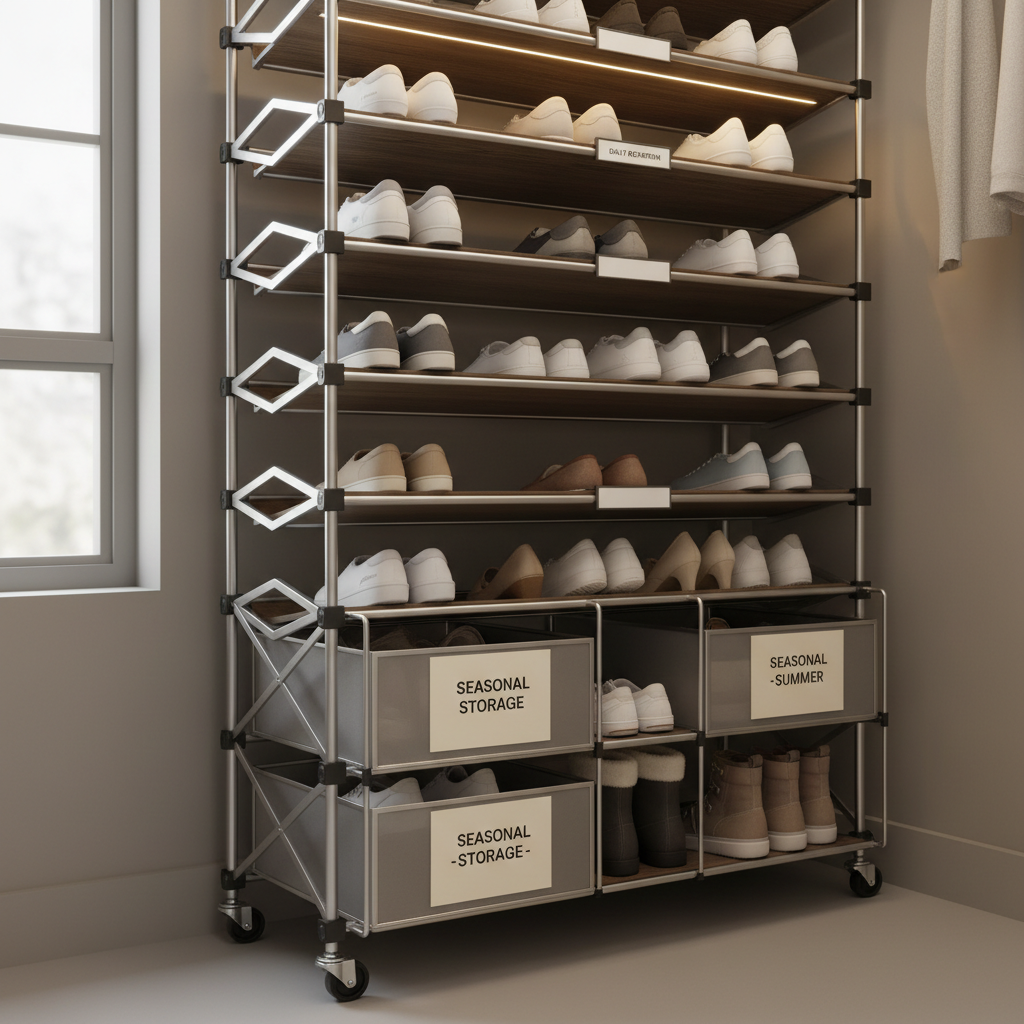
When you might need a different solution (or professional help)
Sometimes the best stackable shoe racks for small closets still won’t solve the real constraint. A few signals:
- Your closet has strong humidity or dampness: you may need ventilation, a dehumidifier, or to address a moisture source. If you see persistent mold, consider talking with a qualified professional.
- You can’t keep a clear walking path: it may be time to reduce volume, rotate seasonally, or move rarely worn shoes out of the closet.
- The closet layout is the issue: adding a second hanging rod or a shelf system can free up more shoe real estate than any rack change.
Conclusion: a simple way to choose today
If you want the cleanest decision, start with measurements, then pick a rack type based on shoe bulk and how stable stacking needs to be. For many people, an interlocking metal rack hits the sweet spot in a tight reach-in, while modular plastic works when flexibility matters more than rigidity.
Action steps: measure depth and door clearance, choose a stack height you can comfortably reach, then set up “daily pairs” at the easiest tier so the system stays usable after the first week.
FAQ
What size stackable shoe rack works best for a small closet?
The best size is the one that fits your usable depth without blocking the door, and still leaves a little breathing room for baseboards and trim. Measure first, then pick a width that doesn’t force shoes to angle sideways.
Do stackable shoe racks tip over when you add more tiers?
They can, especially on carpet or uneven floors. Look for designs with interlocking posts or locking connectors, and consider keeping stacks shorter if you’re storing heavier sneakers.
Are stackable shoe racks safe for kids and pets?
In many cases they’re fine, but any tall, narrow stack can become a tip risk if pulled. If you have toddlers or pets that climb, keeping the stack low and placing it against a wall is a safer default, and anchoring may be worth considering if the product supports it.
How do I store boots in a small closet with a stackable rack?
Boots often need a separate plan: a taller side area, boot shapers to keep them upright, or one adjustable shelf bay with extra height. Trying to squeeze boots into standard tiers usually wastes more space than it saves.
Metal vs plastic vs bamboo: which lasts longer?
Metal wire racks often hold up best under frequent use and heavier loads, while plastic modular units can be durable if connectors stay tight and the floor is level. Bamboo tends to last well for lighter shoes and calmer closets, but fixed shelf spacing can limit flexibility.
How many shoes can I realistically fit on a “10-pair” rack?
It depends on shoe size and bulk. If most pairs are slim flats, you might hit the stated capacity, but bulky sneakers or wide men’s sizes can reduce it noticeably, so treat capacity as a rough estimate.
How do I keep shoes from smelling when stored tightly?
Let shoes dry fully before storing, rotate pairs, and keep airflow where you can. If odor persists, cleaning insoles or using an odor absorber may help, and persistent foot odor concerns are worth discussing with a healthcare professional.
If you’re trying to pick the best stackable shoe racks for small closets and want a faster answer, share your closet width, depth, and the mix of shoes you actually wear, and you can narrow to a rack style and stack height that fits without guesswork.