
Best magnetic organizers for fridge side options can turn that awkward “in-between” space into real storage, but only if you match the organizer to your fridge finish, the weight you plan to hang, and how often you use what’s inside.
If you’ve ever had a magnetic basket slide down mid-week, or scratched a stainless panel with a gritty magnet, you already know the catch: fridge-side storage looks simple, yet the details decide whether it feels tidy or annoying.
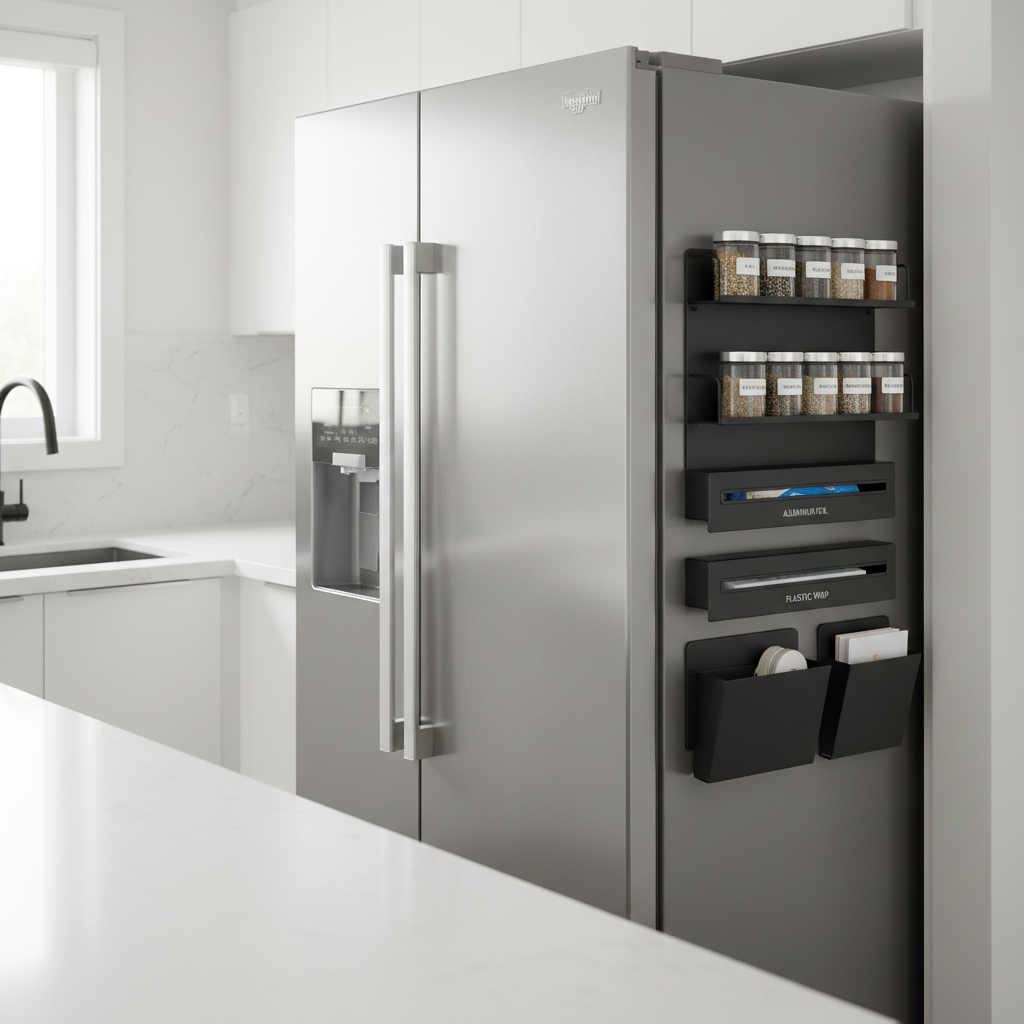
This guide focuses on what typically works for U.S. kitchens: narrow gaps, high-traffic sides, kids opening the fridge, and the reality that not all “stainless” is magnetic. You’ll get a quick fit checklist, a comparison table, and setup tips that reduce slipping and surface damage.
What makes fridge-side magnetic storage work (or fail)
Before shopping, it helps to call out the failure points. Most complaints come from one of these mismatches.
- Your fridge side isn’t magnetic: many stainless steel doors attract magnets, but the side panels can be different materials or have a coating that weakens hold.
- Not enough magnetic contact area: small round magnets on a tall basket look strong in photos, but real-life leverage pulls the top outward, especially when loaded.
- Overloading or lopsided loading: oils, canned drinks, and large spice refills are heavy; weight concentrated at the front edge increases slide risk.
- Surface grit: crumbs or metal dust trapped behind the magnet can scuff finishes over time.
- Heat and vibration: if the organizer sits near a vent or frequently gets bumped, weak magnets slowly “walk” downward.
According to UL Solutions, magnets can pose ingestion hazards for children, especially high-powered magnets, so if you have kids or pets, placement and product choice matter as much as convenience.
Quick self-check: are you a good candidate for magnetic organizers?
Use this as a fast filter. If you answer “no” to the first two, you may be better off with adhesive, over-the-door, or rolling cart storage instead of a magnetic setup.
- Magnet test: does a standard fridge magnet stick firmly to the side panel (not just the door)?
- Clearance: do you have at least 2–3 inches between fridge and wall/cabinet so a basket won’t get crushed?
- Traffic: does that side get bumped by people walking through, kids, or a dog bowl station?
- Load type: are you storing light-to-medium items (wraps, snack bags, spice jars) versus heavy glass bottles?
- Finish sensitivity: do you care about micro-scratches on stainless or painted panels?
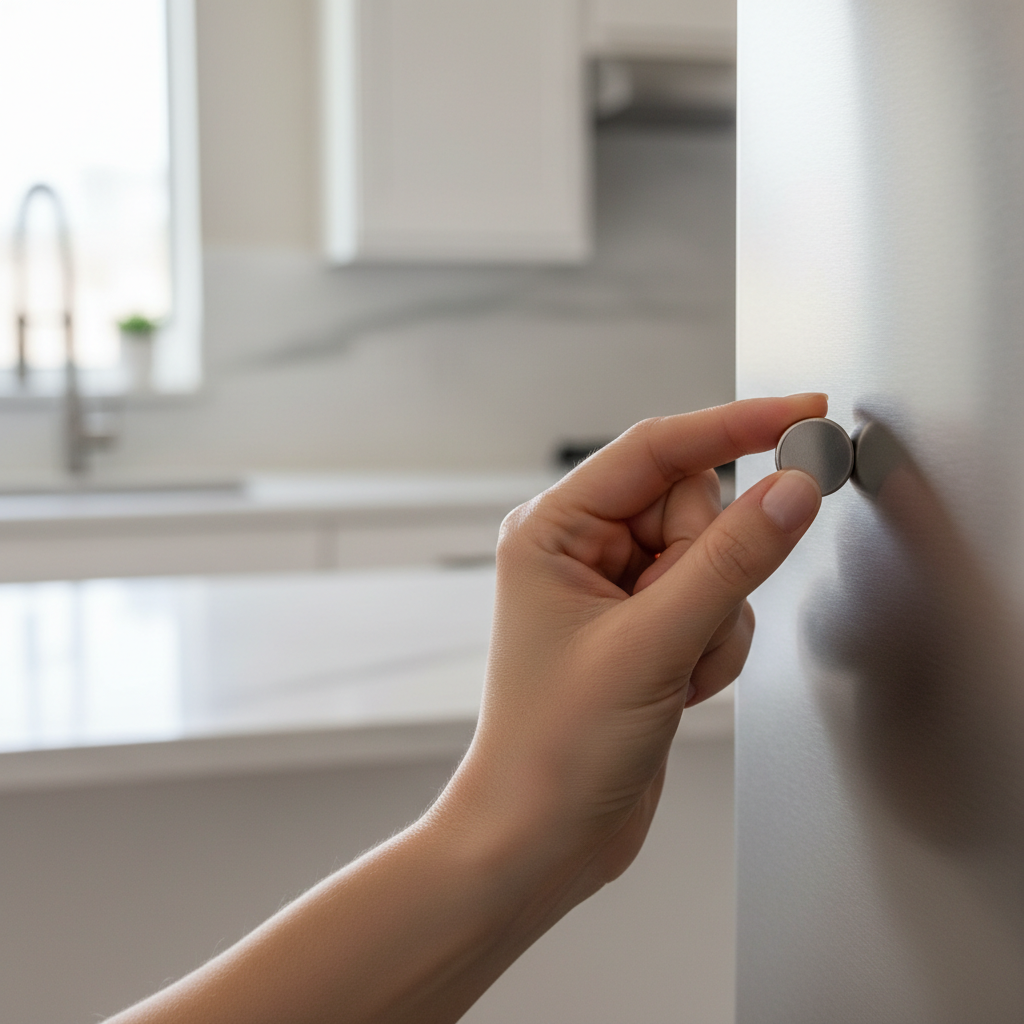
If the magnet test is borderline, don’t assume a “strong magnet” label fixes it. In many kitchens, the real solution is switching to organizers with a larger magnetic pad area, or using a hybrid setup where magnets stabilize but a bottom ledge (like a slim cart) carries weight.
Types of magnetic organizers (and who they’re best for)
“Best magnetic organizers for fridge side” can mean very different products. Picking by type usually beats picking by star rating.
Magnetic baskets and bins
Great for snack bags, onions/garlic, dish sponges, or small pantry items. Look for wide magnet sheets or multiple large pads, plus a front rail that keeps items from tipping when you grab something quickly.
- Best for: daily grab items, families, renters
- Watch for: tall bins with tiny magnets, sharp edges, paint that chips
Paper towel + wrap holders
These are underrated because they keep bulky boxes off counters. The key is wobble control: a good holder has a bar that keeps rolls from jumping, and enough magnet surface to resist the “pull” when you tear.
- Best for: small kitchens, meal prep routines
- Watch for: tearing motion causing downward slide, awkward refills
Spice racks (jar ledges)
Useful if you cook often and hate digging through cabinets. Choose racks with a lip tall enough for standard spice jars, and consider two shorter racks rather than one long rack if your fridge side has curves or seams.
- Best for: frequent cooks, compact kitchens
- Watch for: glass jars adding up in weight, rack depth blocking a walkway
Magnetic shelves with hooks
A shelf plus hooks can hold measuring spoons, oven mitts, or a small towel. The hooks also “invite” overloading, so think of them as light-duty by default.
- Best for: multipurpose storage, small tools
- Watch for: hanging heavy items (cast iron tools, big scissors) on weak hooks
Magnetic file/mail holders and whiteboard caddies
Perfect for the paper clutter zone: school flyers, coupons, freezer inventory, or a pen cup. This type usually stays stable because the load is light and flat.
- Best for: family command center, meal planning
- Watch for: sharp corners, ink staining on textured coatings
Comparison table: choosing the right organizer for your fridge side
This table is meant to be practical, not “one product wins.” Most kitchens end up using a mix.
| Type | Typical use | Stability needs | Good if your fridge side is… | Common mistake |
|---|---|---|---|---|
| Basket/bin | Snacks, small pantry items | Medium to high | Flat and strongly magnetic | Loading heavy jars in a tall bin |
| Wrap/towel holder | Paper towels, foil, cling film | High (tear force) | Strong magnet hold, low bump zone | Mounting too high, pulling downward |
| Spice rack | Daily spices | Medium | Enough clearance from wall | Underestimating total jar weight |
| Shelf with hooks | Utensils, towels, mitts | Medium | Flat panel, minimal seam lines | Hanging too much from hooks |
| Mail/file holder | Paper clutter, pens | Low | Almost any magnetic surface | Using it for bulky packages |
How to pick the best magnetic organizers for fridge side (a realistic checklist)
If you want fewer returns and less trial-and-error, evaluate with these criteria. It’s boring, but it saves you from the classic “looks cute, won’t hold” outcome.
- Magnet style: wide magnetic pads or strips usually hold more steadily than small discs because they spread force across more surface area.
- Contact coverage: look for designs where magnets sit high and low, not only at the top, which reduces leverage.
- Finish protection: a soft backing (rubberized or silicone) lowers scratch risk; still, keep the surface clean.
- Edge design: rounded corners and a front lip matter if you walk close to the fridge side.
- Depth and clearance: measure the gap to the wall, then subtract at least 1/2 inch so the organizer doesn’t rub when the fridge vibrates.
- Modularity: two smaller pieces are easier to place around seams, handles, or curves than one long shelf.
Key point: If you plan to store liquids in glass, assume you need a sturdier setup than “standard kitchen magnets,” even when the listing says heavy-duty.
Setup that actually stays put (step-by-step)
This part is where most people cut corners, then wonder why the organizer slides after a week.
1) Clean the panel and the magnet backing
Wipe both sides with a non-abrasive cloth, then dry fully. Any grit trapped behind the magnet can grind into the finish during small movements.
2) Mount for the way you pull
If it’s a wrap holder, mount it so you pull across or slightly upward, not straight down. The more downward force, the more the organizer wants to creep.
3) Load from the back, keep heavy items low
Put heavier items closest to the fridge panel and near the bottom of the organizer. This reduces torque and makes the load feel “stuck” rather than “hanging.”
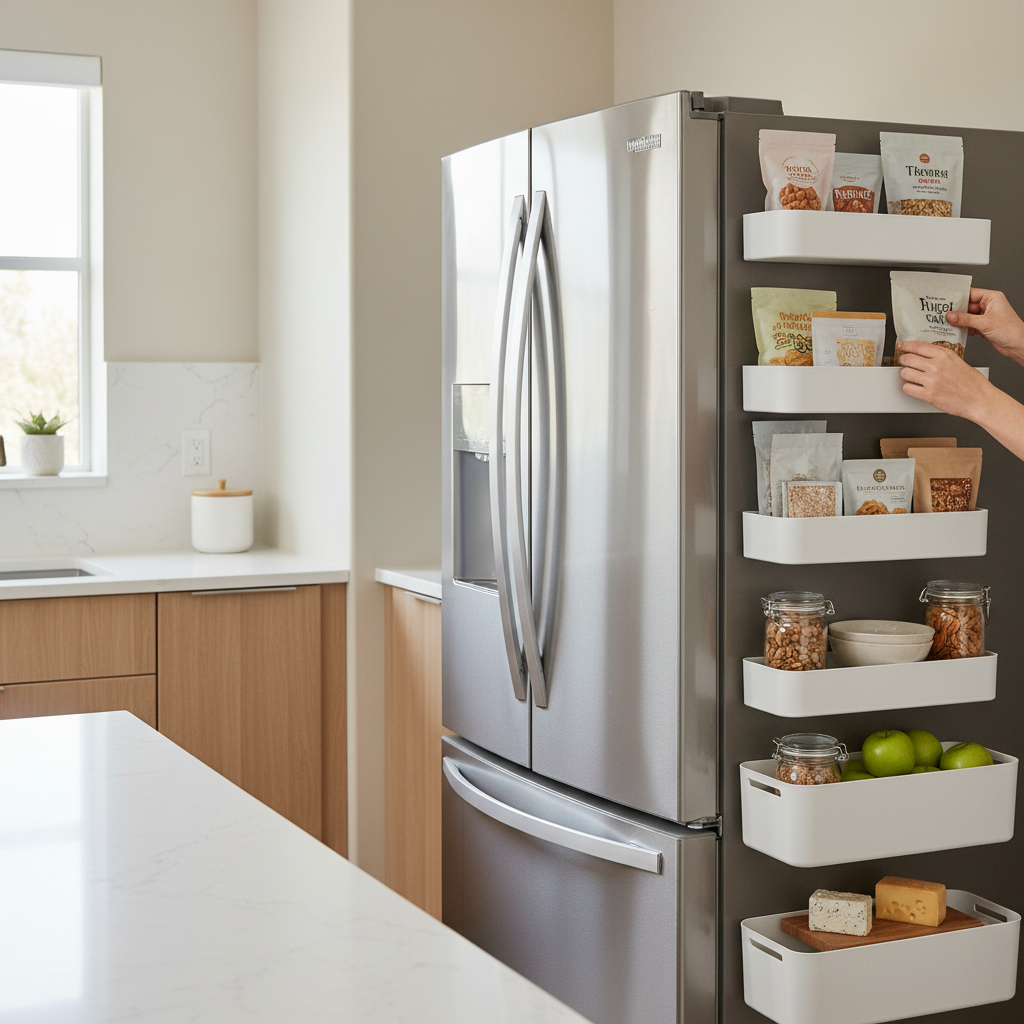
4) Give it a “stress test” before trusting it
Gently tug the organizer in the direction you’ll use it. If it shifts, adjust height, reduce load, or switch to a wider-magnet style. Do this test once, and you’ll avoid the slow slide that shows up later.
Safety, finish care, and common mistakes to avoid
Magnetic storage is usually low-risk, but a few issues come up often in real kitchens.
- Kids and small magnets: avoid products with detachable small magnets if a child can reach them. According to the U.S. Consumer Product Safety Commission (CPSC), high-powered magnets can be dangerous if swallowed, so place organizers thoughtfully and supervise as needed.
- Don’t block ventilation: many fridges vent at the top or bottom, but designs vary; if you’re unsure, check your manual so storage doesn’t interfere with airflow.
- Stainless isn’t always “magnetic stainless”: if the side panel barely holds a souvenir magnet, a heavy basket will likely disappoint.
- Avoid abrasive pads: if you need to clean, use gentle materials; aggressive scrubbing can mark finishes faster than the magnets do.
- Don’t treat it like a pantry shelf: cans and big bottles belong on a cart or in a cabinet more often than not.
If you have a pacemaker or other implanted medical device, strong magnets can be a concern in some contexts, so it may be worth asking a clinician what distance is appropriate for your specific device and lifestyle.
Practical “best picks” by situation (without overpromising brands)
I’m not going to pretend there’s one universal winner, because fridge materials, family habits, and available clearance vary a lot. What tends to work best is choosing by scenario.
- For renters who want zero residue: a medium-depth magnetic basket set, plus a magnetic mail holder for paper clutter.
- For meal-prep households: a sturdy wrap holder and one bin for snack bags, mounted where you pull sideways, not downward.
- For small kitchens with no pantry: two short spice racks (instead of one long rack) to manage seams and keep weight distributed.
- For families with kids: higher placement, rounded edges, and avoiding detachable mini-magnets; keep heavy glass low or off the fridge entirely.
Conclusion: what to do next
The best magnetic organizers for fridge side are the ones that match your panel’s magnet strength, your clearance, and the way you grab items day-to-day, not the ones with the biggest photos or the most compartments.
If you want a simple next step, do a 30-second magnet test on the fridge side, then start with one organizer type for one purpose, like wraps or snacks, and adjust after a week of real use.
FAQ
What if my fridge side is stainless steel but magnets barely stick?
That’s common, because “stainless” can be a non-magnetic grade or have a panel construction that weakens magnetic hold. In that case, lighter organizers like mail holders may work, but heavier bins often slip, so consider a slim cart or adhesive systems made for your finish.
How much weight can magnetic fridge-side organizers hold?
It depends on magnet area, panel material, and load direction. Listings may provide a number, but real kitchens add leverage and bumps, so treat capacity as a guideline and stress-test with your actual items before fully committing.
Will magnets scratch my refrigerator?
They can, especially if dust or grit gets trapped behind the magnet backing. A rubberized backing helps, and regular wipe-downs reduce risk, but if you’re very protective of your finish, choose organizers designed with soft pads and avoid sliding them around.
Are magnetic organizers safe around kids?
Usually yes when magnets are sealed inside the product and mounted out of reach, but detachable small magnets are a bigger concern. According to the CPSC, swallowed magnets can cause serious injury, so choose designs that don’t shed magnet pieces and place them thoughtfully.
Where should I place a magnetic paper towel holder on the fridge side?
Place it where you can pull across or slightly upward, and where it won’t get bumped by hips or shoulders in a narrow walkway. If tearing causes the holder to shift, lower the roll, reduce tension, or switch to a design with more magnet coverage.
Do magnetic spice racks work with glass spice jars?
They can, but glass weight adds up quickly. If you go this route, keep the rack shallow, don’t overload, and consider splitting spices across two racks so each one carries less weight and sits flatter.
What’s better for fridge-side storage: magnets or adhesive?
Magnets win for removability and easy repositioning, while adhesive can be more stable on non-magnetic panels. If your fridge side fails the magnet test, adhesive or a freestanding solution is often the less frustrating path.
If you’re trying to build a cleaner fridge-side setup without guessing, it can help to map what you grab daily, measure clearance once, then choose one or two organizer types that fit your real habits rather than buying a big matching set upfront.