
Entryway organization ideas small hallways work best when you stop trying to “store everything” and start designing for how you enter and leave the house each day. The goal is simple: clear the walking path, give every everyday item a predictable home, and cut down the frantic searching right before you walk out.
Small hallways get messy fast because they’re a high-traffic bottleneck. Shoes pile up, bags land wherever there’s space, and mail becomes a permanent stack. The fix usually isn’t more furniture, it’s tighter decisions about what belongs here and what doesn’t.
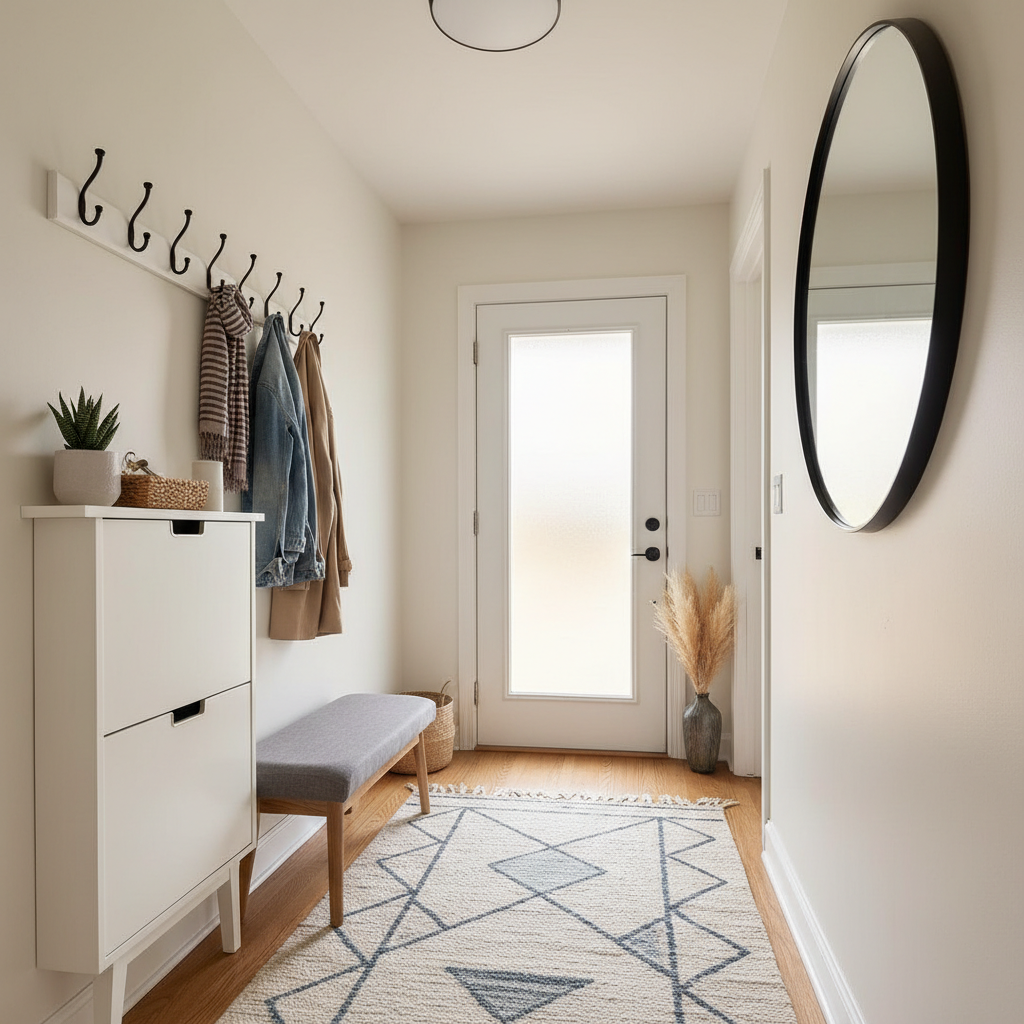
Below you’ll find practical setups that fit real apartments and older homes with tight entry corridors. I’ll also include a quick self-check to pick the right approach, plus a small “what to buy vs. what to skip” table so you don’t over-shop your way into more clutter.
Why small hallways get cluttered (and what to fix first)
Most cramped entries fail for a few predictable reasons, and it helps to name them before you start moving things around.
- No “drop zone”: keys, sunglasses, and packages land on the floor or the nearest chair because there’s no assigned landing spot.
- Too much floor storage: bulky racks block the walkway, so people sidestep around them and stop using them consistently.
- Seasonal creep: winter boots and extra coats linger into spring, then umbrellas and sports gear move in.
- Unclear rules: if one person keeps shoes in a closet and another keeps them by the door, the hallway becomes the compromise.
If you only do one thing, protect the “clear lane.” A narrow hall should feel like a hallway first, not a storage unit with a path through it.
A quick self-check: what kind of entryway do you actually have?
Before you buy hooks or bins, match the solution to the space and the household. This is where a lot of DIY plans quietly break.
- If your hallway is under ~36 inches wide: prioritize wall-mounted storage and closed, slim-depth cabinets.
- If you rent: use removable hooks, tension systems, or over-the-door organizers, and avoid heavy drilling.
- If you have kids: plan for low hooks and open-access shoe slots so they can succeed without help.
- If you have pets: keep leashes and wipes in a grab-and-go bin, and choose easy-clean mats.
- If the entry is also a main hallway: choose storage that sits flat to the wall, and avoid protruding pegs at shoulder level.
According to UL (Underwriters Laboratories), maintaining clear pathways helps reduce trip hazards at home. In a tight entry, that translates to keeping floors as open as you reasonably can and avoiding anything that invites stumbling.
Layout ideas that work in tight entry corridors
Think in zones, even if the “zone” is only one wall. A good micro-layout typically includes: a place to hang, a place to sit or brace, and a place to catch small items.
1) The “one-wall station” (best for very narrow halls)
Put everything on one side so the opposite side stays visually calm and physically clear.
- Row of hooks (coats, backpacks, dog leash)
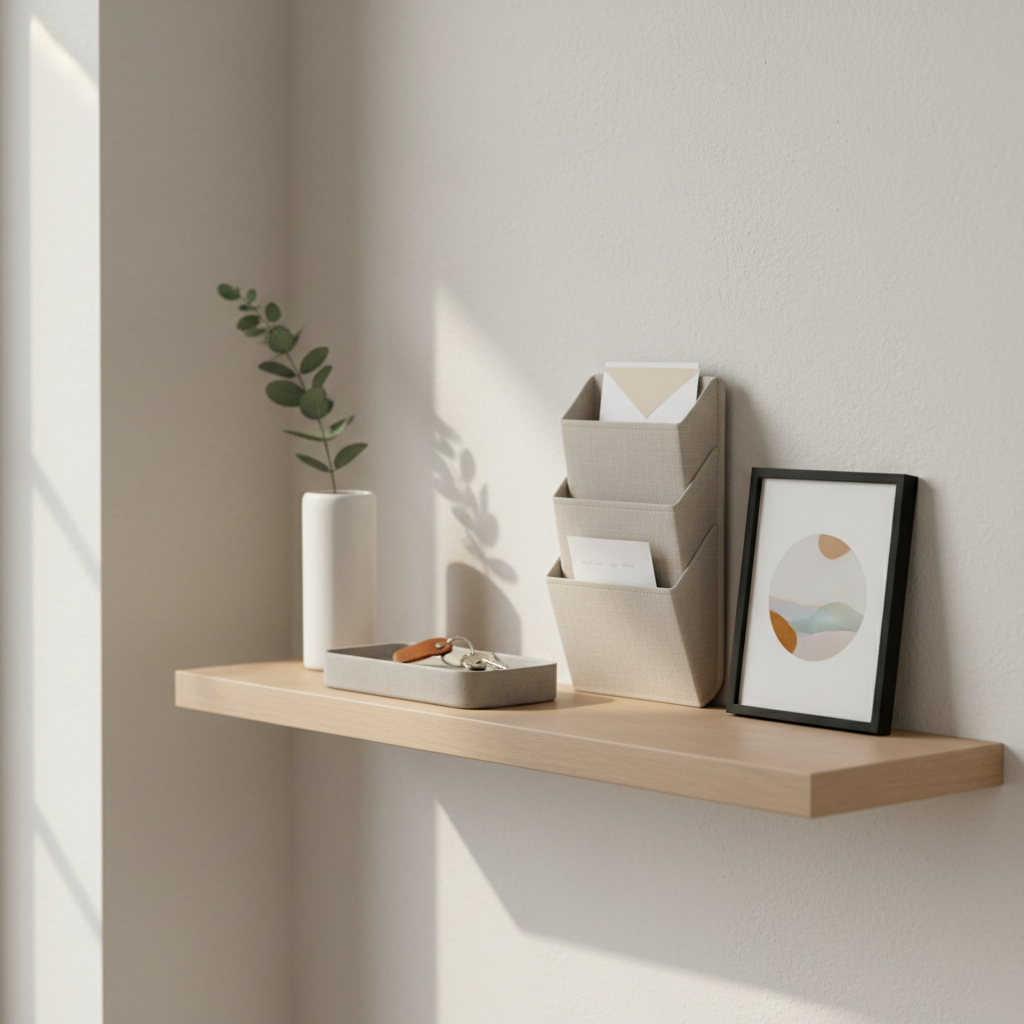
- Small shelf with a tray (keys, wallet, mail)
- Slim shoe cabinet or vertical shoe tower (closed if you hate visual clutter)
This is one of those entryway organization ideas small homes benefit from because it doesn’t ask the hallway to become a room, it just becomes a smarter hallway.
2) The “bench + vertical” combo (best when you can spare a few inches)
If you have a spot that’s slightly wider or near the door swing, a narrow bench earns its keep.
- Bench (ideally with a shelf under it, not big cubbies that stick out)
- Above-bench hooks or a peg rail
- One lidded basket for hats and gloves
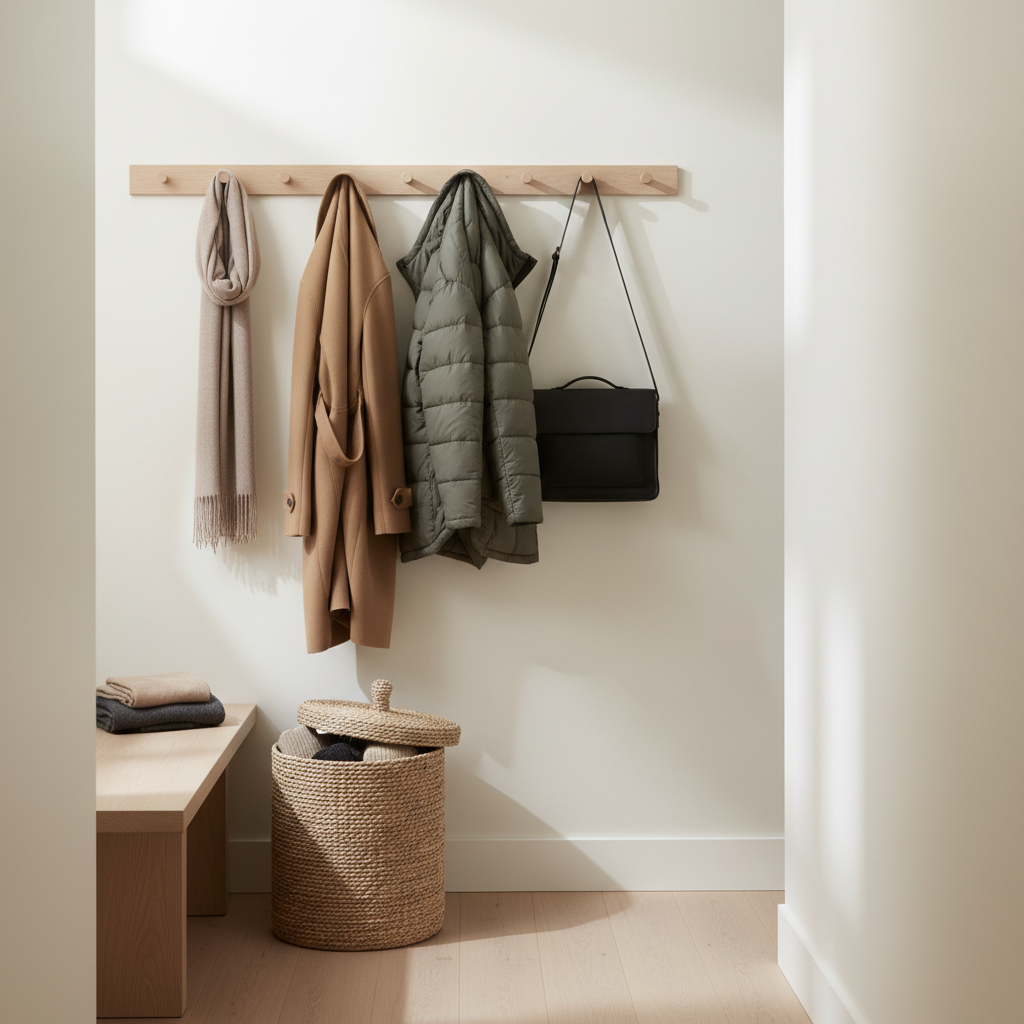
One caution: if the bench forces people to turn sideways to pass, it will become a “stuff holder” instead of a tool. Measure your clear walking width before committing.
3) The “closet upgrade” (best if you already have a coat closet)
If there’s a closet within a few feet of the door, you may not need much in the hallway at all.
- Add a second hanging rod or a hook panel inside the door
- Use a shoe organizer that fits the closet depth
- Store seasonal gear up high, daily gear at chest level
This approach keeps the hallway calmer, which many people prefer, especially in older homes where the entry is also the main passage.
Small-space storage pieces: what usually works (and what to skip)
Not all “small entryway” products are actually small-hallway friendly. Depth and protrusions matter more than total capacity.
| Item | Why it works in small hallways | Common mistake |
|---|---|---|
| Wall hooks / peg rail | Uses vertical space, keeps floor clear | Placing hooks where coats drag on the floor |
| Slim shoe cabinet | Closed storage reduces visual noise | Choosing a unit too deep for the walkway |
| Key tray + small shelf | Creates a true drop zone | Using it as a catch-all for everything |
| Over-the-door organizer | Great for renters, adds hidden capacity | Overloading it until the door won’t close well |
| Big cube organizer | Sometimes works in wider foyers | In narrow halls, it blocks traffic and collects junk |
When people ask for entryway organization ideas small spaces can handle, I usually steer them toward fewer, slimmer pieces that do one job well.
Step-by-step: a 45-minute reset you can actually keep up
You don’t need a full makeover to feel a difference by tonight. This reset is designed for real life and small square footage.
- Clear the floor completely, even if it means moving items into a box temporarily.
- Sort into four quick piles: daily essentials, weekly items, seasonal items, and “not entryway.”
- Limit shoes: set a realistic cap (often 2 pairs per person near the door), store the rest elsewhere.
- Create one drop zone: tray or bowl for keys, a spot for mail, a hook for the most-used bag.
- Assign one overflow container: a lidded bin for odd items you don’t want visible, but still need.
Key takeaway: small hallways stay tidy when you reduce decisions. If everyone knows exactly where keys, shoes, and outerwear go, you’ve already won most days.
If your hallway doubles as an exit route, keep heavier items stable and avoid anything that tips easily. If you’re unsure about wall mounting or anchoring furniture, it may be worth asking a handyman or building professional, especially in older plaster walls.
Mistakes that make “organized” hallways fall apart
Most organization systems fail for boring reasons, not because you lacked the right bins.
- Too many categories: if hats have three bins, nobody uses any of them consistently.
- No weekly reset: the entry collects random items, so plan a 5-minute Sunday sweep.
- Ignoring door swing: a cabinet that blocks the door becomes instant frustration.
- Open storage everywhere: open cubbies look nice in photos, but in busy homes they can read as clutter.
- Keeping “maybe” items at the door: the entry should hold what you use, not what you might use.
Another subtle one: hooks placed too high. If people can’t reach comfortably, coats go on chairs, and you’re back where you started.
When it’s time to bring in professional help
If you’ve tried a few resets and the hallway still feels unworkable, you may be dealing with constraints that organization alone can’t solve.
- Persistent trip hazards or mobility needs: consider consulting an occupational therapist or a home safety professional for safer layout suggestions.
- Wall or door limitations: a contractor or handyman can advise on anchoring, door hardware changes, or adding a narrow built-in.
- Chronic overflow: a professional organizer can help you set realistic limits and routines, especially for multi-person households.
According to the National Association of Productivity & Organizing Professionals (NAPO), effective organizing systems are typically tailored to how you live day-to-day, not just how a space looks when staged. That’s a good standard to hold yourself to.
Conclusion: a small entry can still feel calm
A tight hallway doesn’t need to be perfect, it just needs a clear path and a few reliable homes for the items you touch every day. Pick one layout, keep storage shallow, and set a simple limit on shoes and outerwear so the system stays realistic.
If you want an easy next step, choose one upgrade you can do this week: install a hook rail, add a slim shoe cabinet, or create a key-and-mail drop zone, then do a five-minute weekly reset to keep it from drifting.
FAQ
What are the best entryway organization ideas small hallways can handle without feeling cramped?
Wall-mounted hooks plus a narrow shoe cabinet usually gives the biggest impact with the least floor intrusion. Add a small shelf for keys and you cover most daily clutter.
How do I organize an entryway with no closet in a small hallway?
Use vertical storage: a peg rail or hooks, a slim closed shoe cabinet, and one lidded bin for accessories. If coats are bulky, consider rotating seasonal items to a bedroom closet.
How many pairs of shoes should stay by the door?
Most households do better with a firm cap rather than “as many as fit.” Often that means 1–2 pairs per person near the door, with the rest stored elsewhere, but adjust for your lifestyle and weather.
What’s a renter-friendly way to add entryway storage?
Over-the-door organizers, removable wall hooks (used within weight limits), and freestanding slim cabinets work well. If you’re unsure about paint or wall type, test in a less visible spot first.
How can I keep a small entry organized with kids?
Lower the bar: put hooks at kid height, use open bins they can understand, and simplify categories. If they can’t do it quickly, it won’t stick on busy mornings.
Should I use open cubbies or closed storage in a small hallway?
Closed storage tends to look calmer in narrow spaces, especially if the hallway is visible from living areas. Open cubbies can work if you’re disciplined and use matching bins.
What if my hallway is too narrow for a bench?
Skip the bench and build a “standing station” with hooks and a shelf. A fold-down wall seat can be an option, but mounting should be secure, and in some cases it’s worth consulting a professional.
If you’re trying a few entryway organization ideas small spaces allow but still feel stuck, a simple layout sketch and a short shopping list can save you from buying the wrong-size pieces, and make the entry feel functional without turning it into a renovation project.