
Home library ideas small space usually start with one honest question, where will the books actually live without taking over the room. If your shelves already spill into stacks on the floor, you don’t need a bigger home, you need a plan that fits how you read, store, and tidy.
A small-space home library can feel calming instead of cramped, but only if you treat it like a mini system, not a random shelf purchase. The good news is that most small homes have hidden “library zones” people ignore, a hallway wall, the space over a desk, the dead area under a window, even the side of a wardrobe.
One quick misconception to drop, a home library does not have to mean a wall-to-wall built-in. In many apartments, the most realistic setup is a focused reading corner plus deliberate storage, then everything else stays visually quiet.
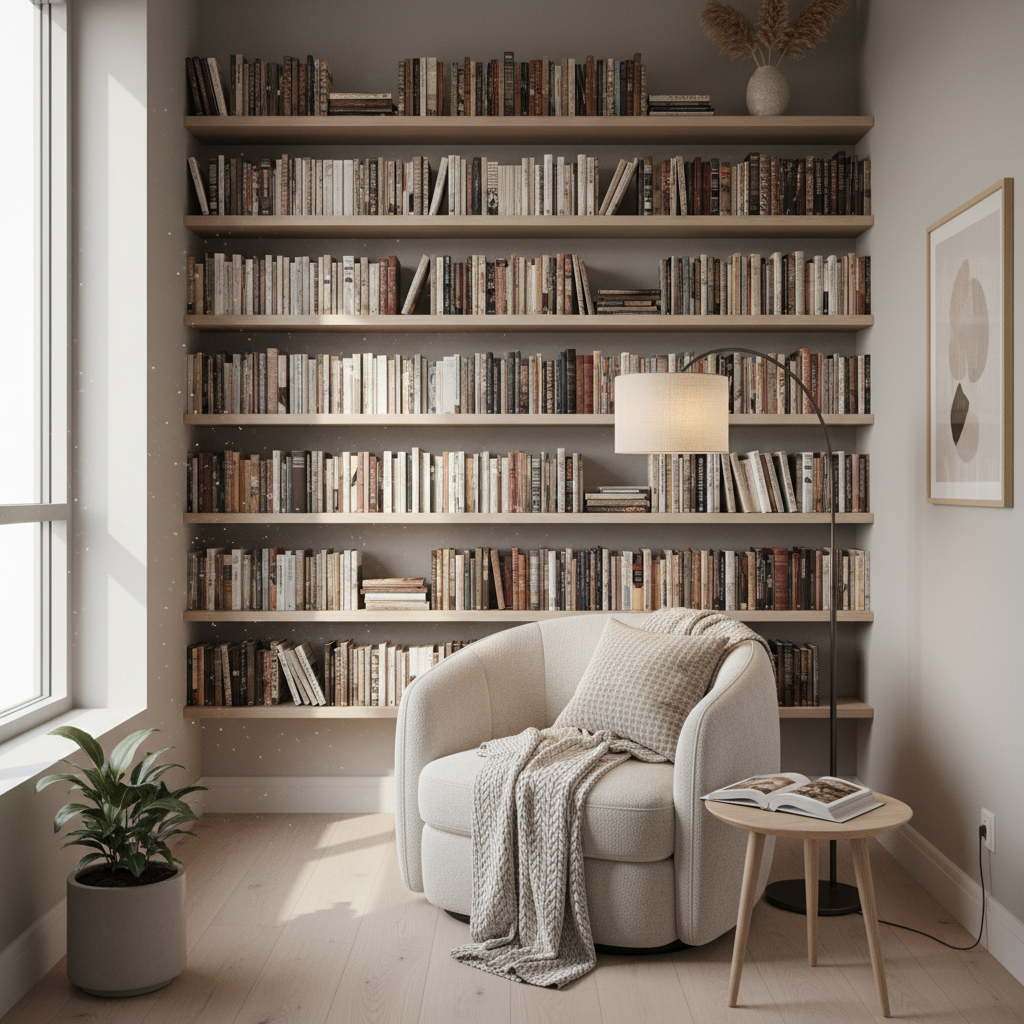
Below, you’ll get practical ways to choose a location, pick shelving that looks intentional, and keep the whole setup easy to maintain, plus a simple checklist and a quick table to match ideas to your space.
Start with the “library footprint,” not the furniture
Before you shop, decide how much of your home you’re willing to dedicate to books and reading. Small spaces go sideways when the footprint grows silently, one shelf becomes two, then the nightstand becomes a pile.
- Storage footprint: the linear feet of shelving or closed storage you can commit to long-term.
- Reading footprint: one seat, one light source, one surface for a drink or notebook.
- Circulation: keep walkways clear, especially in studios and shared living rooms.
According to U.S. Consumer Product Safety Commission (CPSC), furniture tip-overs can be a hazard, especially with tall bookcases, so if you’re stacking height in a small room, anchoring becomes part of the plan, not an optional upgrade.
Where a home library fits best in small spaces
If you’re hunting for home library ideas small space, location does most of the heavy lifting. The “best spot” is usually the one that already has a visual boundary, so the library reads as a zone, not clutter.
High-success zones (even in rentals)
- End of a hallway: shallow shelves, vertical storage, and a small sconce or plug-in lamp.
- Beside the sofa: a tight bookcase + a tray table turns into a reading station.
- Under a window: low shelving or a storage bench, then books stay reachable and the area feels intentional.
- Over a desk: wall-mounted shelves keep the floor open, great for work-and-read households.
- Bedroom corner: works if you can keep dust under control and avoid blocking closet doors.
Avoid putting your main collection in humid areas or anywhere a door constantly bumps shelves, it’s not “wrong,” it just creates ongoing annoyance that makes the setup hard to keep neat.
Space-smart shelving that looks built-in (without the cost)
Small-space libraries work when storage is vertical, consistent, and sized for the room. The trick is choosing one shelving style and repeating it, visual repetition reads more “designed.”
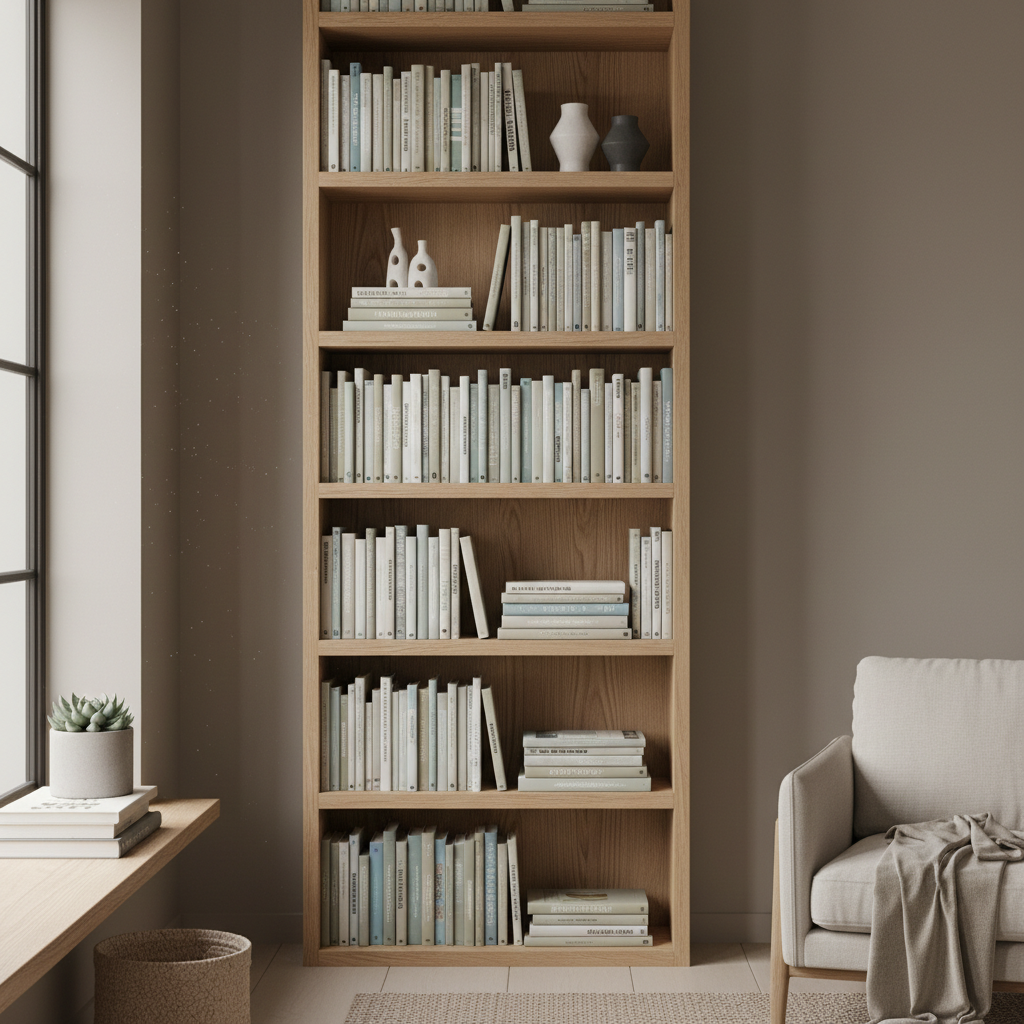
Good options for tight rooms
- Tall, narrow bookcases: maximize height, minimize floor space.
- Floating shelves: keep things airy, but use proper anchors for your wall type.
- Picture ledges: great for slim books, magazines, cookbooks, and rotating displays.
- Over-door shelving: works for light items, but avoid heavy hardcovers above head height.
- Closed base + open top: hide overflow and keep the top shelves curated.
On floating shelves, weight limits vary by hardware and wall material, so if you’re unsure, check the manufacturer guidance or ask a handyman. It’s not worth gambling with a shelf full of hardcovers.
Quick self-check: what kind of small-space library do you actually need?
Most people overbuild because they plan for an “ideal future collection” instead of the books they own now. This quick check keeps your choices realistic.
- If you own under ~50 books: you can go with a reading nook + one vertical unit, then rotate display books.
- If you own ~50–200 books: plan for two zones, a visible curated shelf and a secondary storage spot.
- If you own 200+ books: think “archive,” you may need closed cabinets, under-bed bins, or a dedicated wall.
- If you borrow/ebook often: prioritize the reading footprint over storage footprint.
- If you hate dusting: include at least one closed option, doors or bins.
Be honest about your habits, if you don’t naturally re-shelve, open shelves everywhere will feel messy fast.
Best home library ideas for small space (by scenario)
Below is a practical match-up table, so you can choose ideas based on what your home gives you, not what looks good online.
| Small-space scenario | What to build | Why it works |
|---|---|---|
| Studio apartment | One tall bookcase + compact reading chair + floor lamp | Keeps the library contained to one “column” of space |
| Narrow hallway | Shallow shelves or picture ledges + art-like book styling | Uses overlooked wall area without blocking movement |
| Shared living room | Closed storage base + curated open shelf above | Reduces visual clutter and relationship tension |
| Bedroom corner | Wall shelves over a nightstand or small cabinet | Creates a calm reading zone without adding furniture bulk |
| Work-from-home nook | Shelves above desk + labeled bins for overflow | Combines office and library without fighting for floor space |
If you’re still stuck, pick one scenario and commit, mixing styles across rooms is what usually makes small homes feel busy.
Practical setup steps (a weekend plan you’ll actually finish)
You don’t need a renovation to get a “real” library feeling. You need a sequence that prevents rework.
1) Edit and group your books
- Pull everything into one pile so you see the true volume.
- Make three groups, keep, donate/sell, store elsewhere (rarely used but not ready to let go).
- Group by how you look for books, genre, author, topic, or “to read next.”
2) Choose one “anchor” piece
- A tall bookcase, a low cabinet, or 2–3 floating shelves, pick one main structure.
- Size it to the wall with a little breathing room, tight-to-the-edge often looks accidental.
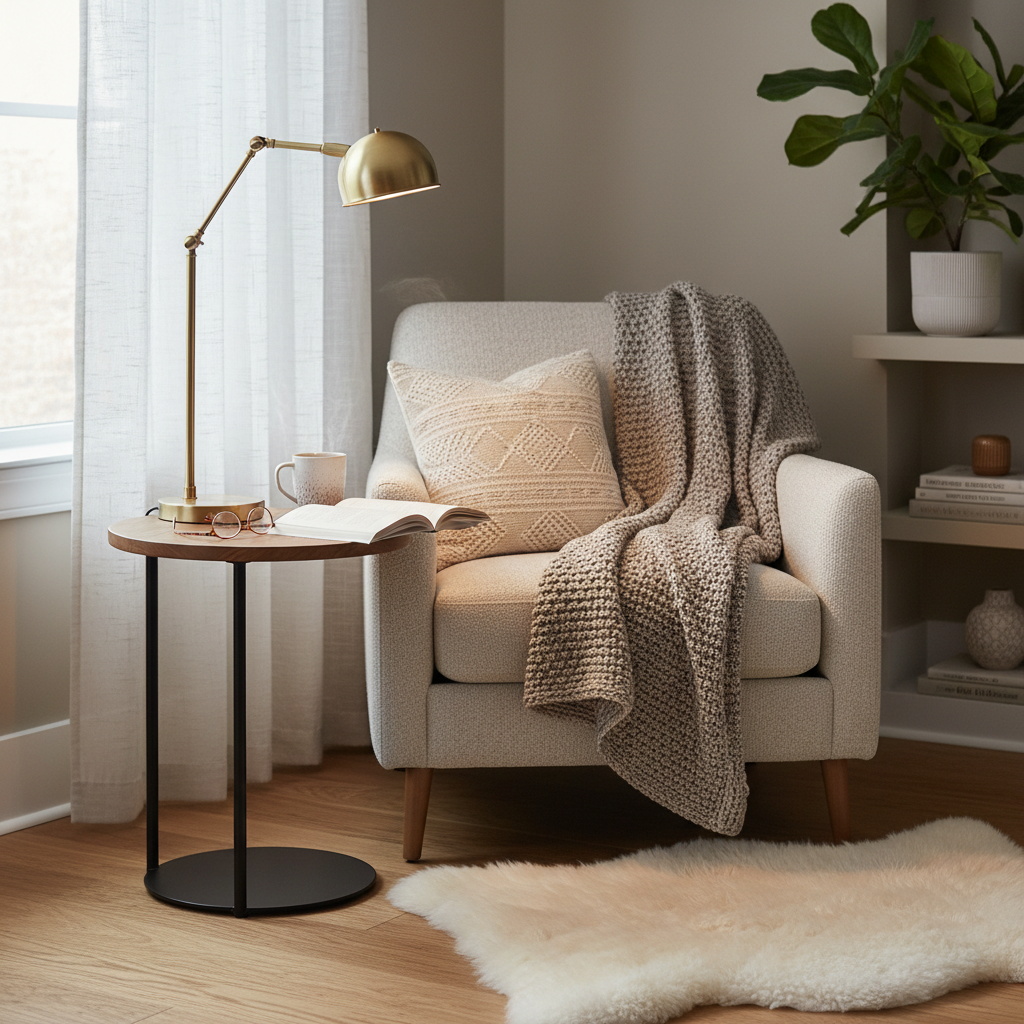
3) Add lighting that makes you want to sit down
- Floor lamp: easiest for rentals and flexible layouts.
- Plug-in wall sconce: saves space, gives a built-in vibe.
- Clip or shelf light: helps if you read late and want targeted light.
According to the American Lighting Association, layering light (ambient plus task lighting) supports visual comfort. In small reading corners, that typically means one general lamp nearby plus a more focused reading light.
4) Make one rule for overflow
- One labeled bin per category (cookbooks, kids books, textbooks, magazines) keeps “extra” from multiplying.
- Decide a cap, when the shelf fills, one book leaves before another arrives.
Common mistakes that make small libraries feel messy
These are the patterns that look small in the moment, then quietly ruin the vibe.
- Buying shelves before measuring: even a few inches off can block doors, vents, or outlets.
- All open storage: it photographs well, but real life includes mail, chargers, and random paperbacks.
- No plan for “in-progress” books: the current stack needs a home, a tray, basket, or one dedicated shelf.
- Over-styling: too many objects between books makes it harder to maintain, and the library stops feeling like a library.
- Ignoring safety: tall units in tight rooms should be secured, especially with kids or pets around.
If your space is already visually loud, go simpler, fewer shelves, more closed storage, and leave some negative space on the shelf on purpose.
When it’s worth getting professional help
Most setups are DIY-friendly, but a few situations deserve extra caution or expertise.
- Wall uncertainty: plaster, brick, or unknown wall construction, a contractor or handyman can prevent damage.
- Rental restrictions: if your lease limits holes or anchors, ask your landlord about acceptable methods.
- Electrical upgrades: if you want hardwired sconces or new outlets, consult a licensed electrician.
- Accessibility needs: for mobility or reach concerns, an interior designer or OT-informed approach may help.
This is not about making it fancy, it’s about making it safe, functional, and easy to live with.
Conclusion: a small-space library should feel easy, not fragile
The strongest home library ideas small space don’t try to mimic a mansion library, they build one clear zone for reading and one reliable system for storage. If you do only two things this week, measure a realistic library footprint and choose one anchor shelf style you can repeat, your space will feel calmer almost immediately.
If you want a quick start, pick a corner, add one comfortable light, then curate one shelf to look intentional, you can always expand after the habit sticks.
Key takeaways
- Define the footprint so your library stays contained.
- Use vertical storage and repeat one style for a built-in look.
- Plan for overflow with one rule and one closed option.
- Prioritize lighting so the nook gets used, not just admired.
FAQ
What are the best home library ideas small space for renters?
Go for tall freestanding bookcases, floor lamps, and plug-in sconces. Floating shelves can still work, but check your lease and use the right anchors for your wall type.
How do I make a small home library look “built-in” without custom carpentry?
Repeat the same shelf style, align heights, and keep spacing consistent. Painting the wall behind shelves a slightly deeper tone can also help, as long as it suits your room’s light.
Is it okay to store books under the bed in a small apartment?
It can be practical for overflow, especially seasonal or rarely used books. Use sealed bins if dust is a problem, and avoid damp areas that might lead to warping or odor.
How many books can a floating shelf hold?
It depends on shelf material, bracket design, and wall construction. Follow the manufacturer’s weight guidance, and if you’re not confident, ask a professional, hardcovers add up fast.
What’s the easiest way to organize a small-space home library?
Organize based on how you search, not an ideal system. Many people do well with broad categories plus a “currently reading” spot, it’s simple enough to maintain.
How do I keep a small library from looking cluttered?
Limit décor, leave a bit of empty space, and mix in one closed storage area for visually noisy items. The goal is for your eye to land on books, not on a hundred small objects.
Where should I place lighting for a reading nook in a small space?
Aim for light coming from slightly behind and to the side of where you sit, so pages are lit without glare. If you get eye strain, adjusting bulb color temperature and brightness usually helps.
If you’re trying to build a small-space library but keep bouncing between “cute ideas” and what fits your layout, it may help to map one corner and choose a single shelf-and-light combo that matches your daily routine, that approach stays realistic and easier to maintain.