
Small space dining table ideas usually work best when they solve two problems at once, you need a surface that feels “real” for meals, and you need the room to keep functioning the other 22 hours of the day.
If you live in an apartment, the dining area often overlaps with a walkway, a work-from-home spot, or the only open space near the kitchen. The wrong table doesn’t just look off, it can make your whole place feel tighter and harder to use.
This guide breaks down table types that actually make sense in small homes, how to choose the right size, and a few layout moves that create breathing room without giving up everyday comfort.
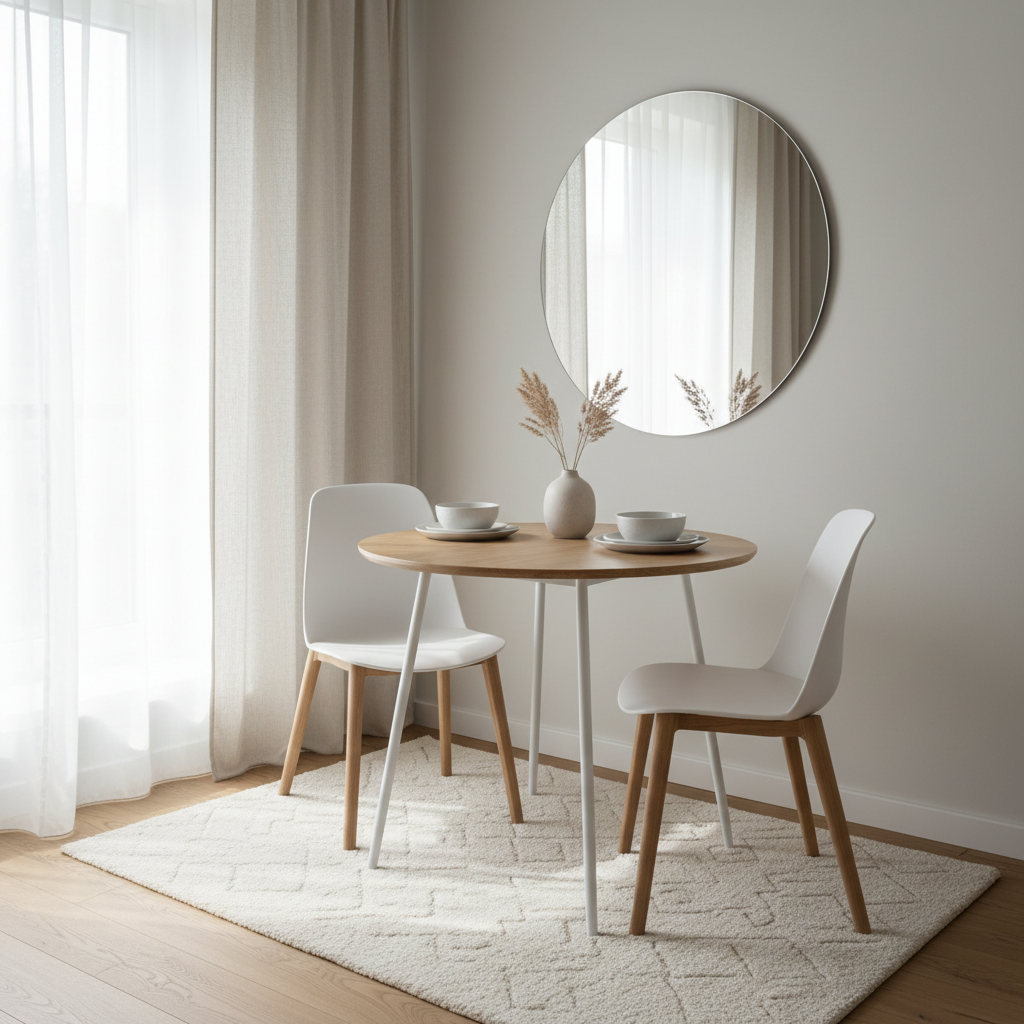
Start with the “real” constraint, not the table style
Before you pick a shape or scroll products, get clear on what limits you. In apartments, space problems are rarely about square footage alone, they’re about clearance and daily traffic.
- Walkway pinch points: doors, fridge swing, hallway paths, balcony access.
- Multi-use needs: dining plus laptop time, homework, crafts, or serving area.
- Storage reality: where extra chairs live when nobody visits.
- Floor plan “dead zones”: that corner that feels useless until you measure it.
Quick measuring rule that helps: measure the footprint you can spare, then subtract what you need for people to move. Many designers aim for roughly 36 inches of clearance for comfortable pass-through, but tight apartments often function with less if the area is low-traffic and chairs can tuck in cleanly.
According to ADA (Americans with Disabilities Act) guidance, accessible routes typically call for wider clearances, so if you’re planning for mobility needs, it’s worth checking those standards or consulting a pro for your specific layout.
Best small table types for apartments (and when each wins)
Most small space dining table ideas fall into a few proven categories. The trick is matching the category to how you live, not how you want your dining area to look on day one.
Drop-leaf tables (the flexible classic)
Drop-leaf styles shine when you eat solo during the week, then occasionally host. Leaves down keep the profile slim, leaves up give you a “normal” surface.
- Good for: studios, galley kitchens, narrow dining strips
- Watch for: leaf hardware quality, wobble, knee clearance
Wall-mounted fold-down tables (the space saver)
If your layout can’t tolerate a permanent footprint, wall-mounted fold-down tables are hard to beat. They do ask more from your walls, and installation needs care.
- Good for: micro-apartments, breakfast bars, entry-kitchen combos
- Watch for: stud placement, weight rating, wall material
For rentals, double-check your lease rules and consider a professional installer if you’re unsure about anchors. A table that pulls out of drywall is a bad day.
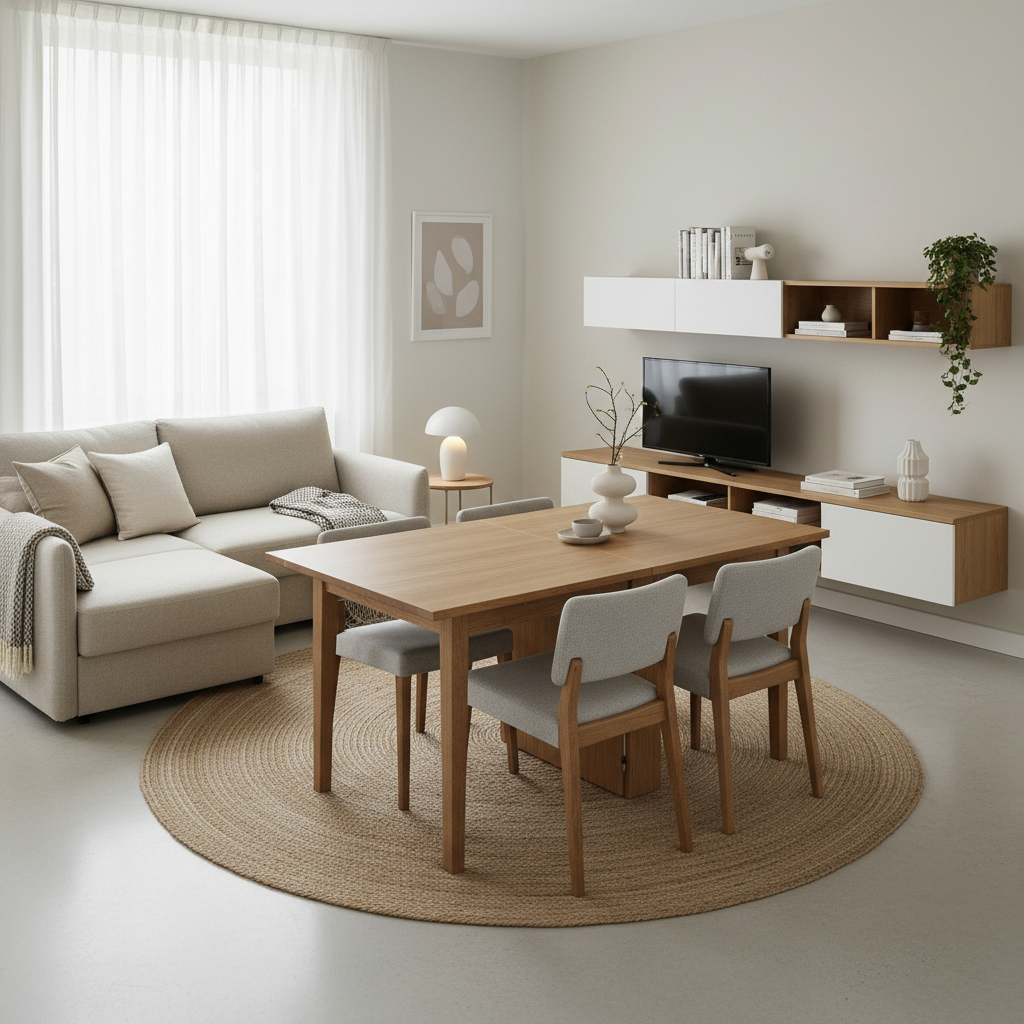
Extendable tables (the “normal table” that adapts)
Extendable designs work when you want a table that feels substantial every day, but still stretches for guests. Look for simple extension mechanisms you’ll actually use.
- Good for: one-bedroom apartments, open living/dining rooms
- Watch for: stored leaf location, edge comfort, chair spacing when extended
Round pedestal tables (small footprint, easier flow)
Round tables often feel “smaller” in use because there are no sharp corners to navigate, and a pedestal base can make seating less awkward.
- Good for: tight walkways, awkward corners, conversation-friendly meals
- Watch for: base width versus knee space, stability if you lean on it
Console-to-dining tables (the transformer)
These convert from a narrow console into a full dining surface, sometimes with stored leaves and folding legs. They’re not for everyone, but they’re clever in spaces where a dining table would otherwise dominate.
- Good for: living rooms that need open floor most days
- Watch for: setup time, storage for leaves, long-term durability
Size and seating cheat sheet (use this before you buy)
A table can “fit” on paper and still feel annoying in daily use. Use this quick reference as a reality check.
| Apartment scenario | Table size that often works | Comfortable daily seating | Notes |
|---|---|---|---|
| Studio, tight kitchen edge | Drop-leaf 24–36 in wide | 1–2 | Keep one leaf down to protect walkway |
| Small nook by window | Round 30–36 in diameter | 2–3 | Pedestal base helps chairs tuck |
| One-bedroom, open plan | Extendable 36x48 in (extends longer) | 2–4 | Plan chair storage for guest mode |
| Living room doubles as dining | Console-to-dining converter | 2 daily, 4–6 occasionally | Best if you’ll actually convert it |
Chair choice matters as much as the table. Armless chairs tuck in easier, slim-profile chairs reduce visual clutter, and benches can save space on one side, but benches become annoying if someone needs to get up often.
Layout ideas that make a small dining area feel bigger
When people ask for small space dining table ideas, they often want a product recommendation. But layout tweaks usually create the bigger payoff, because they fix flow problems.
Put the table where chairs can “borrow” space
A common win: place one side against a wall, window, or banquette so only the open side needs full chair clearance. This is especially effective with a bench or built-in seating.
Use a rug only if it defines the zone without blocking movement
Rugs can visually anchor a dining nook, but in tight apartments, a rug edge can become a trip point or chair snag. If chairs catch every time you scoot in, skip it.
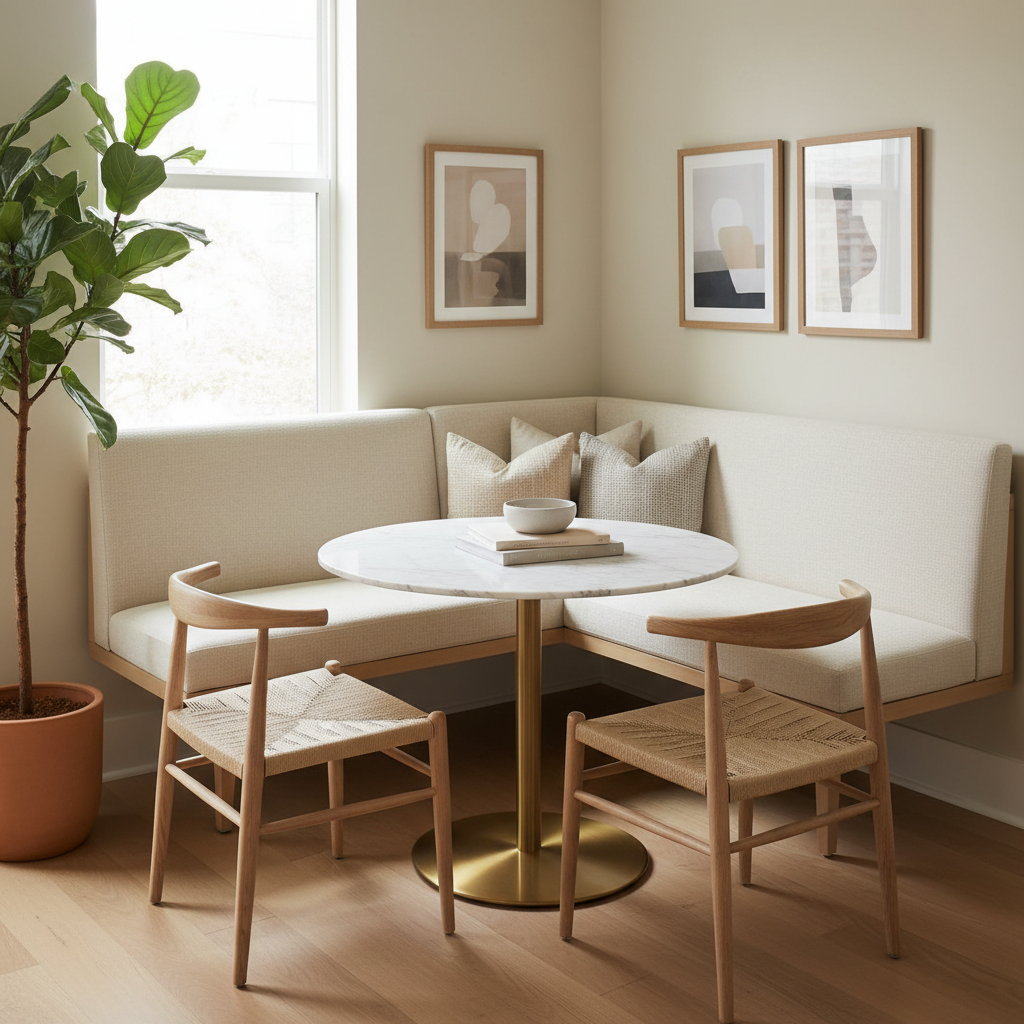
Try a corner banquette if your nook is awkward
A compact banquette turns “wasted” corner space into seating and can reduce how far chairs pull out. If you can’t build in, a ready-made corner bench plus a small round table often gets close.
Let lighting do some of the work
A pendant or plug-in sconce over the dining spot makes the area feel intentional, even if the table is small. Just keep the fixture scaled, oversized lights can make the corner feel crowded.
Practical buying checklist (so you don’t regret it in two weeks)
Here’s what experienced apartment shoppers check beyond “does it look cute.” It saves returns, and it saves frustration.
- How many seats on a normal day? Buy for daily life, then plan for guests with folding chairs.
- What’s the tightest path nearby? If it blocks the fridge or the front door, it’s not the right piece.
- Leg placement: Corner legs can fight chair legs, pedestal bases usually play nicer in small rooms.
- Edge comfort: Thin sharp edges feel harsh if you work there with forearms on the surface.
- Finish and maintenance: Matte hides fingerprints, glossy shows everything, especially under warm kitchen lighting.
- Noise and wobble: Lightweight tables can shake on older apartment floors, adjustable feet help.
Common mistakes that waste space (even with a “small” table)
A table can be compact and still be wrong for your apartment. These issues show up a lot.
- Choosing width over clearance: a narrow rectangular table may look efficient, but if chairs must sit in the walkway, it feels worse than a round table.
- Oversizing to “host someday”: if you host twice a year, consider an extendable top or a drop-leaf instead of sacrificing daily comfort.
- Ignoring chair storage: extra chairs need a plan, closet, wall hooks, or foldable options.
- Buying bulky dining chairs: thick arms and wide frames steal the space you thought the table saved.
- Forgetting task needs: if this table doubles as a desk, prioritize legroom, surface durability, and cable-friendly placement.
When it’s worth getting outside help
If you’re stuck, it may not be you, some layouts are genuinely tricky. A quick consult can be useful when you have odd angles, fixed radiators, or you’re trying to keep an accessible route through the space.
- If you need wheelchair-accessible clearances, consult an accessibility specialist or qualified contractor for your exact room dimensions.
- If you’re mounting a fold-down table, a handyman or installer can confirm studs and anchors, especially in older buildings.
- If you’re planning built-in seating, a local carpenter can help avoid mistakes like unusable seat depth or blocked outlets.
Key takeaways
- Measure clearance first, then pick a table type that matches how you move through the room.
- Drop-leaf and wall-mounted options handle the smallest footprints, extendable tables keep things “normal” day to day.
- Round pedestal tables often improve flow in tight walkways, chair choice can make or break the setup.
- Plan where extra seating goes before you buy, your future self will thank you.
Conclusion
The best apartment dining setup rarely depends on one perfect product, it comes from matching a table style to your traffic paths, your daily routine, and how often you truly host. Pick a table that behaves well on an average Tuesday, then add flexibility for the occasional Friday night.
If you want a simple next step, measure your tightest clearance point, decide whether you need a fixed, foldable, or extendable surface, then choose chairs that tuck in cleanly. That combination tends to deliver the biggest “my place feels bigger” result without major compromise.
FAQ
What are the best small space dining table ideas for a studio apartment?
Drop-leaf tables and wall-mounted fold-down options usually work well in studios because they keep a slim profile when you’re not eating. If you have a small nook, a 30–36 inch round pedestal table can also feel surprisingly comfortable.
Is a round or rectangular table better for a small apartment?
Round tables often win when you’re fighting tight walkways, since corners don’t snag traffic flow. Rectangular tables can work better when the space is long and narrow, especially if you can push one side against a wall.
How many people can realistically sit at a small dining table?
For daily comfort, many small tables feel best with 2–4 seats depending on shape and chair size. You can sometimes “fit” more, but if elbows collide or chairs block the path, it stops being practical.
Are benches a good idea for small dining areas?
Benches can save space on one side and help a table sit closer to a wall. The tradeoff is convenience, if someone needs to get up often, a bench can feel like a hassle compared with individual chairs.
What should I look for in a foldable dining table for an apartment?
Focus on stability, easy hardware, and whether you’ll truly fold it away. Also confirm installation needs if it’s wall-mounted, in many cases a professional installer makes sense for safety.
Can a small dining table double as a desk?
Yes, and it’s common in apartments. Prioritize legroom, edge comfort, and a surface finish that handles heat and spills, then place it near an outlet so cords don’t run across walkways.
How do I plan for guests without buying a bigger table?
Use an extendable or drop-leaf table, then keep 2–4 folding chairs in a closet or under a bed. This approach usually keeps daily life comfortable while still letting you host occasionally.
If you’re trying to choose between a couple of options and your room feels “almost workable but not quite,” it can help to share your measurements, walkway constraints, and how many seats you need day to day, you’ll get to a decision faster and avoid buying a table that looks right but lives wrong.