
Garage storage ideas for tools work best when you stop thinking “more bins” and start thinking “zones plus access,” because most garage mess comes from mixing quick-grab tools with long-term equipment on the same shelves.
If your garage feels cramped, it’s rarely because you own too much, it’s because the storage doesn’t match how you actually use the space, ladders lean where cars should park, drills disappear under paint cans, and cords turn into a floor hazard.
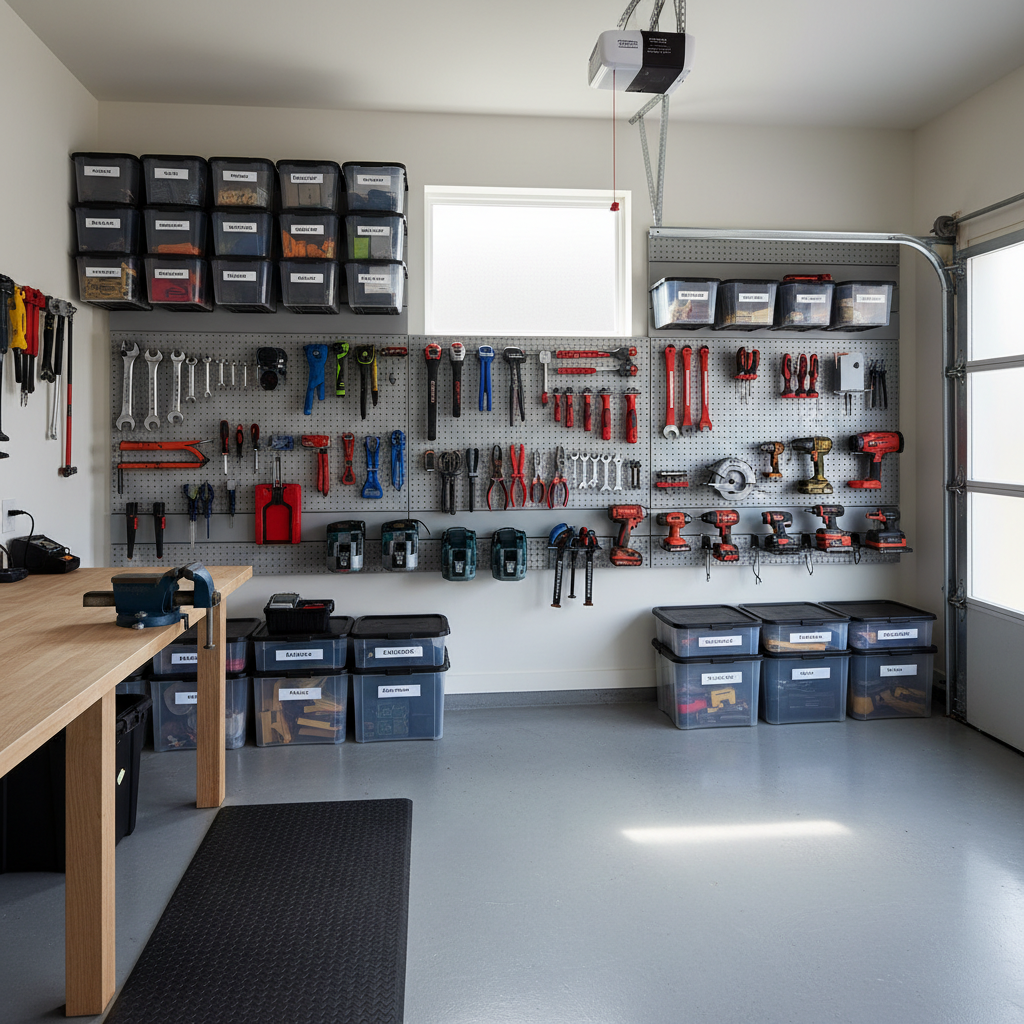
This guide focuses on practical setups for real households, weekend DIYers, and home mechanics, what to buy, what to skip, and how to decide when wall storage, cabinets, or overhead racks make sense.
You’ll also get a quick self-check, a comparison table, and a step-by-step plan you can finish over a weekend without turning the garage into a month-long project.
Start with the “garage zones” plan (it’s the part most people skip)
Before hooks and racks, decide what activities your garage supports, parking, DIY, lawn care, sports, seasonal storage, or a mix. That decision tells you what deserves prime wall space versus higher shelves.
- Daily/weekly grab zone: drill, driver bits, tape, safety glasses, work gloves, shop vacuum attachments.
- Project zone: fasteners, adhesives, paints, clamps, sanding supplies, extra blades.
- Yard zone: trimmer, blower, fuel cans, pruning tools, extension cords.
- Auto zone: jack, stands, fluids, funnels, torque wrench, detailing supplies.
- Long-term zone: holiday bins, camping gear, rarely used specialty tools.
Put your most-used tools between shoulder and waist height, it sounds obvious, yet many garages waste that band on random shelves full of “someday” items.
Pick the right storage system: pegboard vs slatwall vs cabinets vs shelves
Most garages need a hybrid. The trick is choosing a backbone system, then adding smaller pieces that solve specific problems like awkward tool shapes or chemical storage.
Quick comparison table
| System | Best for | Pros | Watch-outs |
|---|---|---|---|
| Pegboard | Hand tools, light power tools | Low cost, flexible layout, easy to expand | Hooks can pop out if overloaded, needs solid mounting |
| Slatwall | Heavier tools, mixed gear | Stronger, cleaner look, wide accessory options | Higher cost, plan layout to avoid “dead” sections |
| Wall cabinets | Fluids, small parts, valuables | Dust control, hides visual clutter, safer storage | Needs studs/anchors, doors can block tight spaces |
| Open shelving | Bins, bulky supplies | Fast access, affordable, easy DIY | Becomes “stuff catcher” without labels and limits |
| Overhead racks | Seasonal bins, light bulky items | Frees floor space, uses vertical volume | Weight limits matter, keep clear of garage door tracks |
If you’re deciding between pegboard and slatwall, think “light and cheap” versus “heavier and calmer,” either can work, but a flimsy wall system is where garage organization quietly fails after two weeks.
Wall storage ideas that actually hold tools (without constant re-hanging)
Wall storage is where the best garage storage ideas for tools pay off, because you stop stacking and start seeing. The goal is fewer drawers to rummage through and fewer trips across the garage mid-project.
- Outline boards for your core hand tools, not for every tool you own. Keep it tight and realistic.
- Magnetic bars for screwdrivers, small wrenches, and bits, great near a workbench, less great for heavy impacts.
- Dedicated drill/driver dock with battery charging shelf, keep chargers off the floor and cords controlled.
- Long-handle tool rail for rakes, shovels, brooms, aim for heads up to avoid tangling.
- Hose and cord reel to remove trip hazards, choose a reel you’ll actually rewind, not a “someday” reel.
According to OSHA, good housekeeping helps reduce slip, trip, and fall hazards in work areas. A garage is not a jobsite, but cords and clutter behave the same way, so treat the walkway like a no-storage zone.
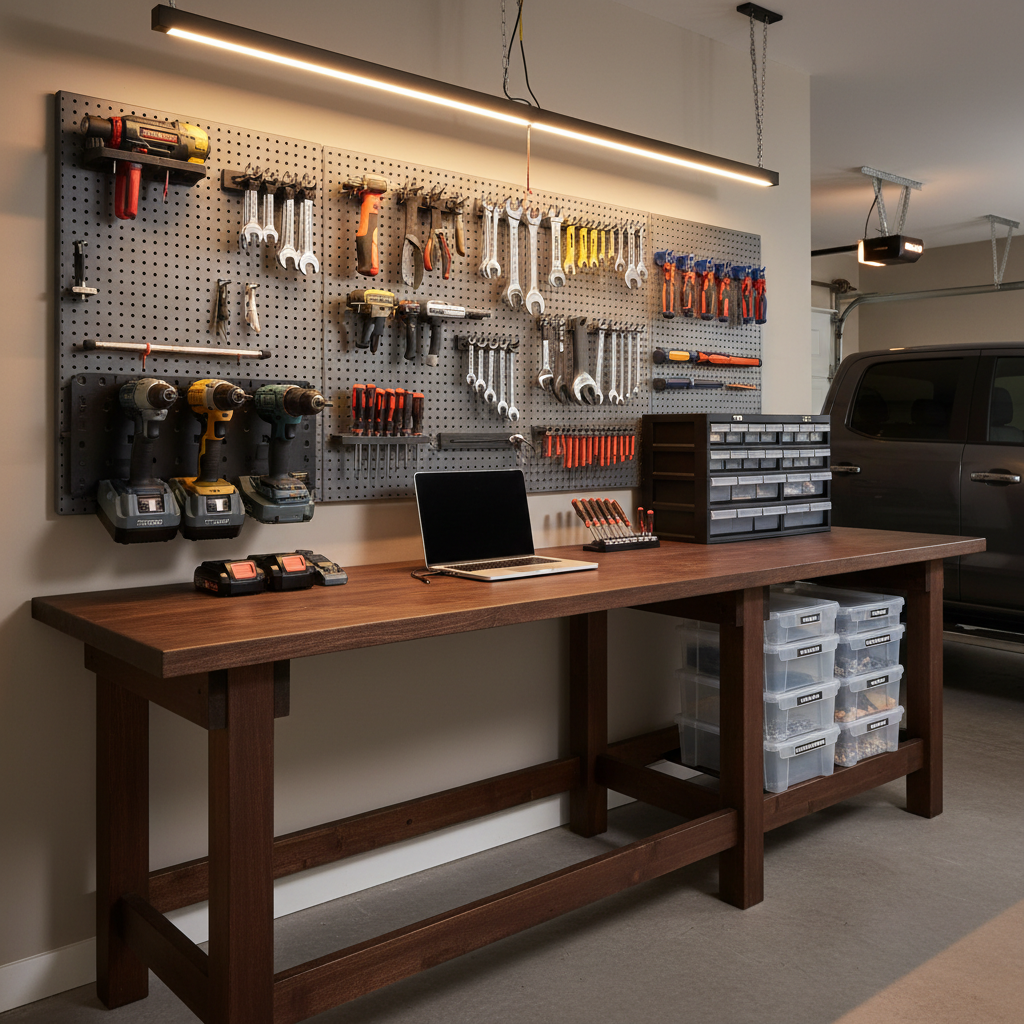
If you only do one thing, mount a “primary tool wall” close to the bench or the spot where you naturally start projects, people often put it on the farthest wall because it looks nicer, then never use it.
Small parts and hardware: stop the “mystery screws” problem
Fasteners, anchors, and random brackets create visual chaos fast, and they’re the first thing that makes a garage feel out of control. This is also where labels matter more than aesthetics.
What works in most garages
- Clear drawer organizers for screws, washers, and specialty bits, you see inventory at a glance.
- Stackable, labeled bins for project-specific kits, for example “deck repair” or “picture hanging.”
- One ‘catch-all’ tray limited to a single container, if it overflows, you sort it that week.
A simple rule helps: if you can’t describe what’s inside in two words, it doesn’t get a bin, it gets sorted or tossed.
Overhead and ceiling storage: when it helps, and when it backfires
Ceiling racks look like a magic trick, but they only feel magical if you store the right items, think light, bulky, and seasonal, not “heavy and awkward.”
- Good candidates: holiday decor bins, camping chairs, empty coolers, pool noodles, wrapping paper tubes.
- Bad candidates: paint cans, large power tools, anything you’ll need weekly.
Before you buy, check garage door travel and opener clearance, and confirm your ceiling structure can support the load. If you’re unsure about load ratings or mounting into ceiling joists, asking a qualified installer is usually safer than guessing.

One practical move: color-code seasonal bins and keep an inventory list taped inside a cabinet door, overhead storage is out of sight, so you need a reminder system.
A quick self-check: what type of garage setup do you actually need?
These questions help you avoid buying storage that looks great online but doesn’t fit your routine.
- Do you park inside? If yes, floor space is premium, prioritize wall and overhead options.
- Are your tools mostly hand tools or bulky equipment? Hand tools love wall systems, bulky gear needs shelves and racks.
- Do you share the garage? Shared spaces need clearer zones and more closed storage to prevent drift.
- Do you do messy work? If yes, cabinets and closed bins reduce dust and cleanup time.
- What do you need weekly? Weekly items stay at eye level, everything else earns a higher shelf.
If you answered “yes” to parking plus weekly projects, your best path is usually a workbench zone with a dense tool wall, plus a small cabinet for chemicals and a limited shelf row for bins.
Weekend action plan: set up your garage in a way that stays organized
You don’t need a full remodel to get momentum. A solid reset often comes from making a few decisions and sticking to them.
Day 1: Reset and measure
- Clear one wall and one shelf section, don’t try to touch every corner.
- Measure wall width, stud spacing, and garage door track clearance.
- Group tools by use, not by brand, keep “project pairs” together.
Day 2: Install and assign homes
- Mount the wall system first, then hang tools, avoid “designing” on the floor for hours.
- Label bins in plain language, “gloves,” “sanding,” “plumbing,” not “misc.”
- Create a one-minute reset routine, put away five items before you close the door.
Once the basics are up, you’ll spot what’s still annoying, that’s when you add one or two targeted upgrades like a reel, a battery shelf, or a small-parts drawer unit.
Common mistakes to avoid (these waste money fast)
- Buying storage before sorting, you’ll build a system around clutter instead of around use.
- Overloading hooks and rails, a few failures teach you the wrong lesson, “wall storage doesn’t work,” when the issue is capacity.
- Too many open shelves, they look tidy for a week, then become a dumping ground without bin limits.
- Hiding everything, closed cabinets are great, but if nothing is visible you may rebuy tools you already own.
- Ignoring safety storage, fuels, solvents, and pesticides may need special handling, read product labels and consider professional advice for your situation.
Key takeaways: build zones, keep weekly tools at eye level, use walls for visibility, ceilings for seasonal volume, and label like you’re helping your future self on a rushed Saturday.
When it’s worth getting professional help
If your plan includes heavy overhead racks, large cabinets, or wall-mounted systems holding expensive power tools, it can be worth hiring a handyman or garage storage installer, especially if you’re not confident locating studs, anchoring into masonry, or respecting load limits.
Also consider help if you have electrical upgrades in mind, like new outlets for charging stations or better lighting. Electrical work has real safety risk, and local codes vary, so a licensed electrician is often the right call.
Conclusion: make it easy to put tools away, not just easy to buy storage
The garages that stay tidy usually don’t have “more storage,” they have fewer decisions, each tool has an obvious home, and the most-used gear sits where your hands naturally reach. If you want a clean win this week, start with one primary wall and one small-parts system, then build out from there.
If you do nothing else, pick a two-hour window, create your zones, hang the weekly tools, and label a few bins, that alone tends to change how the whole space feels.
FAQ
- What are the most practical garage storage ideas for tools if I’m on a budget?
Start with a basic pegboard or a DIY French cleat wall, then add a small-parts drawer unit and a couple of labeled bins. Budget setups work when you limit categories and keep the tool wall close to where you work. - How do I organize power tools so batteries don’t end up everywhere?
Create a single charging station with a shelf and a power strip mounted off the floor, then hang the tools nearby. If cords become messy, a short cable management tray helps more than another bin. - Is pegboard strong enough for heavier tools?
Sometimes, but it depends on mounting and hook quality. If you’re hanging heavier items, slatwall or a cleat system typically feels more secure, and you’ll spend less time rehanging hooks. - What should not be stored overhead in a garage?
Avoid heavy items and anything you’ll need often, and be cautious with liquids like paint or chemicals. If you’re unsure about temperature stability or safety, follow product labels and consider professional guidance. - How high should I mount a tool wall?
Keep the “active zone” roughly between waist and shoulder height for your household’s main user. Less-used tools can go higher, but the daily drivers should be reachable without a step stool. - What’s the easiest way to keep small hardware organized long-term?
Use clear drawers or small bins and label by type and size, then set a container limit for random leftovers. A single “sort later” tray prevents the slow drift back into chaos. - Do I need cabinets, or are shelves enough?
If you want less dust and visual clutter, cabinets help. If you prioritize quick access and you’re disciplined with labeled bins, shelves can be enough, many garages benefit from having both.
If you’re trying to turn a chaotic garage into a space where tools are easy to find, it can help to map your zones and pick one wall system to commit to, and if you’d rather not guess sizes, layouts, or load limits, a ready-made garage storage kit or an installer consultation can be a more straightforward path.