
How to divide a studio apartment without walls usually comes down to one thing: creating clear “zones” for sleeping, living, and working without making the space feel smaller or darker.
A studio can feel messy fast, not because you own too much, but because everything happens in one sightline, your bed faces the sofa, your desk becomes the dining table, and suddenly nothing feels restful.
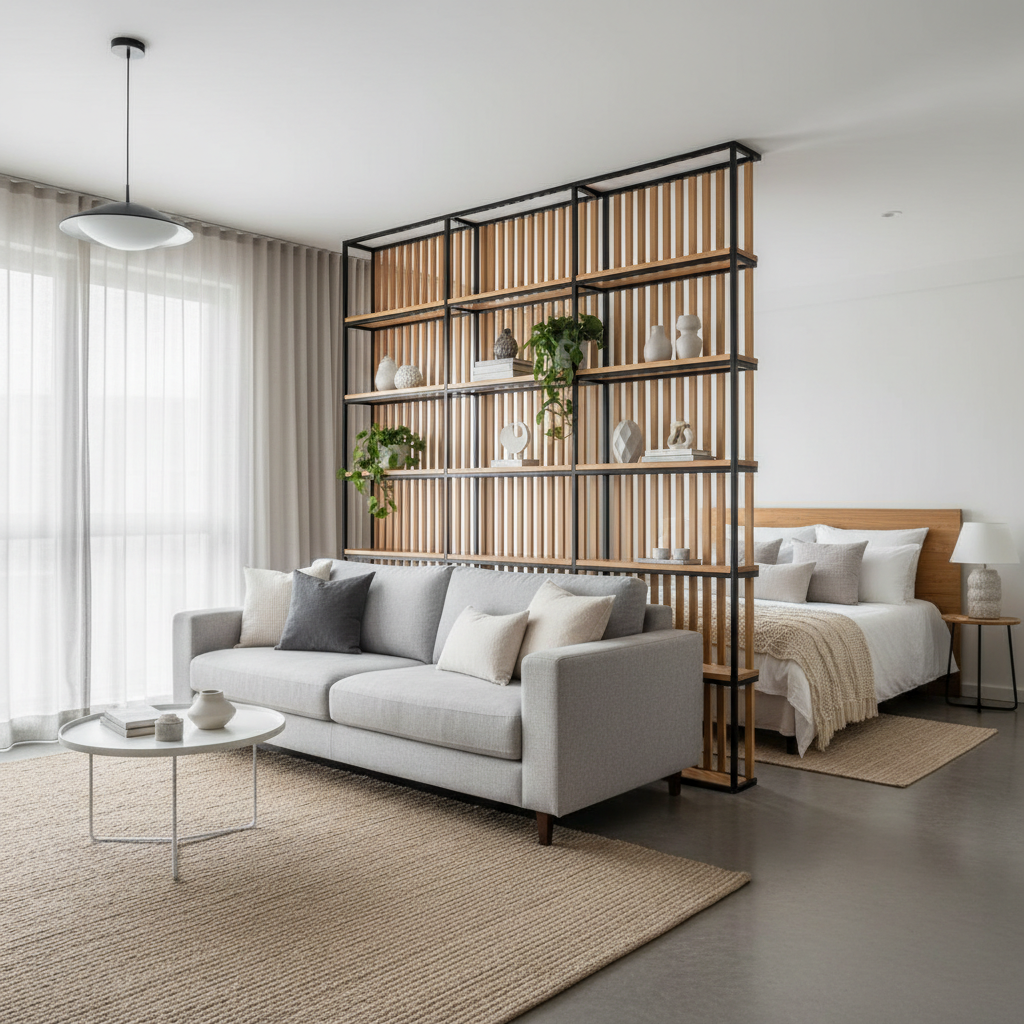
The good news is you do not need construction, permits, or permanent partitions to make it work, you need a plan that respects light, circulation, and how you actually live on a Tuesday night.
This guide walks through the most reliable divider options, a quick self-check to pick the right one, and a few “do this before you buy anything” moves that save money and frustration.
Start with zones, not dividers
Before you shop, decide what zones you really need, most studios only need two or three, and every extra “area” tends to create clutter.
- Sleep zone: bed, nightstand, lamp, maybe a small dresser.
- Living zone: sofa or loveseat, coffee table, media stand.
- Work or dining zone: desk that can double as a table, or a small dining set.
Now think about flow, you want a clear walkway from the entry to the kitchen and bathroom, and you want daylight to travel as far as possible into the room, blocking windows is where most studio layouts start to feel cramped.
Key takeaway: the best divider is often the one that supports the layout you already need, instead of forcing a layout to match a divider you liked online.
A quick self-check: what kind of separation do you actually need?
Not everyone needs “privacy” in the same way, and that changes what will work. Use this as a fast filter.
- Visual privacy: you do not want to see the bed from the front door or sofa.
- Light-friendly separation: you want a boundary but still want sunlight to pass through.
- Sound buffer: you take calls, host guests, or have different sleep schedules.
- Renter-friendly: no drilling, no ceiling tracks, easy to remove.
- Storage boost: the divider should also hold books, baskets, or clothing.
If you mostly want visual privacy, you have many options. If you truly need sound control, your choices narrow, and you may need soft materials plus placement changes, because most “no wall” solutions do not block sound the way drywall does.
Divider options that look good and still feel breathable
Here are the workhorse solutions that tend to photograph well and live well. Mix and match when it makes sense, but try not to stack three dividers in one small room.
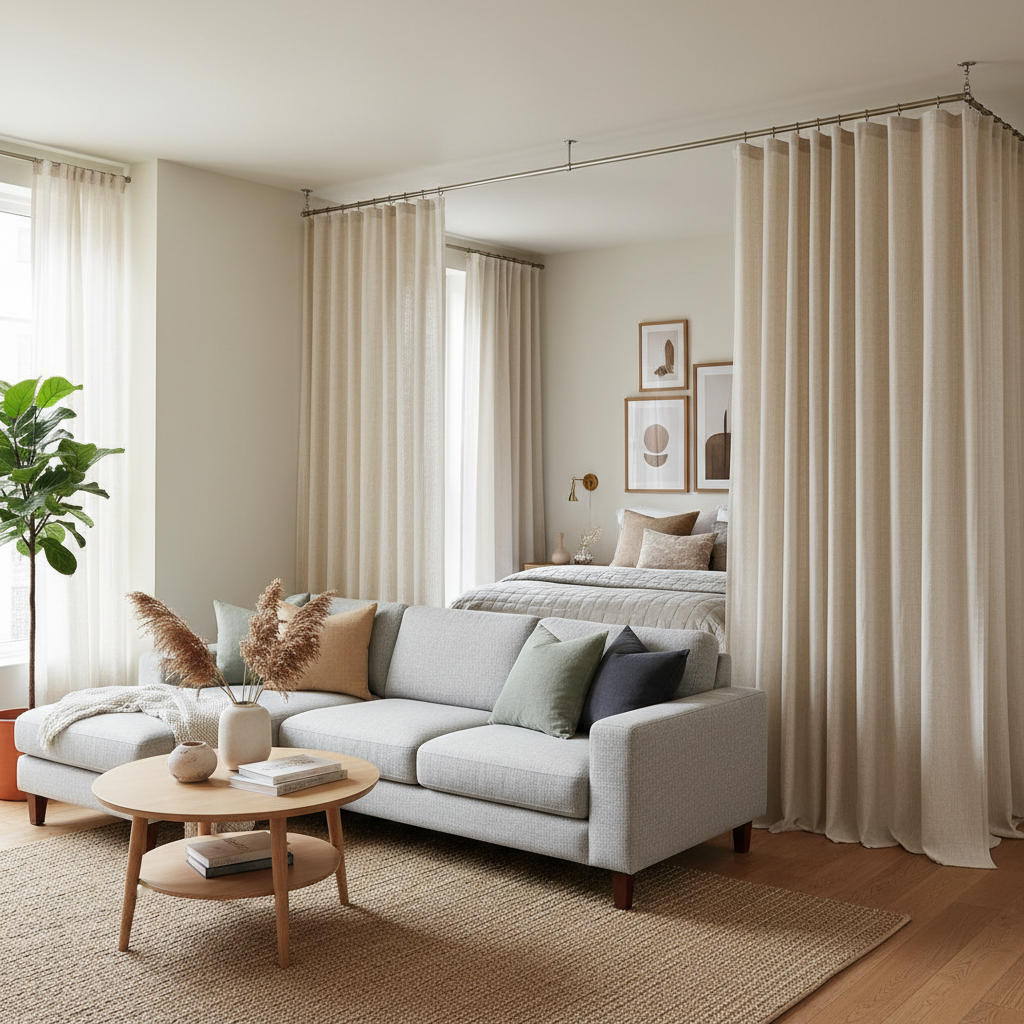
1) Curtains and ceiling-to-floor drapes (soft separation)
Curtains are underrated because they are flexible, you can open them daily and close them when you want the bedroom to disappear.
- Choose ceiling-height panels to make the studio feel taller.
- Use sheers when you want light, and a heavier panel if you want more visual privacy.
- If you are renting, tension systems or removable track setups often work, but check your lease and ceiling type.
2) Open shelving as a “see-through wall” (privacy + storage)
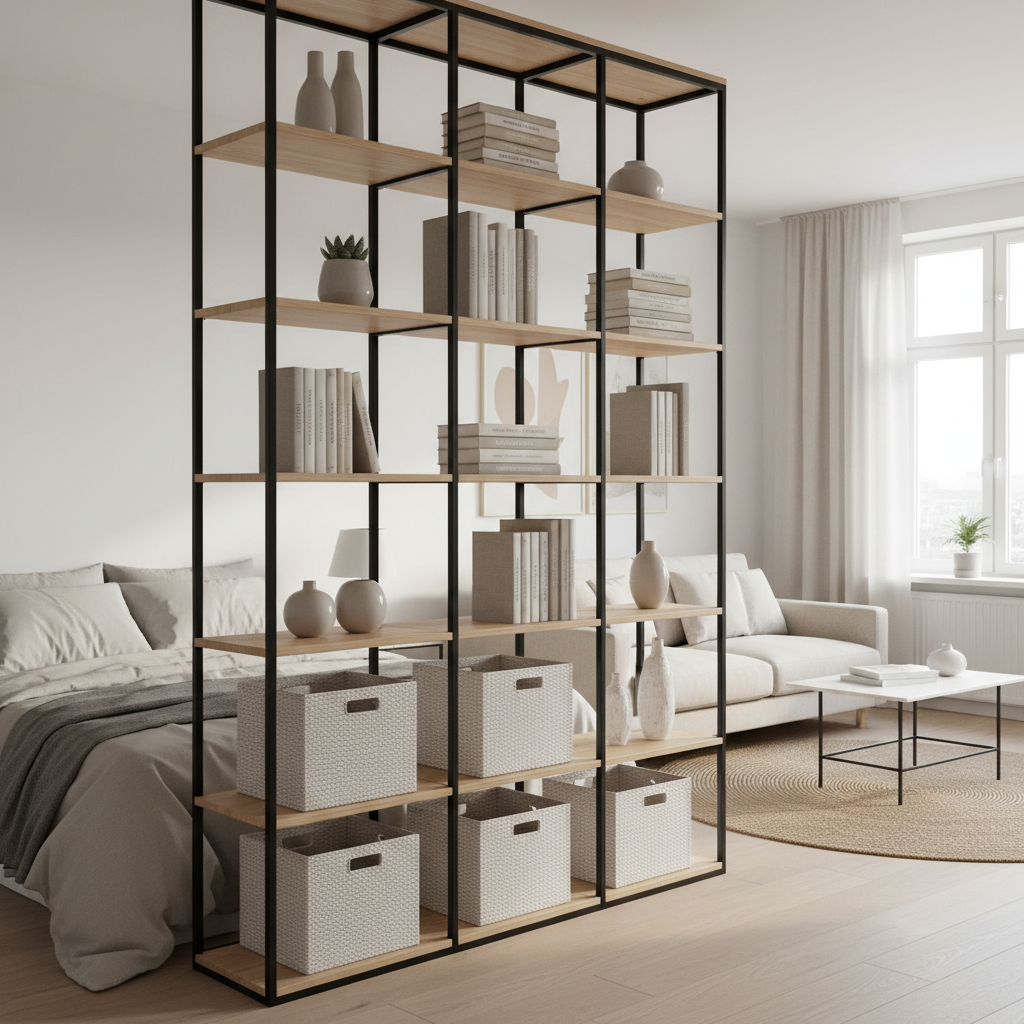
An open bookcase can divide a studio while still letting light pass through, and you gain storage, which is usually the real pain point.
- Anchor it safely when possible, tipping risk is real, especially with pets or kids.
- Use bins on the lower shelves to hide clutter, keep upper shelves lighter.
- Leave a few open squares, a fully packed shelf reads heavy fast.
3) Folding screens (fastest, least commitment)
A screen is the quickest answer to how to divide a studio apartment without walls when you want something you can move around, especially for occasional guests.
- Best for visual separation, not for sound.
- Works well angled, not flat against furniture, angles add stability and style.
- Look for wider panels if you want the bed fully hidden from the sofa.
4) Rugs and lighting (the invisible divider)
This sounds too simple, but it is often the most natural, a rug under the sofa group signals “living room,” a different rug or none under the bed signals “bedroom,” and lighting finishes the boundary.
- Use a floor lamp for the living zone and a table lamp for sleep zone.
- Keep bulb color consistent so the space feels intentional, not patchy.
Choose the right method: a practical comparison table
If you feel stuck, pick based on what you need most, privacy, flexibility, or storage. This table keeps it grounded.
| Method | Best for | Light flow | Sound control | Renter-friendly? |
|---|---|---|---|---|
| Curtains/drapes | Bed privacy on demand | High (with sheers) | Low to medium | Often, depends on install |
| Open shelving | Storage + definition | Medium to high | Low | Yes, with safe placement |
| Folding screen | Quick visual block | Medium | Low | Yes |
| Rugs + lighting | Budget zoning, open feel | High | None | Yes |
| Sofa as divider | Clear living room boundary | High | Low | Yes |
Step-by-step: a layout plan that works in most studios
If you want a repeatable approach, do this in order, it avoids the common trap of buying a divider and then realizing it blocks the only natural light.
Step 1: Place the bed where it feels calm
Most people sleep better when the bed is not the first thing you see from the entry, and when it is not jammed into the kitchen path. If your studio has an alcove, treat it like a mini bedroom.
Step 2: Build the living area around a rug
Put the front legs of the sofa on the rug, and keep a consistent “conversation distance” between sofa and coffee table. This makes the living area read as a room, not leftover space.
Step 3: Create the divider line
Now decide the boundary between bed and sofa:
- If you need flexibility, use curtains or a folding screen.
- If you need storage, use open shelving perpendicular to the wall.
- If your studio is very small, use the back of the sofa plus a slim console table, that combo often looks intentional.
Step 4: Add a “landing strip” near the entry
A narrow bench, hooks, or a small cabinet stops your keys, bags, and shoes from migrating into every zone. It sounds minor, but it is how studios stay tidy.
Make it feel bigger: the details that matter more than the divider
This is where many make or break the look. The divider is visible, but the supporting choices determine whether the studio feels like a home or a storage unit with decor.
- Keep sightlines: choose open or semi-open dividers when you only have one window wall.
- Use vertical height: tall curtains, tall shelves, and higher art placement can lift the room visually.
- Repeat materials: if the divider is light wood, echo that wood in a side table or picture frame.
- Hide the “utility”: cords, hampers, and random bins read messy, tuck them behind doors or matching baskets.
According to U.S. Consumer Product Safety Commission (CPSC), tip-over accidents involving furniture can be serious, so if you use tall shelving as a divider, consider anti-tip measures and placement that reduces climb temptation, especially with children.
Common mistakes that waste money (and how to avoid them)
If you have tried to figure out how to divide a studio apartment without walls and it still feels off, it is often one of these.
- Blocking the only good light: a solid divider near the window can make the whole studio feel like dusk.
- Going too bulky: thick armoires and deep shelves eat floor area and shrink walkways.
- Making the bed the focal point: if the bed is centered in the main view, the space reads like a bedroom with a couch, not a studio with zones.
- Ignoring storage reality: if you do not add a real home for daily items, any divider becomes a backdrop for clutter.
One more thing people skip, measure door swings, radiator clearance, and vent locations, it is boring, but it prevents the “why does this feel cramped” problem.
When it is worth calling in help (or at least getting a second opinion)
If you are dealing with ceiling damage risk, unclear lease rules, or you want to hang heavy ceiling tracks, it can be smart to ask your landlord or a licensed contractor, especially in older buildings where ceiling anchors and pipes vary.
If you are trying to improve sound privacy for remote work or sleep, consider talking with an interior designer or acoustic consultant, many no-wall dividers look good but will not solve noise in a meaningful way.
Conclusion: a studio can feel like “rooms” without becoming closed off
Most people do not need a dramatic partition, they need clear zones, a divider that matches the kind of privacy they want, and a few small choices that protect light and circulation. If you do one thing this week, sketch your floor plan and mark the walking paths, then pick one divider approach that supports that map.
If you want quicker results, start with rugs and lighting, then add curtains or open shelving only where the boundary truly helps, that is usually the cleanest path to a studio that feels calm.
FAQ
How do I divide a studio apartment without walls on a tight budget?
Start with zoning tools you may already own, a rug to define the living area, a floor lamp to anchor it, and a bookshelf you can rotate to create a boundary. If you buy one item, curtains often give the most impact per dollar because they hide the bed when you want.
What is the best way to hide a bed in a studio?
Curtains and tall open shelving are the most common answers because they create strong visual separation without permanent construction. If your bed is right by the entry, prioritize blocking that first sightline, it changes how the whole space reads.
Will a room divider make my studio feel smaller?
It can, especially if it is solid and tall in a studio with limited windows. Many cases look better with semi-open dividers, lighter colors, and enough clearance to keep walkways wide and obvious.
How can I create a bedroom area in a studio for better sleep?
Try to keep the sleep zone visually quieter, fewer bright objects, softer lighting, and a divider that reduces visual noise from the living area. Sound is harder to control, but textiles like curtains and rugs may help a bit.
Can I use a sofa to divide a studio apartment?
Yes, and it is often more natural than a separate divider. Place the sofa with its back toward the bed, then add a slim console behind it to make the boundary feel finished and useful.
What should renters avoid when dividing a studio?
Avoid drilling or heavy ceiling hardware without permission, and be cautious with tall shelving that could tip. If you are unsure, choose freestanding solutions like screens, rugs, or furniture placement changes.
How do I divide a studio apartment without walls and still keep it bright?
Keep dividers away from the window line when possible, use open shelving or sheer curtains, and avoid dark, solid partitions. Mirrors can help bounce light, but only if the room is already reasonably organized, mirrors double clutter too.
If you are trying to divide a studio and it keeps feeling “almost right,” a quick layout review can save you from buying the wrong divider twice, sometimes a small shift in bed angle, rug size, or shelf placement does more than adding another piece.