
Small living room ideas with tv work best when you treat the screen as part of the layout, not an afterthought you squeeze into a corner. In a tight space, a TV can quietly dictate where you sit, how you walk through the room, and whether the whole area feels calm or constantly cluttered.
The good news is you usually don’t need a full remodel, you need clearer priorities: a comfortable viewing angle, a clean path for traffic, and storage that hides the stuff that makes a small room look smaller. Once those three are handled, style becomes much easier.
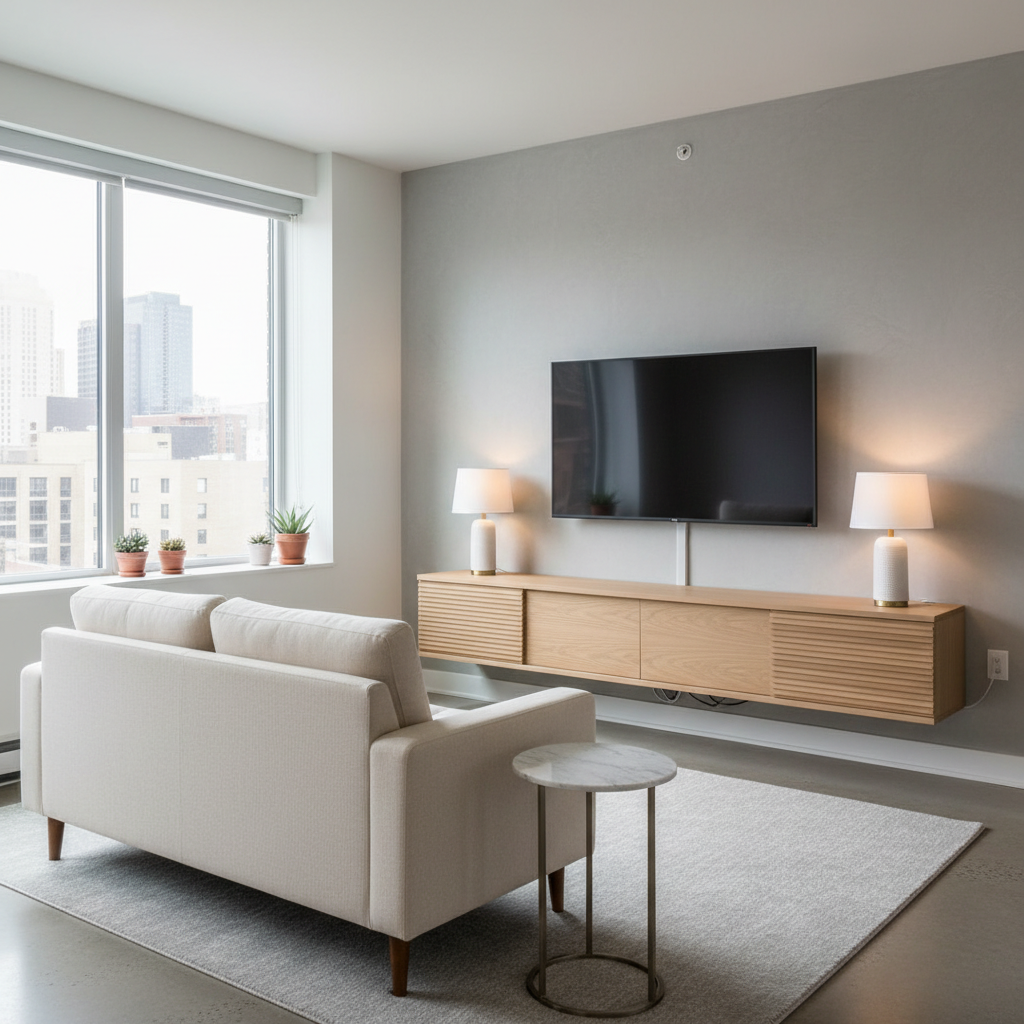
What trips people up is focusing only on “where the TV goes,” then realizing the sofa blocks a doorway, the screen sits too high, or there’s nowhere for a router and game console. This guide breaks down real-world layouts, quick self-checks, and room-by-room fixes you can actually apply.
Start with the three constraints that shape every small room
Before you buy a new console or start drilling into studs, lock in the constraints that don’t care about your Pinterest board: sightlines, walkways, and light.
- Sightlines: Your main seat should face the screen without twisting your neck, if you’re constantly angled, the room feels “off” even if the decor looks nice.
- Walkways: Keep a clear path from doorways to the most-used spots, in many homes that’s 30–36 inches, but adjust to how you actually move.
- Light and glare: If the TV fights a bright window, you’ll hate the room at 2 pm, not just movie night.
According to THX (a well-known audio/visual standards company), a common comfort guideline is planning seating distance based on screen size and viewing angle, so you’re not craning or squinting. You don’t need to memorize formulas, just avoid the extremes: too close feels overwhelming, too far makes subtitles your new personality.
Best layout ideas when your living room is small (and real life is messy)
These are the layouts that show up again and again in U.S. apartments, townhomes, and smaller single-family living rooms. Pick the one that matches your walls and walkways, then refine.
1) TV on the longest wall, seating “floats” slightly forward
This is the most forgiving option because it keeps the viewing angle centered while leaving corners for storage or a reading chair. The trick in a small space is letting the sofa sit a few inches off the wall if it improves traffic flow, it often looks more intentional than it sounds.
2) Corner TV placement, but with a purpose
Corner placement gets a bad reputation because it often happens by accident. It works when the corner is already a visual anchor, like near a fireplace bump-out or when the only uninterrupted wall is taken by windows.
- Use a corner media stand with closed storage, not open shelves that show every cable.
- Angle the main seat toward the corner so the room doesn’t feel like it’s ignoring the TV.
3) TV opposite the window, paired with glare control
If the TV must face a bright window, plan for it: light-filtering shades, curtains, or a matte screen protector can help. This is where small living room ideas with tv become less about decor and more about comfort.
Mounting vs. console: which one actually saves space?
Wall-mounting can free floor area, but only if you also control cords and still provide a “home base” for devices. A mount without a plan often turns into a dangling-wire situation that makes the room feel busier.
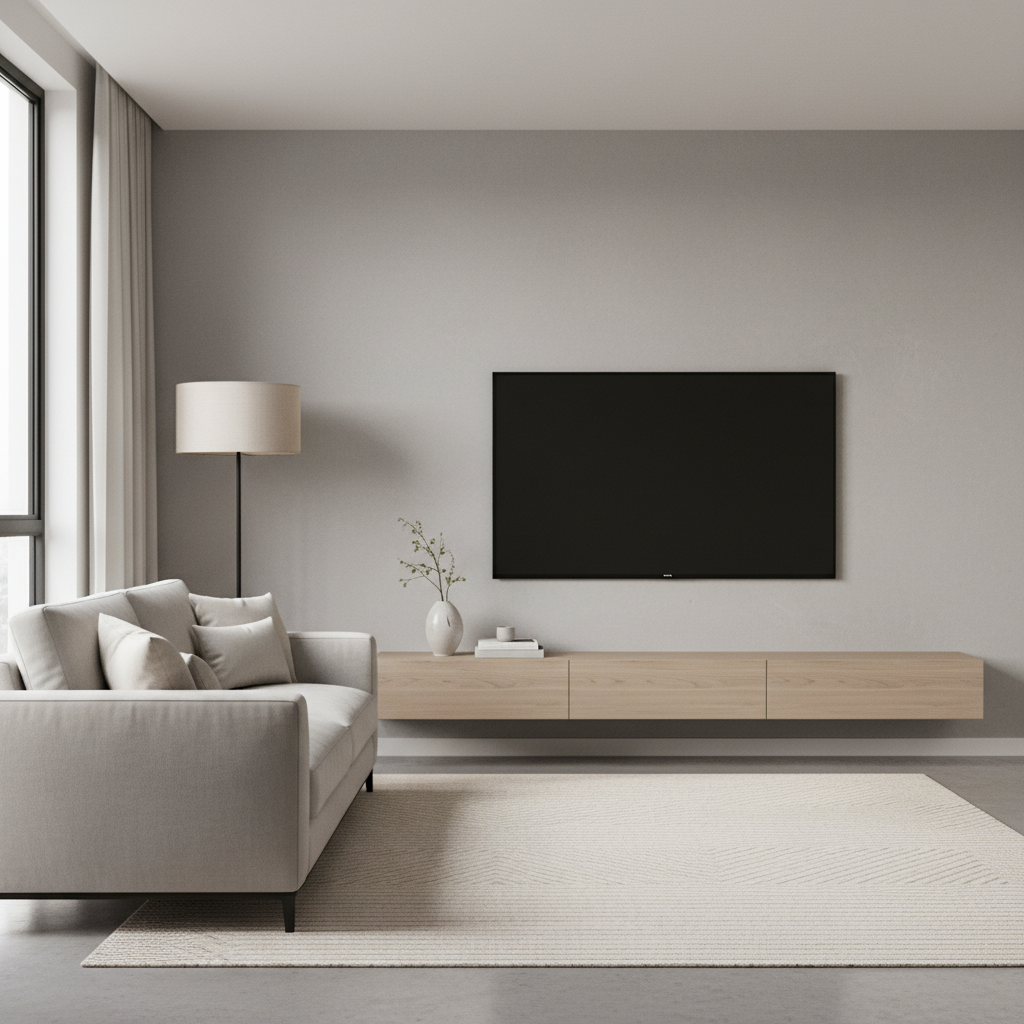
Here’s a practical comparison you can use before buying anything:
| Option | When it works well | Common downside |
|---|---|---|
| Wall-mounted TV | Very tight floor plan, kids/pets, need a clean look | Bad cable management looks worse than a bulky console |
| TV on a slim console | Renters, frequent rearranging, lots of devices to store | Console depth can eat walkway space |
| Hybrid: mount + floating console | Want visual lightness plus hidden storage | Requires careful measuring and sturdy anchoring |
Safety note: If you mount a TV, follow the bracket manufacturer instructions and anchor properly, if you’re unsure about studs, wiring, or wall type, it’s worth asking a qualified installer or contractor. In older buildings, surprises inside walls are not rare.
A quick self-check: why your room feels “tight” even when it’s clean
Sometimes the furniture is fine, but one choice keeps compressing the room visually. Run this checklist and circle what’s true for you.
- Your TV sits higher than eye level when seated, so you tilt your head up.
- The sofa back lines up with a doorway, making entry feel blocked.
- You have more than two open-storage surfaces in the TV area (open shelves, side tables, console cubbies).
- Cables are visible from your main seating spot.
- You rely on a coffee table that’s too large, so you walk around it like an obstacle course.
If you checked 2+ items, you don’t need more decor, you need one targeted fix: lower the TV, shift the sofa, swap one storage piece, or reduce surface clutter.
Storage and styling that make the TV area look intentional (not like a tech corner)
The TV tends to create a “black box” effect in a small room. The goal is not to hide it at all costs, it’s to build a calm frame around it so the screen doesn’t dominate.
Use closed storage for the messy reality
- Pick a console with doors or drawers for remotes, controllers, and cables.
- Limit decor on the media surface to 2–3 items, extra objects read as clutter fast.
Balance the TV with vertical elements
- Add a tall plant or slim floor lamp to one side, it softens the rectangle-heavy look.
- If you do shelves, keep them light and asymmetrical, and leave empty space on purpose.
Consider a TV wall that’s “quiet”
A matte paint finish, a subtle wallpaper, or a simple slat panel can make the wall feel designed without making the room busy. If your room is already visually loud, skip the accent wall and focus on cable control and lighting.
Step-by-step setup: a small-room TV layout you can finish in a weekend
If you want a straightforward plan, this sequence keeps you from doing the fun part first and regretting it later.
- Step 1: Mark your primary seat and your main walkway with painter’s tape.
- Step 2: Place the TV where it’s easiest to view from that seat without glare, even if it’s not the “prettiest” wall.
- Step 3: Choose one storage solution: slim console, floating console, or a cabinet that doubles as a sideboard.
- Step 4: Fix cables before styling, use raceways, cord covers, or in-wall kits that match local codes and building rules.
- Step 5: Add lighting, a small floor lamp or plug-in sconce can change the room more than an extra throw pillow.
- Step 6: Keep the coffee table compact, nesting tables or an ottoman often fit better.
Once the layout feels easy to live with, then layer in the softer pieces: rug, art, textiles. That order sounds boring, but it prevents expensive “almost right” setups.
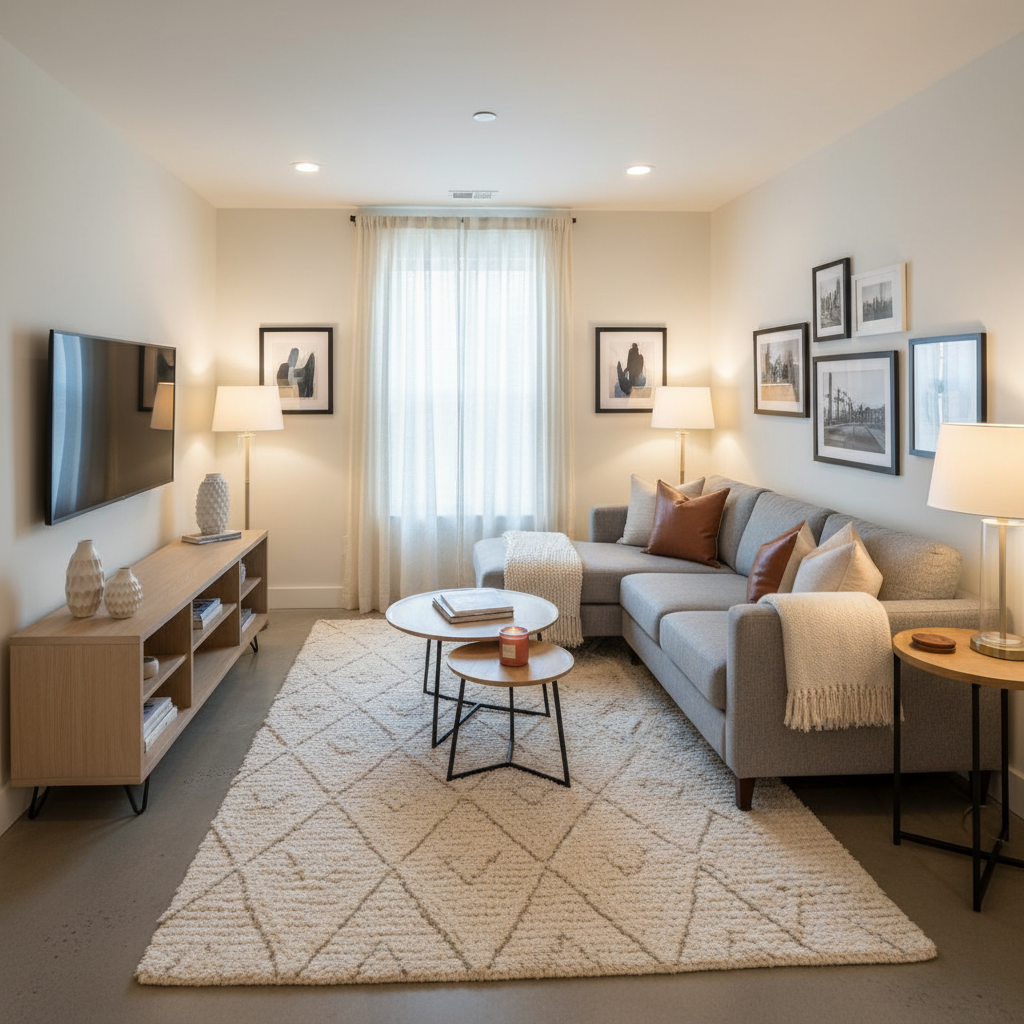
Common mistakes to avoid (they’re popular because they look good in photos)
Some choices photograph well but feel annoying by day three. If your space is limited, comfort wins.
- Mounting the TV too high to “clear” decor, it can create neck strain over time.
- Oversized sectionals that eliminate walkways, the room becomes a furniture maze.
- Open shelving under the TV when you know you won’t keep it styled, most people don’t.
- Too many small frames around the screen, it can read as visual noise instead of a gallery wall.
- Ignoring sound, a rug and soft furnishings can reduce echo, which often makes a small room feel harsher.
If you want a cleaner look with less effort, choose fewer, larger elements: one console, one lamp, one piece of art beside the TV, one basket for throws.
Key takeaways and a simple next move
The best small living room ideas with tv are usually the ones that respect how you live: where you sit most, how you walk through the room, and what items need to disappear behind doors. Get those right and your space starts feeling bigger without changing the square footage.
Pick one action today: either measure and lower the TV to a more comfortable height, or swap to closed storage that hides the tech clutter. That single change often creates momentum for the rest of the room.