
The best decorative storage boxes for living room setups do two jobs at once, they hide the everyday mess and they look intentional on shelves, consoles, and coffee tables. If your living room keeps collecting remotes, chargers, kids’ stuff, pet toys, or mail, you’re not alone, and the wrong box choice can make the space feel even more crowded.
What usually trips people up is buying “cute” boxes that don’t fit where they need to go, or choosing materials that sag, scuff, or attract dust. A living room is high-traffic, so decorative storage has to hold up, open easily, and still match the vibe.
This guide focuses on real buying decisions, where the boxes will sit, what they’ll store, and which materials make sense. You’ll get a quick self-check, a comparison table, and a few setups that work in most U.S. homes, from small apartments to family rooms.
What “best” really means for decorative storage in a living room
For living rooms, “best” rarely means the most expensive. It usually means right size, right material, and right access for how you live. A box that looks perfect but requires you to unstack three items to open will stop getting used fast.
- It fits the furniture: shelf depth, console height, basket cubbies, or coffee-table clearance.
- It matches the mess: flexible for odd shapes like controllers, candles, toys, or throws.
- It opens with one hand: lift-off lids look clean, but hinged or tray-style can be easier day-to-day.
- It looks “part of the room”: color and texture should echo your rug, pillows, or wood tones.
One more practical point, if you’ll store anything fragile or tech, a lined interior and a lid that seals reasonably well can reduce dust buildup and minor scratches.
Quick self-check: which living-room clutter are you actually storing?
Before you browse, name the category. People who skip this step tend to buy boxes that are either too shallow or too precious to use.
- “Grab-and-go” items: remotes, matches, coasters, controllers, charging cables.
- Paper clutter: mail, kids’ school notes, coupons, manuals.
- Soft stuff: throw blankets, extra pillow covers, seasonal decor.
- Kid/pet items: small toys, chew toys, grooming brushes.
- Display-adjacent storage: candles, photo albums, board games you want nearby.
If you have more than two categories, plan on two box types, one “open often” option (easy access) and one “close it and forget it” option (seasonal or rarely used).
Materials and finishes: what holds up and what looks good
The best decorative storage boxes for living room use tend to fall into a few material families. Each has a tradeoff, so pick based on wear, cleaning, and the look you’re after.
Woven (seagrass, rattan, wicker)
Warm, casual, forgiving with visual clutter. Great for family rooms. Watch for snagging if you’re storing delicate knits, and consider a fabric liner.
Fabric-covered (linen-look, canvas, felt)
Lightweight and easy to move, often budget-friendly. The downside is sagging over time unless the frame is rigid, and light fabrics can show smudges.
Wood or wood veneer
More “furniture-like” and stable for stacking. It can scratch if dragged on shelving, so felt pads matter. For humid areas, warping is possible depending on quality.
Leather or faux leather
Polished, adult, and good for a formal living room. Faux leather quality varies, some finishes crack over time, especially near heat sources.
Acrylic, metal, or lacquered boxes
Best for modern or glam interiors and for tabletop “catch-all” use. Acrylic shows fingerprints, and metal corners can scuff wood furniture if not padded.
According to American Cleaning Institute guidelines on household cleaning, manufacturers’ care instructions and spot-testing are smart moves before using new cleaners on finished surfaces, which matters for faux leather, lacquer, and painted boxes.
Comparison table: choose the right box for your space
Use this as a quick match tool, then fine-tune by measuring your shelf or table.
| Use case | Best box style | Material picks | Why it works |
|---|---|---|---|
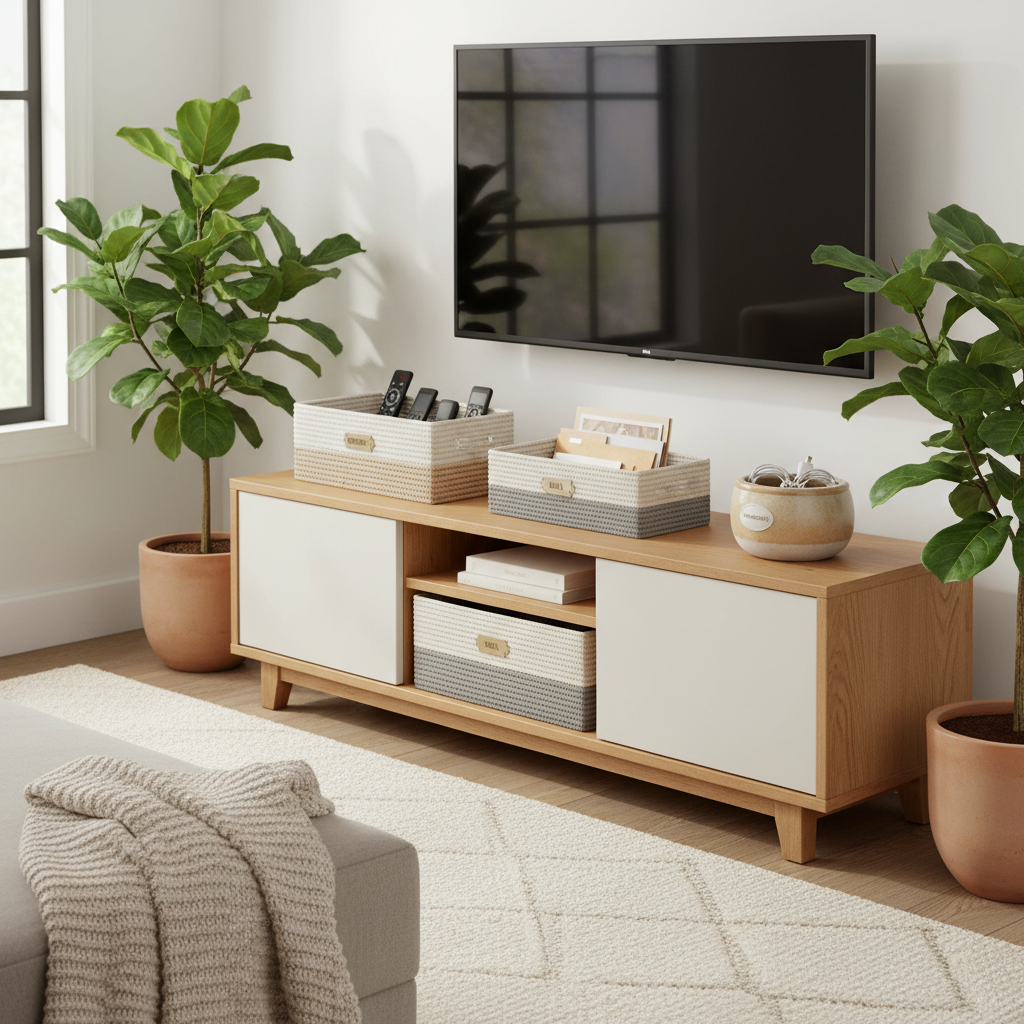
| TV console clutter (remotes, cables) | Low lidded box or divided organizer | Faux leather, wood, fabric-covered | Keeps a clean surface, easy open/close |
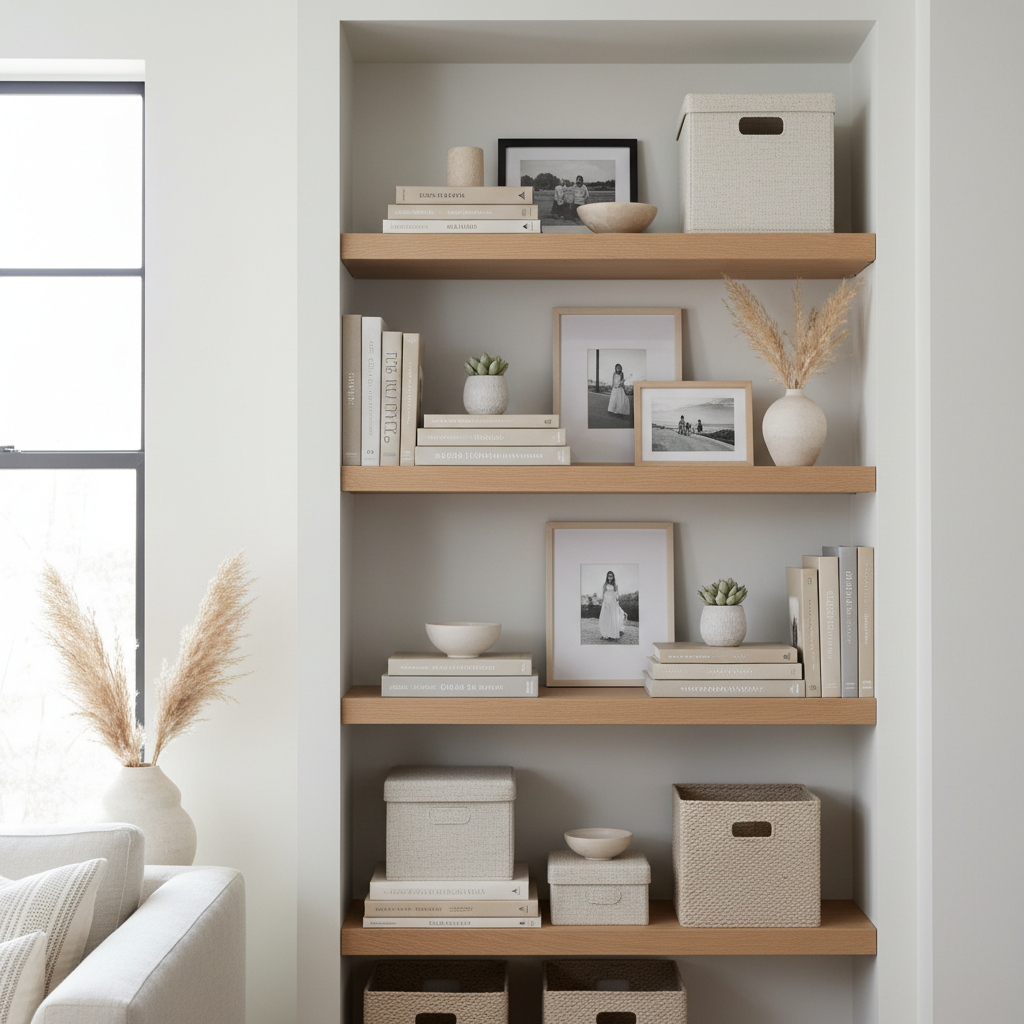
| Open shelving (visual calm) | Matching set of bins with lids | Woven with liner, structured fabric | Creates uniform look, hides mixed items |
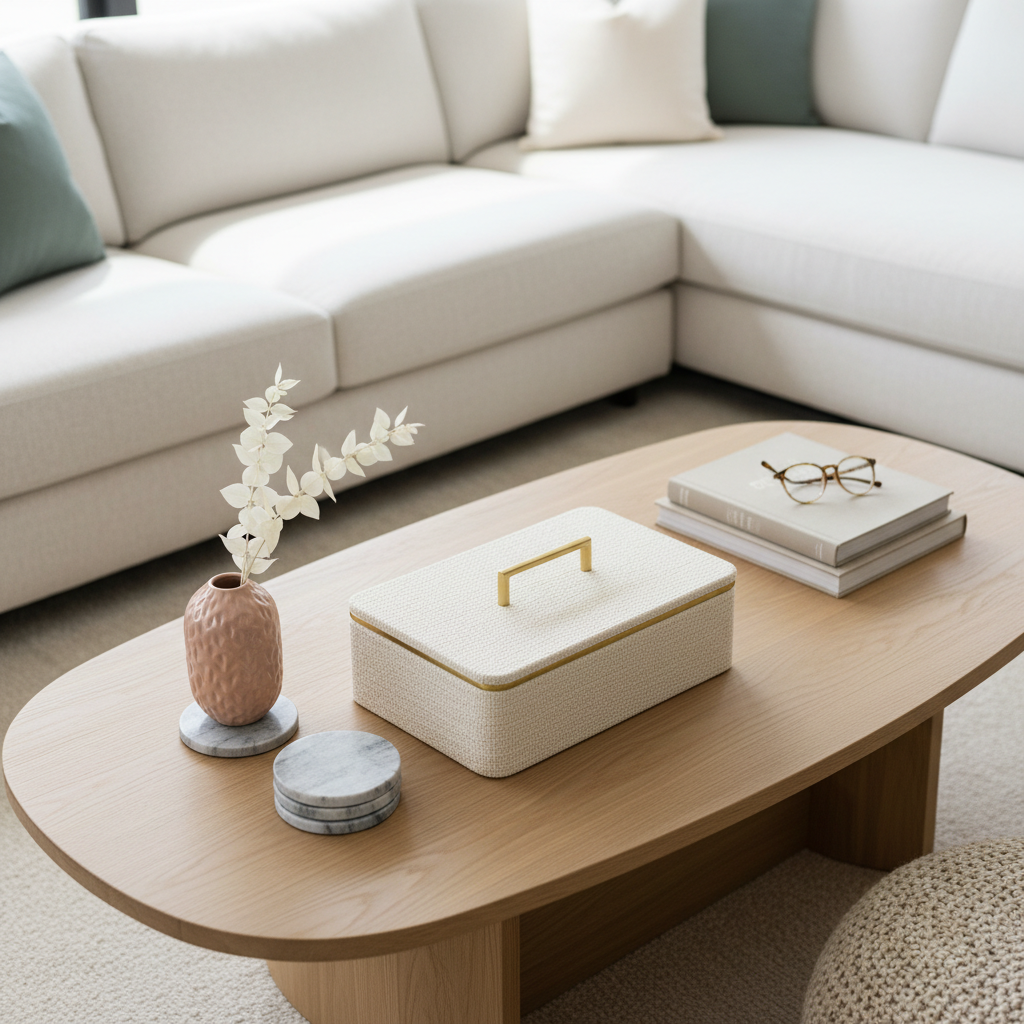
| Coffee table styling | Decorative box with tray-like lid | Lacquer, wood veneer, acrylic | Looks like decor, holds small essentials |
| Blankets and pillows | Large basket or trunk-style box | Woven, upholstered storage bench | High capacity, quick toss-in storage |
| Kids/pet pickup routine | Soft-sided bin with handles | Canvas, felt, woven plastic | Light to carry, safer edges, flexible |
How to size and place boxes so they look intentional
This is where most “why does it look messy?” problems come from. Even the best decorative storage boxes for living room shelves can look off if scale is wrong.
- Measure depth first: shelves often fail here, a box that sticks out by one inch looks accidental.
- Leave finger space: if there’s no space to grab the lid, you’ll stop using it.
- Group by height: on open shelves, keep similar heights together so the line feels clean.
- Use 2–3 “matching” pieces: a small set can calm a wall of mixed decor without making it sterile.
- Anchor with one heavier texture: one woven or wood box helps the shelf feel grounded.
For coffee tables, avoid tall boxes that block sight lines. In many living rooms, a low box or a decorative tray plus a smaller lidded container feels more livable.
Practical setups that work in most living rooms
If you want a fast win, copy a setup instead of overthinking individual products. These combinations cover most clutter patterns.
Setup A: The “remote control and cable” fix
- One low decorative box with a lid for remotes and controllers
- One smaller inner pouch or divider for charging cables and adapters
- A label on the underside of the lid, not on the front, so it stays pretty
Setup B: The shelf-unifier for open storage
- Two identical lidded bins for mixed items (paperwork, random accessories)
- One open bin for “today’s stuff” you grab often
- Keep one cube empty, sounds weird, but it prevents overflow onto surfaces
Setup C: The family room pickup routine
- One big handled bin near the sofa for toys or pet items
- One lidded box higher up for things you don’t want visible
- Choose softer edges if kids carry it, fewer pinches and bumps
According to U.S. Consumer Product Safety Commission, storing small items safely and keeping choking hazards away from young children is important. If your home includes toddlers, consider lidded options placed out of reach and avoid small detachable hardware.
Buying checklist: what to look for before you click “add to cart”
When you shop quickly, you end up with boxes that photograph well but function poorly. This checklist keeps you honest.
- Interior dimensions, not just exterior, especially for games and albums.
- Lid behavior: lift-off, hinged, magnetic, or slipcover, pick what you’ll actually use.
- Base protection: felt feet or a soft bottom prevents shelf and table scratches.
- Handle comfort: thin rope handles can hurt if the box gets heavy.
- Odor and off-gassing: some faux leather or adhesives smell strong at first, airing out helps.
- Color realism: read reviews for “true to photo” notes, lighting can mislead.
Key takeaway: if you can’t describe exactly what will go inside, pause the purchase. Decorative storage works best when it has a job, not just a look.
Mistakes to avoid (and small fixes that save the look)
A few common errors make even good storage feel cluttered. The good news, most are easy to correct.
- Too many different textures: if everything is woven, add one smooth box, if everything is glossy, add one soft fabric box.
- Clear boxes on busy shelves: they reveal clutter, use them only when contents look curated.
- Oversized labels: they turn decor into pantry storage, keep labels discreet.
- Ignoring lighting: dark boxes in dark corners disappear, mix in lighter tones to avoid a “hole” effect.
- Buying sets blindly: sets are convenient, but one size often ends up awkward for your shelf height.
If your room still feels messy after adding boxes, the issue is often volume, not containers. In that case, use one box as a “quarantine bin” for a week, whatever stays untouched can usually move elsewhere or be donated.
Conclusion: picking boxes that stay useful (not just pretty)
The best decorative storage boxes for living room spaces are the ones you’ll open without thinking and still feel good leaving out in the open. If you do one thing today, measure the spot where the box will live and write down the top three items it must hold, that small step prevents most disappointing purchases.
If you want a quick action plan, choose one low lidded box for daily small clutter and one larger handled bin for quick resets, then match materials to your room’s dominant textures so everything looks intentional.