
Finding the best drawer organizers for kitchen utensils usually comes down to two things people overlook, your drawer’s real interior size and how your utensils behave in daily use, bulky handles, odd shapes, and the “junk” tools you still reach for.
If your drawer jams, trays slide, or your spatulas end up tangled by dinner time, it’s not a discipline problem, it’s a layout problem. The right organizer makes cooking smoother because you stop hunting, you stop re-stacking, and you stop fighting a drawer that never stays tidy.
This guide breaks down organizer types that actually work in U.S. kitchens, how to measure so you don’t waste money, and a few practical setups that handle real-life utensil mixes, from minimal to overstuffed.
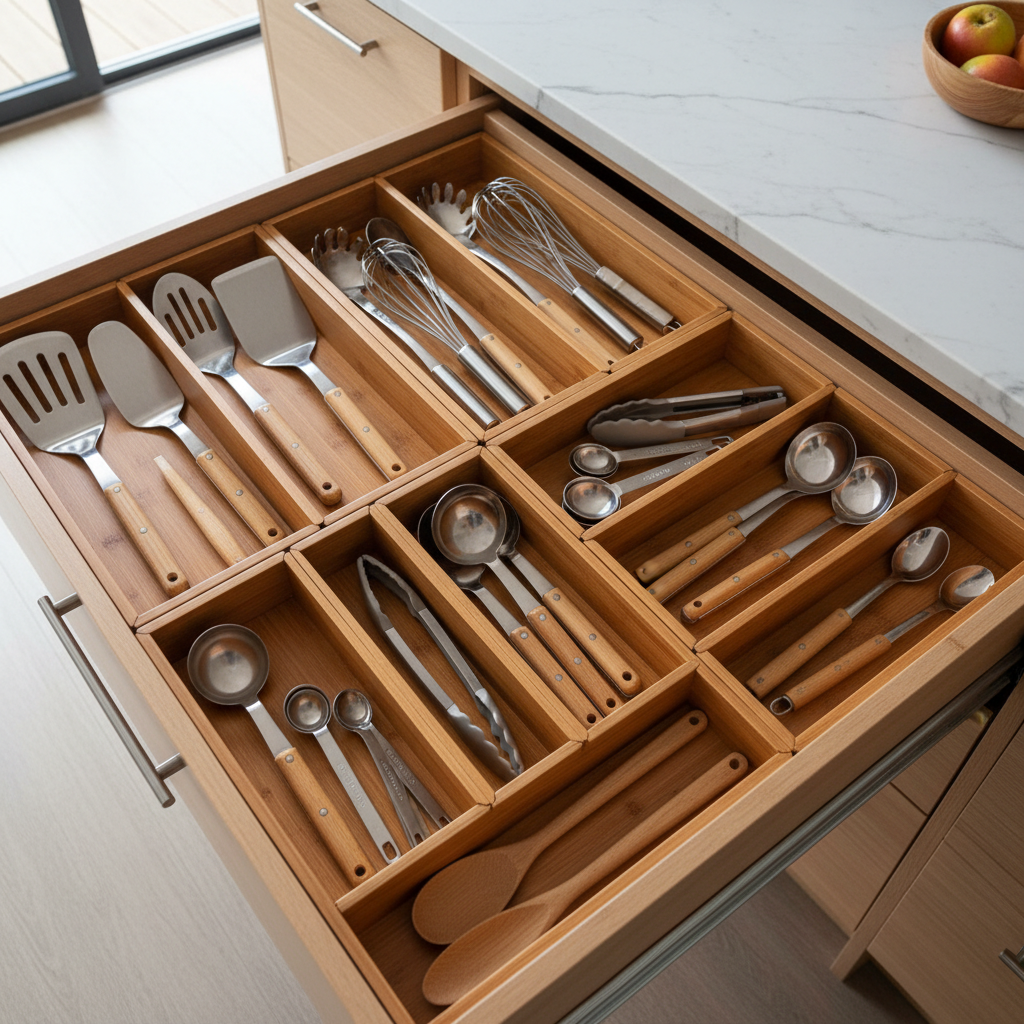
What makes a utensil drawer organizer “best” in real kitchens
Before brands and aesthetics, a good organizer needs to do a few unglamorous things, fit flush, stop shifting, and make the drawer easier to use than tossing everything into one bin. If any of those fail, you’ll slowly abandon the system.
- Proper fit: tight side-to-side fit reduces sliding, especially in wide drawers.
- Right compartment sizing: long tools need long lanes, short tools need shallow lanes that don’t swallow them.
- Easy cleaning: crumbs and spice dust happen, smooth surfaces and removable pieces matter.
- Comfortable access: you should see handles and grab with one motion, no “layer digging.”
- Material durability: thin plastic can warp, cheap wood can stain, metal can scratch without liners.
Key point: the “best” option is often the one that matches your drawer height. Deep drawers invite stacking, and stacking is what makes order collapse.
Quick measuring and layout check (so you don’t buy twice)
Most returns happen because people measure the front face, not the interior. Pull the drawer out, measure inside wall to inside wall, and measure usable depth to the back panel.
- Interior width: measure at the narrowest point, some drawers taper slightly.
- Interior depth: front interior wall to the back interior wall.
- Usable height: bottom to the lowest obstruction, often the drawer’s upper frame.
- Hardware intrusions: note bumps from slides or screws that can block a tight tray.
Then do a 60-second utensil audit. Put everything on the counter, group into (1) daily tools, (2) occasional tools, (3) awkward oversized items like tongs and ladles. This is where you decide if you need long channels, a side bin, or a two-zone drawer.
Types of drawer organizers and who they’re for
There are a handful of organizer styles that show up again and again because they solve different drawer problems. Here’s the practical breakdown, without pretending one style fits everyone.
Fixed utensil trays
Fixed trays work best when your drawer is close to standard width and you like clean, simple lanes. They’re easy to live with, but they’re unforgiving if your drawer is extra-wide or your utensil set is unusually chunky.
- Best for: small to medium drawers, predictable utensils
- Watch out for: wasted space on the sides, shallow compartments that don’t hold bulky handles
Expandable trays
Expandable trays are often a safe bet for U.S. kitchens because drawer widths vary, especially in apartments and older homes. They also let you allocate width to the tools you actually own.
- Best for: medium to wide drawers, mixed utensil sets
- Watch out for: expansion joints that trap crumbs, flimsy expanders that flex
Modular bins (mix-and-match)
Modular bins shine when your drawer is wide, oddly sized, or you want custom zones, like one bin for gadgets and another for tasting spoons. They take a little more planning, but once set, they’re very stable.
- Best for: wide drawers, people who like custom layouts
- Watch out for: bins drifting if there’s too much slack, choose sets with grippy bases or add liner
Adjustable dividers
Dividers are the “keep the pile from becoming a mess” solution. They don’t create neat little lanes, instead they create boundaries, which is sometimes exactly what you need for long utensils.
- Best for: deep drawers, long tools, awkward shapes
- Watch out for: dividers that pop loose, especially with slick drawer bottoms
In-drawer crocks and angled organizers
This style holds utensils upright or angled, so you see handles immediately. It’s underrated for anyone who hates digging through flat trays, but it needs enough height clearance.
- Best for: deeper drawers with generous height
- Watch out for: tall tools hitting the top rail, test with your biggest spatula
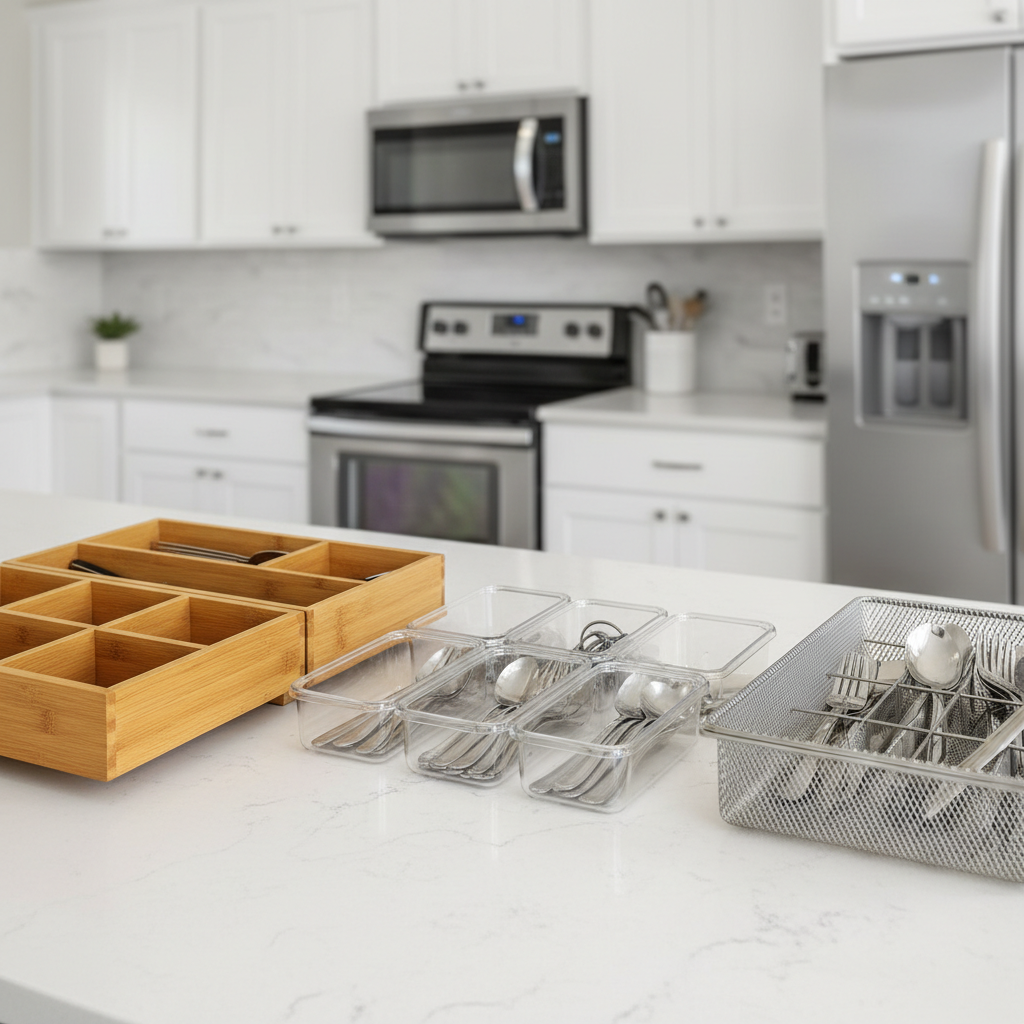
Material choices: bamboo vs plastic vs metal (what matters, what doesn’t)
Material debates can get weirdly intense. In practice, most people care about three things, how it cleans, how it looks after a year, and whether it stays still.
- Bamboo/wood: warm look, often sturdier feel, but can stain if spills sit. If you use drawer liners, it stays nicer longer.
- Plastic: easiest to wash, usually cheapest, great for modular bins. Thin plastic may warp in hot water, so check care notes.
- Metal/mesh: durable and easy to wipe, but can snag small items and may scratch without a liner.
According to NSF, food-contact materials should be cleanable and maintained in sanitary condition, which is a good reminder that “pretty” matters less than “easy to keep clean” for something sitting under crumbs and kitchen dust.
Top picks by scenario (choose your match, not the hype)
Instead of a single ranked list, it’s more useful to match the organizer type to your drawer and habits. The best drawer organizers for kitchen utensils are the ones you’ll still use three months from now, when life gets busy.
| Scenario | Best organizer style | Why it works | What to avoid |
|---|---|---|---|
| Narrow drawer, mostly spoons/spatulas | Fixed tray | Simple lanes, quick access | Over-compartmentalized trays that waste space |
| Medium drawer, mixed utensil set | Expandable tray | Adjusts to width, flexible layout | Flimsy expanders that shift under weight |
| Wide “everything” drawer | Modular bins + a long channel | Custom zones reduce clutter migration | Random bins without a plan, gaps invite sliding |
| Deep drawer with tall clearance | In-drawer crock/angled organizer | Handles visible, one-grab access | Too-tall containers that hit the drawer frame |
| Lots of long tools (tongs, ladles) | Adjustable dividers | Creates “lanes” without fixed sizes | Weak tension dividers that loosen |
Quick takeaway: if your drawer is wider than your organizer, you’ll fight sliding forever. In that case, expandable trays or modular sets usually feel more “finished.”
Simple setup plans you can copy (15 minutes, no perfectionism)
Even great organizers fail with bad zoning. These setups are boring, which is why they work.
Plan A: Daily tools front-and-center
- Put your top 8–12 utensils in the easiest-to-reach compartments.
- Group by motion: stirring tools together, flipping tools together.
- Keep measuring spoons near mixing tools, not near serving tools.
Plan B: Two-zone drawer (utensils + gadgets)
- Use a long tray or divider lane for spatulas, spoons, tongs.
- Use 2–4 modular bins for gadgets like peelers, can opener, thermometer.
- Add one “odds” bin, but cap it, if it overflows, remove items.
Plan C: The deep drawer fix (no more stacking)
- Use an in-drawer crock for tall, frequently used tools.
- Put flat trays on one side for small tools that get lost.
- If tools tip, add a non-slip liner under the containers.
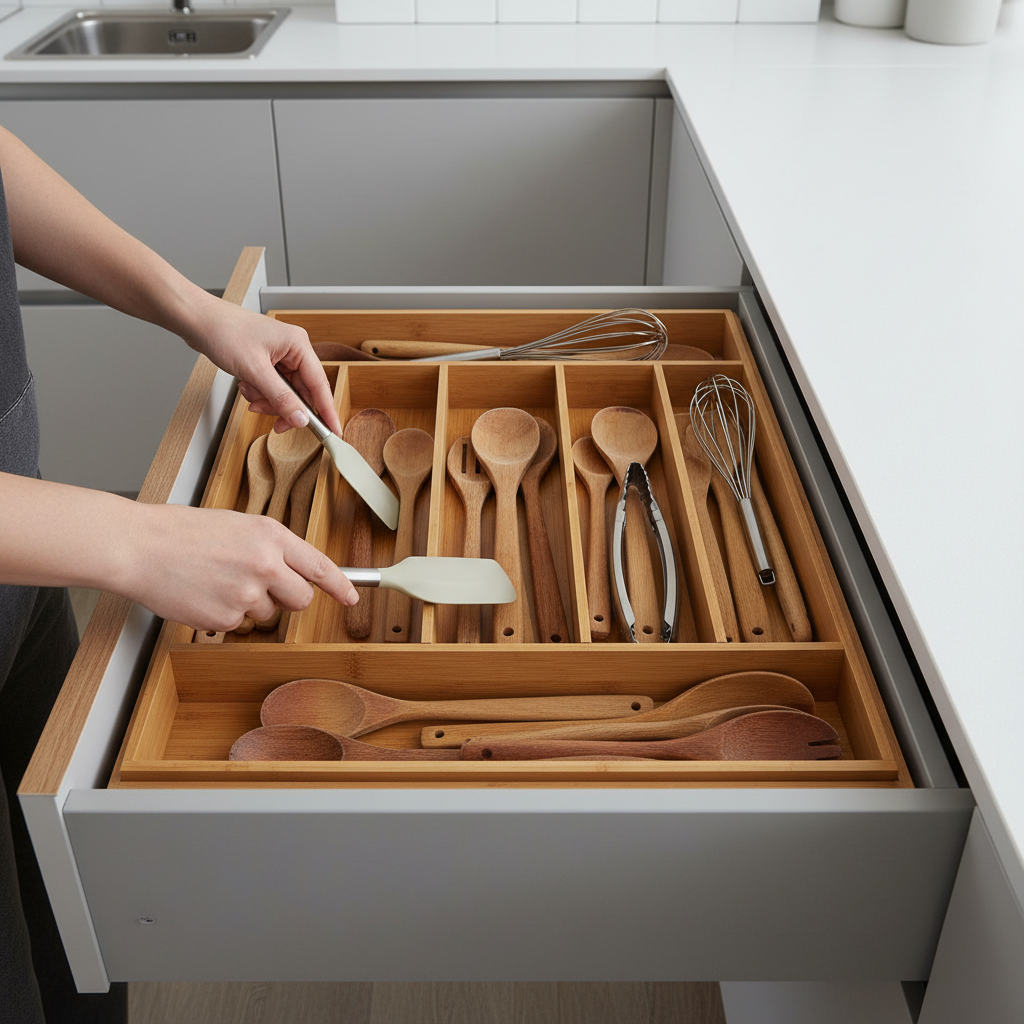
Common mistakes that keep drawers messy (even with “good” organizers)
A lot of clutter comes back for predictable reasons. Fixing these tends to matter more than swapping products.
- Buying before measuring: you end up with gaps, then trays drift, then the drawer becomes chaos again.
- Too many micro-compartments: looks organized, feels annoying, people stop putting things back.
- Keeping duplicates “just in case”: five spatulas often means none fit well, pick your favorites.
- No liner in slick drawers: even the best drawer organizers for kitchen utensils can slide on glossy surfaces.
- Ignoring utensil length: long tools jam diagonally, then everything piles on top.
Also, be cautious with very tight-fitting expandables in older drawers that swell seasonally, in some homes, humidity changes can make drawers stick, and forcing a tight tray can make the drawer feel worse.
Buying checklist and practical extras worth considering
If you want a quick filter before you hit “add to cart,” this is the checklist that tends to prevent disappointment.
- Non-slip base or plan to add a liner
- At least one long compartment for tongs and ladles
- Easy-to-wipe corners, fewer seams means fewer crumb traps
- Enough height clearance so tools don’t scrape the top rail
- Return-friendly fit strategy, measure, then choose adjustable if you’re between sizes
Optional extras that often help: a thin non-adhesive drawer liner, label tabs if multiple people cook, and one small bin for “sharp” items like peelers so you’re not grabbing blindly.
Conclusion: pick the organizer that matches your drawer, then keep the system small
The best drawer organizers for kitchen utensils aren’t the fanciest ones, they’re the ones that fit your drawer walls, match your utensil mix, and make it easier to put things back than to toss them in. If you do nothing else, measure the interior, choose a style that fills the width, and build zones around the tools you touch every day.
If you want a quick win today, start by removing duplicates and reserving one long lane for your longest utensils, that single change usually stops the diagonal jam that triggers most drawer mess.