
Best fabric storage ottoman for living room shopping gets confusing fast because “storage,” “comfortable,” and “actually durable” don’t always show up in the same product listing.
If you want one piece that hides throws, kid toys, or game controllers while still reading as “real furniture,” you’re already thinking the right way, the living room is where cheap hinges, flimsy lids, and snag-prone fabric get exposed.
This guide narrows it down with practical checks, a quick comparison table, and setup tips so the ottoman you pick works with your sofa, your traffic paths, and the way you actually live.
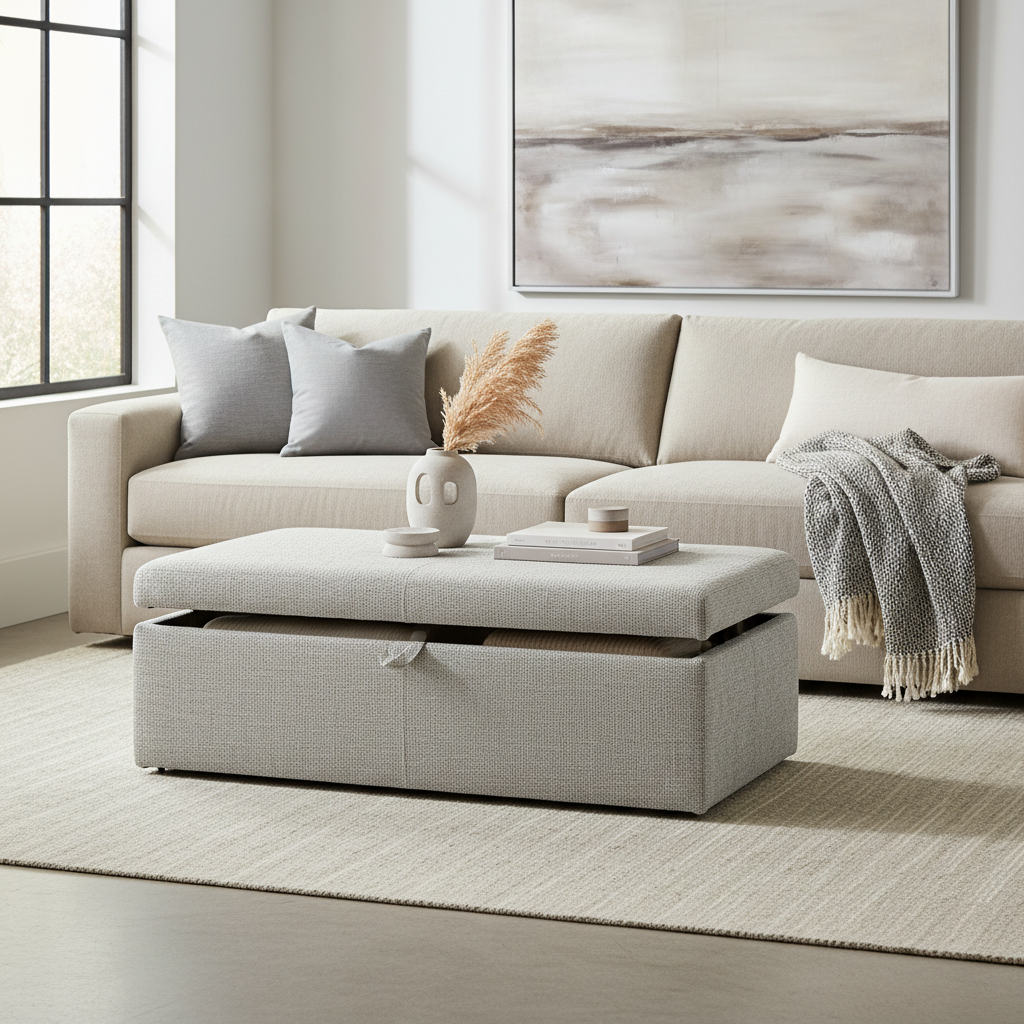
What “best” really means for a fabric storage ottoman
Most people judge an ottoman by looks first, then regret it when the lid feels sketchy, the corners sag, or the fabric pills after one season. In practice, the “best” option depends on which job matters most in your room.
- Everyday footrest: prioritize comfort, stain resistance, and a lid that doesn’t wobble.
- Extra seating: look for a firmer top, sturdy frame, and a weight rating you can verify.
- Casual coffee-table use: you’ll want a flat, stable surface and a tray-friendly top.
- Real storage: interior volume, hinge quality, and how easy it is to open with one hand matters more than marketing photos.
According to CPSC (U.S. Consumer Product Safety Commission), tip-overs and furniture-related injuries can happen in homes, so it’s worth treating lids, stability, and pinch points as safety features, not “nice to have” extras.
Quick comparison table: pick the right type for your space
This is the part most buying guides skip, two ottomans can be “storage ottomans,” but they behave totally differently in a living room layout.
| Type | Best for | Watch-outs | Typical size fit |
|---|---|---|---|
| Rectangular lift-top | Sectionals, tray use | Cheap hinges, lid flex | Large rooms, 80"+ sofas |
| Square storage cube | Small rooms, flexible layouts | Limited volume, can look “temporary” | Apartments, 60–75" sofas |
| Round storage ottoman | Safer corners, softer look | Less tray-stable, can roll visually | High-traffic paths |
| Tufted hinged-top | Classic styling | Tufting collects crumbs, can dent | Traditional/transitional rooms |
| Nested set (2-in-1) | Extra seating on demand | Smaller storage per piece | Entertaining-heavy homes |
Why fabric storage ottomans fail in real life (and how to avoid it)
Most complaints trace back to a few predictable weak points. If you check these before buying, you avoid the “looks great online” trap.
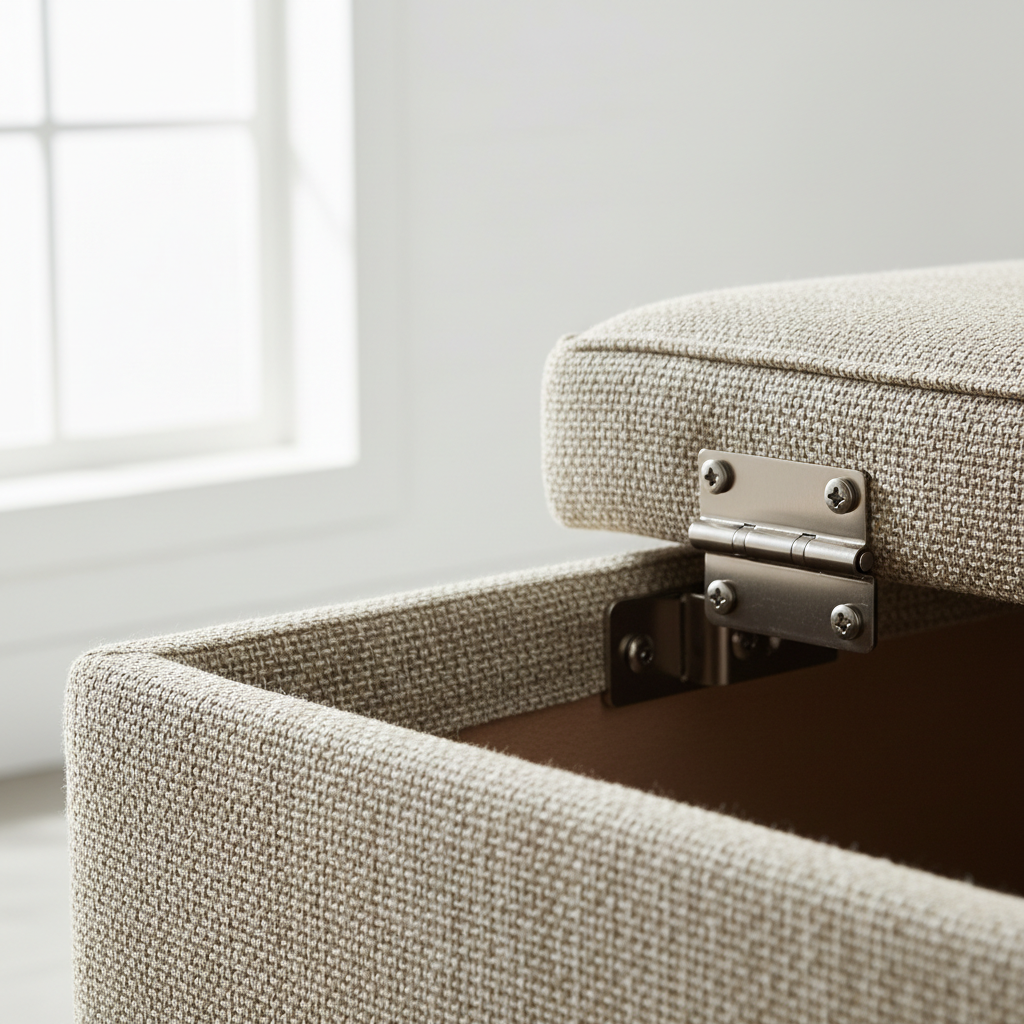
1) The lid and hinge design
- Safety hinge (soft-close or stay-open) reduces slamming and pinched fingers.
- Simple lift-off lids are fine, but they’re annoying when you’re holding laundry or toys.
- If the top will be used as a seat, avoid lids that flex under pressure.
2) Frame strength and panel thickness
Many budget models use thin MDF panels. That can be okay for light storage, but when adults sit on it repeatedly, corners and seams tend to loosen.
3) Fabric that doesn’t match your household
- Performance fabric (often polyester blends) usually handles spills better than loose weaves.
- Bouclé and chunky textured weaves look great, but pet claws and snags are a common issue.
- Linen-look fabric can be breathable and pretty, but it may show stains faster in some homes.
Fast self-check: which ottoman size and features do you actually need?
If you only do one thing from this article, do this checklist in your room, it saves you from buying the wrong footprint.
- Measure the “walk-around” clearance: aim for roughly 16–18 inches around key paths when possible, tighter rooms may need less, but it should not feel like an obstacle course.
- Match seat height: many living room ottomans feel right when the top sits close to sofa seat height, give or take an inch.
- Decide the top job: footrest only, or tray use, or seating, pick one primary job and one secondary job, not three “equally important” jobs.
- Storage reality check: list what goes inside (two throws, board games, kids toys), then compare to interior dimensions, not just exterior size.
- Pet and kid factor: choose tighter weaves or performance fabric if spills and scratches are routine.
What to look for when buying (materials, construction, and comfort)
Product pages are inconsistent, so look for signals that usually correlate with longer life, even when specs are sparse.
Fabric and cleanability
- Removable cover helps if you expect frequent messes, but check whether it’s truly washable or “spot clean only.”
- Ask for swatches when available, lighting and screens can make beige look gray, and texture can feel totally different in hand.
- Look for abrasion resistance language, some brands mention “rub count” or durability testing, if it’s not mentioned, treat it as unknown.
Cushioning and top feel
- For foot comfort, slightly softer tops feel better.
- For seating and tray use, a firmer top reduces wobble and dents.
Legs, feet, and floor protection
- Low-profile ottomans can visually “shrink” a small room.
- If it has legs, check for felt pads or plan to add them, it prevents scratches and reduces sliding.
Room-by-room styling that still feels practical
A fabric storage ottoman can look expensive or look like dorm furniture, often the difference is proportion and the “supporting cast” around it.
- With a sectional: rectangular shapes tend to look intentional, add a large tray so drinks never touch fabric.
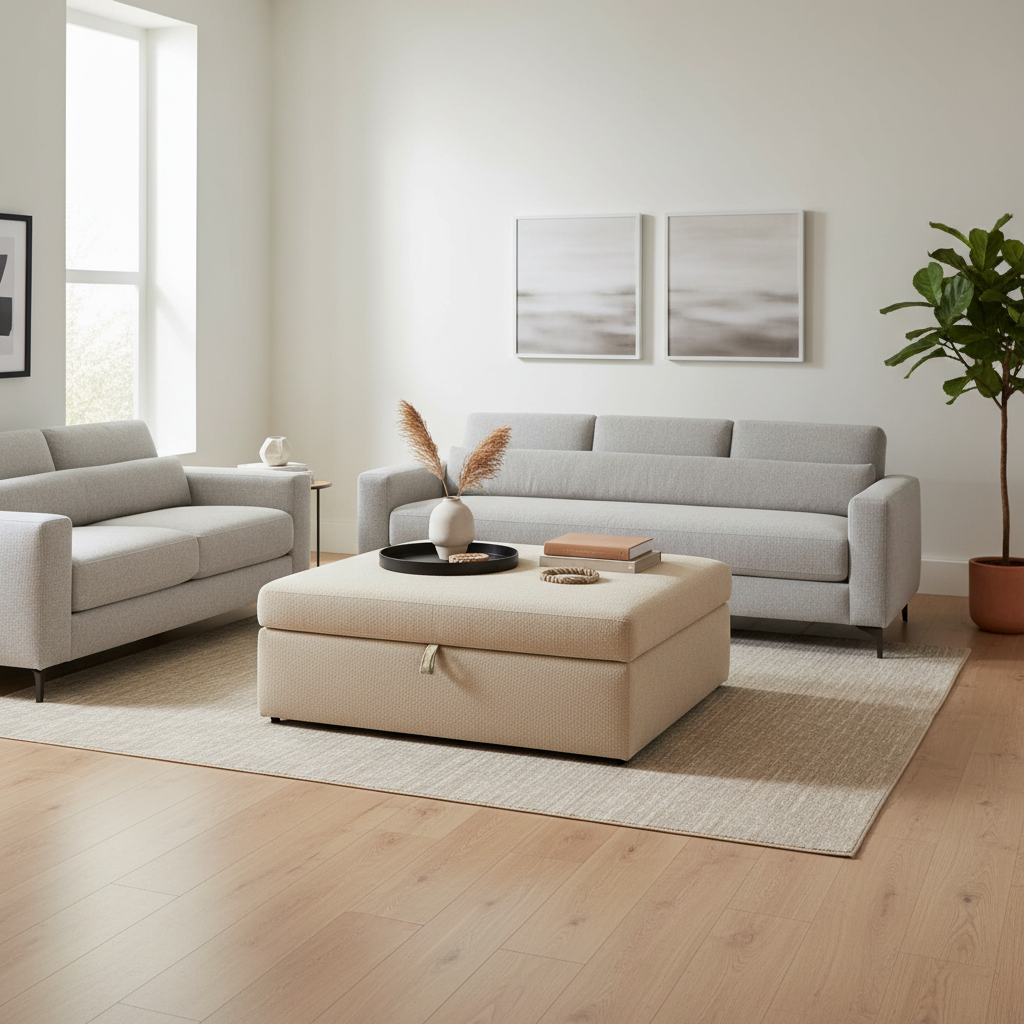
- With two sofas facing: a larger square ottoman anchors the center, but keep the height close to seat height so it doesn’t read as a random box.
- In small apartments: consider a cube or nested pair so you can move pieces when guests show up.
- Color strategy: if your sofa already has texture, pick a calmer fabric; if your sofa is smooth, a subtle texture on the ottoman adds depth without shouting.
Practical setup and care: make it last past the honeymoon phase
The best fabric storage ottoman for living room use still needs a little setup discipline, especially if it will double as a seat or coffee-table stand-in.
- Add a tray if drinks appear in your living room, it’s the simplest way to prevent rings, stains, and constant spot-cleaning.
- Rotate usage: if one side always faces the TV, that side wears faster, small shifts keep it looking even.
- Vacuum the seams: crumbs and grit act like sandpaper on fabric fibers.
- Use the right cleaner: when the tag says spot clean only, avoid soaking, and if you’re unsure, test an unseen area first or ask a professional cleaner.
According to EPA (United States Environmental Protection Agency), indoor air quality can be affected by household products, so when using cleaners or stain treatments, ventilation and label directions matter, especially around kids or pets.
Key takeaways (so you can choose quickly)
- Pick the shape based on layout, not just aesthetics.
- Hinges and lid stability are where many ottomans quietly fail.
- Fabric choice should match your household, performance weaves often win for real life.
- Measure clearance so the ottoman doesn’t choke walkways.
Conclusion: the “best” choice is the one that fits your habits
If you want a living room that feels calmer day to day, a fabric storage ottoman earns its spot when it hides the mess, stays comfortable, and doesn’t demand babying. Start by measuring your clearances, then choose the top job you care about most, footrest, seating, or tray use, and buy around that priority.
If you’re torn between two options, I’d usually lean toward the one with better lid hardware and an easier-to-clean fabric, those are the pain points that show up first in most homes.
FAQ
- How do I choose the best fabric storage ottoman for living room use with kids?
Look for performance fabric or tight weaves, a safety hinge, and a stable top, then plan on using a tray for snacks and drinks so you’re not constantly spot-cleaning. - What size storage ottoman works with a standard 3-seat sofa?
It depends on your room depth, but many people land in a medium-to-large rectangle or square, your best move is to tape the footprint on the floor and test the walkway. - Are lift-top ottomans safe?
Many are fine, but safety depends on hinge quality and stability, if you have kids, a soft-close or stay-open hinge can reduce pinched fingers, and you should avoid wobbly designs. - Can I use a fabric storage ottoman as a coffee table?
Yes, in many living rooms it works well with a large tray, without a tray, fabric tops tend to show wear faster and feel less stable for drinks. - Which fabric holds up best with pets?
Often a tight, durable weave performs better than looped textures like bouclé, but it varies by pet and behavior, if scratching is common, ask for swatches and consider a smoother performance fabric. - What’s a reasonable weight capacity for sitting?
It varies widely by construction, if the brand doesn’t clearly state it, treat it as uncertain and avoid using it as regular seating until you can confirm with the seller. - How do I stop my ottoman from sliding on hardwood?
Felt pads, rubber grippers, or a thin rug under the front area usually helps, just make sure the solution doesn’t trap grit that can scratch the floor.
If you’re trying to find a more “no surprises” option, it can help to narrow to two or three models and compare them side-by-side for hinge type, interior dimensions, and cleaning instructions, then choose the one that matches your room measurements instead of the one with the prettiest hero photo.